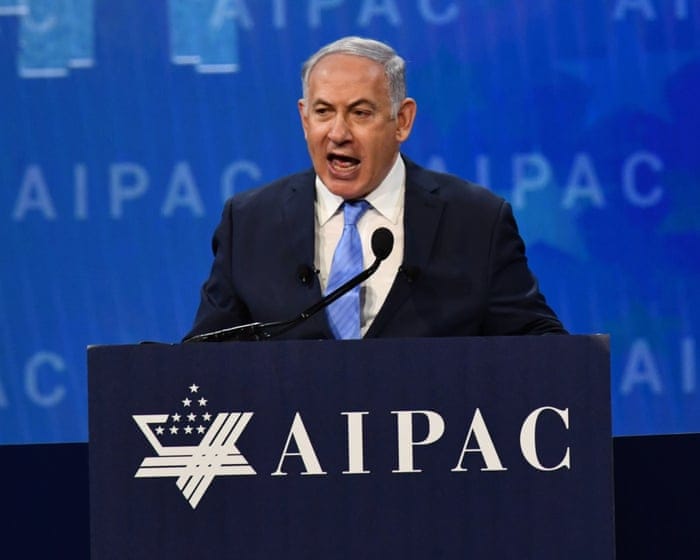
Elect Chicago Women. Affordable Chicago Now. Two Super PACs flooding Illinois Democratic primaries with $13.7 million sound like they care about local issues. They don't mention that every dollar comes from the American Israel Public Affairs Committee and its network — or that Israel's war in Gaza is the reason they're spending.
The deception is deliberate. After a year of mass protests against Israel's military campaign that has killed over 30,000 Palestinians, AIPAC faces a problem it has never confronted in its 70-year history: its money has become politically toxic in Democratic primaries. The solution, according to reporting by The Guardian US and Chicago public radio station WBEZ, is to hide.
Tuesday's primaries in and around Chicago represent the first major test of whether stealth spending can still deliver victories when voters increasingly view uncritical support for Israel as morally untenable. The races also expose how a foreign policy lobby has morphed into a domestic political force that operates more like a corporate PAC than an issue advocate — complete with the shell games and dark money tactics typically associated with fossil fuel companies or pharmaceutical giants.
The scale of spending is staggering for House primaries. In the 7th Congressional District alone, AIPAC-aligned groups have spent over $4 million attacking incumbent Representative Danny Davis, who has called for a ceasefire in Gaza. That's more than some Senate candidates spend in an entire cycle. The money funds attack ads that never mention Israel, Palestine, or foreign policy at all — instead focusing on local crime statistics and healthcare votes.
This represents a fundamental shift in how pro-Israel money operates in American politics. For decades, AIPAC's political giving was relatively transparent: candidates who supported military aid to Israel received donations, those who questioned it faced well-funded opponents. The quid pro quo was obvious but accepted as part of Washington's foreign policy consensus.
What changed wasn't AIPAC's tactics but American public opinion. Polling shows Democratic voters under 45 now sympathize more with Palestinians than Israelis by a 2-to-1 margin. Young Black and Latino voters — key Democratic constituencies in cities like Chicago — overwhelmingly support conditioning military aid on human rights compliance. For these voters, AIPAC's money isn't just another special interest donation; it's blood money.
The shell game extends beyond hiding the funding source. The ads themselves employ a cynical bait-and-switch, attacking progressive incumbents on issues that poll well with moderate Democrats — public safety, inflation, healthcare costs — while the actual disagreement is about whether the U.S. should keep arming a military campaign that international courts are investigating for genocide.
Consider the political technology at work here. A voter in Chicago's 7th District sees an ad from 'Elect Chicago Women' attacking Danny Davis on crime. The ad doesn't mention that Davis's real sin, in AIPAC's eyes, was joining 18 other House members in voting against a resolution that condemned Hamas but failed to mention Palestinian civilian deaths. The voter doesn't know the women's group doesn't exist outside of this election. The attack works precisely because it hides its actual purpose.
This isn't how democratic accountability is supposed to function. When the National Rifle Association spends money, everyone knows it's about guns. When Planned Parenthood backs a candidate, abortion rights are clearly at stake. But when AIPAC spends through 'Affordable Chicago Now,' voters have no idea they're actually voting on whether the U.S. should keep sending 2,000-pound bombs to Israel.
The Illinois primaries also show how thoroughly AIPAC has adopted corporate PAC tactics. The creation of multiple shell organizations with innocuous names. The micro-targeting of ads to specific demographic groups. The use of local voices and imagery to mask outside spending. These are techniques perfected by fossil fuel companies trying to defeat climate legislation and pharmaceutical companies fighting drug pricing reform.
But there's a crucial difference: corporate PACs are defending domestic business interests, however harmful. AIPAC is using corporate tactics to enforce loyalty to a foreign government's military campaign. No oil company would dare create a front group called 'Affordable Chicago Now' to attack politicians who oppose drilling in Alaska. The deception would be too obvious, the backlash too severe.
AIPAC's transformation into a stealth operator also reflects the changing nature of the U.S.-Israel relationship itself. As American military contractors profit from Middle East conflicts and surveillance technology tested in Gaza gets deployed in American cities, the distinction between foreign and domestic policy erodes. AIPAC isn't just lobbying for military aid anymore — it's protecting an entire ecosystem of defense contracts, intelligence sharing, and technological collaboration that generates billions in revenue.
The Tuesday primaries will test whether this ecosystem can survive exposure. Local Chicago activists have spent weeks educating voters about where the mysterious attack ads actually originate. Palestinian-American organizations have gone door-to-door in heavily Arab and Muslim districts with voter guides exposing AIPAC's shell games. Young Jewish groups opposed to the Gaza war have organized phone banks explaining why 'Elect Chicago Women' has nothing to do with electing women.
If AIPAC's candidates lose despite the massive spending, American politics will shift in a fundamental way. It will demonstrate that on issues of war and peace, money can't overcome moral clarity — at least not when voters know where the money comes from. If they win, it will validate a dangerous new model: any interest group with enough cash can manipulate Democratic primaries by hiding behind fake local organizations.
The stakes extend beyond Chicago. AIPAC has reportedly budgeted $100 million for the 2024 cycle, targeting any Democrat who questions unconditional support for Israel. If the shell game works in Illinois, expect to see 'Protect Pittsburgh Families' and 'Safe Streets Seattle' and dozens of other phantom organizations flooding Democratic primaries coast to coast.
What's happening in Chicago represents the monetization of mass death. Every dollar AIPAC spends comes from donors who believe the U.S. should continue arming Israel regardless of how many Palestinian children die. The shell groups exist because those donors know their actual position is politically toxic. The deception is an admission of moral bankruptcy.
Tuesday's results will determine whether American democracy can still function when the price of dissent is measured in millions of dollars and the cost of compliance is measured in thousands of lives. The voters of Chicago hold more than just their local representation in their hands — they're deciding whether anyone with enough money and willingness to deceive can purchase American foreign policy.