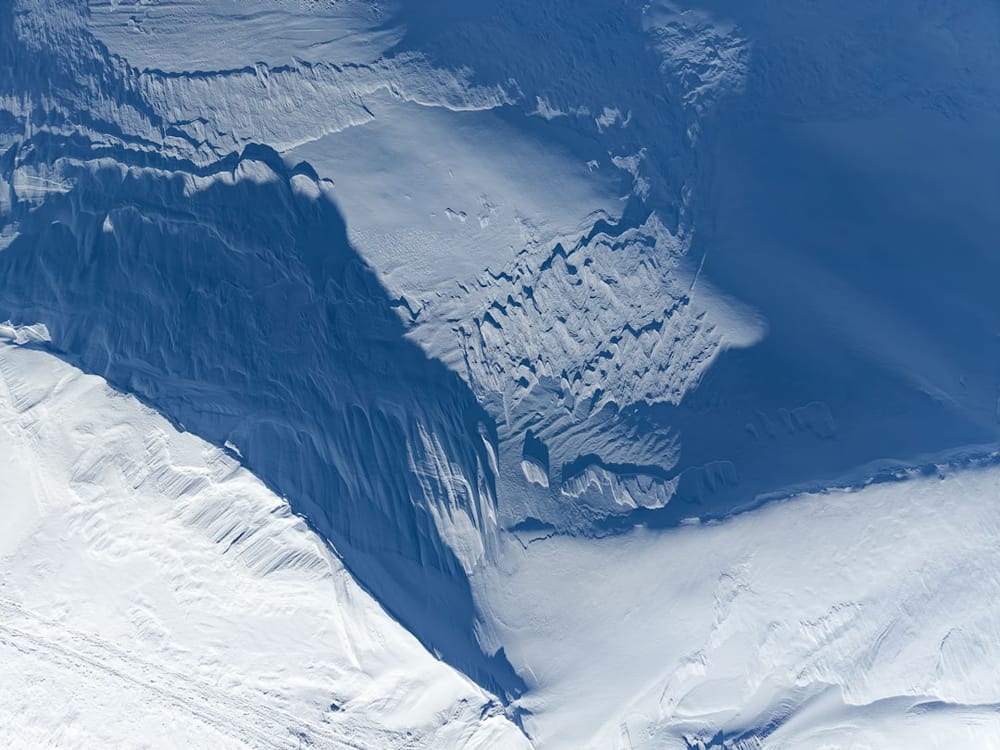
Climate scientists drilling through 500 feet of Antarctic ice have retrieved a 23-million-year sediment record that demonstrates the West Antarctic ice sheet's collapse is now irreversible, regardless of emissions reductions. Mother Jones reported that the research, conducted by an international team drilling into the Antarctic Ocean floor, provides geological evidence that once certain warming thresholds are crossed, ice sheet dynamics become self-reinforcing and unstoppable.
The sediment cores show that during previous warm periods in Earth's history, the West Antarctic ice sheet collapsed completely when ocean temperatures reached levels the planet has already exceeded. The research indicates that even if global emissions were cut to zero tomorrow, the warming already locked into the ocean system will continue driving ice loss for centuries. This is not a projection about what might happen — it is confirmation of a process already underway.
What makes this finding politically significant is the gap it exposes between scientific reality and policy frameworks. International climate agreements, including the Paris Accord, are structured around preventing catastrophic warming through emissions reductions. But if major ice loss is already irreversible, the policy conversation needs to shift from prevention to adaptation and damage control — a shift that has profound implications for how resources are allocated and which communities receive support.
The West Antarctic ice sheet contains enough water to raise global sea levels by approximately 10 feet. The sediment record shows this has happened before during warm periods, and the current ocean warming trajectory matches those historical conditions. Coastal cities from Miami to Mumbai are planning infrastructure based on sea level rise projections that assume emissions cuts will slow ice loss. The new data suggests those projections may be dangerously optimistic.
The research also complicates the political narrative around climate action. For decades, environmental advocacy has centered on the message that immediate action can prevent the worst outcomes. That framing has driven policy momentum but also created a binary: act now and save the planet, or fail to act and lose everything. The Antarctic data introduces a third, more uncomfortable reality — some losses are already locked in regardless of action, and the question is how to manage those losses while preventing additional damage.
This does not mean emissions reductions are pointless. Every fraction of a degree of warming prevented translates to slower ice loss, more time for adaptation, and less displacement of coastal populations. But it does mean the policy framework needs to acknowledge that adaptation is no longer a backup plan — it is the primary challenge. Communities in low-lying regions, particularly in the Global South, are already experiencing displacement from sea level rise. The Antarctic research suggests that displacement will accelerate regardless of emissions trajectories, raising urgent questions about climate migration, infrastructure investment, and international responsibility. Meanwhile, Asia's return to coal amid collapsing LNG markets is adding further pressure to global emissions at precisely the moment the science demands the opposite.

The gap between what the science shows and what policy assumes is not just academic. It determines where money flows, which communities get protection, and who is left to manage the consequences. If ice loss is irreversible, then coastal defense projects in wealthy nations are effectively writing off entire regions in poorer countries that lack the resources for comparable infrastructure. The sediment cores from Antarctica are not just a record of the past — they are a preview of decisions that will determine who survives the next century of sea level rise and who does not. Whether federal climate funding programs can survive long enough to support that adaptation remains an open and urgent question.