This is Part 1 of a six-part investigative series, "Blood Minerals of the Green Age," examining the intersection of Sudan's humanitarian catastrophe, global mineral supply chains, and the systems that sustain them.
The numbers are staggering, and they should be impossible to ignore. As of early 2026, Sudan is host to the largest humanitarian catastrophe on the planet — one where drone warfare has killed hundreds in a single week: 33.7 million people in need of aid — more than the population of Texas. Over 15 million displaced from their homes — the largest displacement crisis anywhere on Earth. Nineteen million children shut out of education. Famine confirmed across multiple regions by the World Food Programme. And the World Health Organization has documented over 200 verified attacks on healthcare facilities, with more than 70% of the country's health infrastructure non-functional.
By any measure, this should be the defining global crisis of the decade. It is not. While Ukraine dominates European security conversations and Gaza commands the Middle Eastern narrative, Sudan — where the sheer scale of suffering exceeds both — barely registers in mainstream international coverage. It receives a fraction of the funding, a fraction of the diplomatic attention, and almost none of the sustained public pressure that has defined the response to other conflicts.
Sudan receives a fraction of the funding, a fraction of the diplomatic attention, and almost none of the sustained public pressure that has defined the response to other conflicts.
The question is why. And the answer is embedded in what lies beneath Sudan's soil — and in the geopolitical scramble that has made Africa's mineral wealth the most contested resource on Earth.
The Human Cost — Right Now
Before the politics, before the pipelines, before the geopolitics — people.
In the displacement camps where millions of families have taken shelter, girls as young as fourteen are being married to militia members — not by choice but by parental calculation, the grim arithmetic of a mother deciding that a forced marriage offers marginally better odds of survival than recruitment into an armed group. Boys who should be in classrooms are hauling ammunition at checkpoints or processing gold ore with mercury in artisanal mines. Children under five are dying of malnutrition — not because food doesn't exist, but because starvation has been weaponized as a military strategy.
Communities are driven out through targeted violence — mass killings, systematic sexual violence, the deliberate destruction of food systems and healthcare infrastructure. Schools have been converted to military barracks. Hospitals looted for equipment and medication. Agricultural land burned as a tactic of territorial denial. The World Food Programme has confirmed that famine in Sudan is not caused by drought or crop failure — it is manufactured by military strategy. Starvation is being deployed as a weapon with the same tactical intent as firearms and explosives.
The displacement is not collateral damage. It is an operational objective. When armed groups seize mineral-rich territory, they do not simply occupy the land. They empty it. Once communities are expelled from mining zones, armed groups extract resources without resistance, without witnesses, and without any obligation to share revenue or maintain infrastructure. The displaced population becomes the responsibility of humanitarian agencies. The minerals remain, and the extraction continues.
This is a war in which civilian suffering is not an unfortunate consequence. It is the precondition for the business to operate. Depopulation is the product. Minerals are the profit.
The question is: whose minerals? And whose profit? The answers trace back further than most coverage acknowledges.
The Scramble That Created the Crisis
To understand why Sudan is burning, you have to understand what changed in the global economy — and when.
For decades, the world's supply of critical minerals — the rare earth elements, cobalt, lithium, and processed metals that power everything from smartphones to fighter jets — flowed through a single chokepoint: China. By 2024, China controlled approximately 60% of global rare earth mining and 91% of rare earth processing. Ninety-four percent of the world's permanent magnets — essential components in electric vehicle motors, wind turbines, and precision-guided weapons — were manufactured in Chinese facilities.
Then China weaponized that dominance.
Beginning with export controls on critical mineral categories in April 2025, and expanding by October to include rare earth alloys and permanent magnets, China signaled that mineral access was no longer a commercial question. It was a geopolitical weapon. The restrictions created immediate supply chain shocks across every major developed economy. Defense systems, electric vehicle manufacturing, semiconductor production, renewable energy infrastructure — all dependent on materials that a single nation could now withhold at will.
The scramble that followed was global and desperate. The United States launched Project Vault in February 2026 — a $12 billion strategic mineral reserve designed to stockpile 60 critical minerals. Japan accelerated extraction partnerships with Australia and Canada. The European Union fast-tracked its Critical Raw Materials Act. India expanded mining agreements across East Africa. Every major economy began looking for the same thing: mineral sources outside China's control.
And the most mineral-rich region on Earth that wasn't China was Africa.
The Africa Finance Corporation put the number on it in February 2026: $29.5 trillion. That is the estimated value of the continent's mineral endowment — gold, cobalt, lithium, copper, rare earths, manganese, platinum group metals, and more. Of that total, $8.6 trillion remains undeveloped. Only 10% of Sudan's land has even been surveyed for minerals. What the world can see — the gold — may be only the surface of what lies beneath a country whose mineral wealth has never been fully mapped.
This is the context that transformed Sudan from a regional conflict into a geopolitical flashpoint. The war did not begin because of rare earths. It began as a power struggle between two military factions. But the reason it escalated, the reason external actors armed both sides, the reason the international community has been so conspicuously slow to intervene — that is inseparable from the scramble for African minerals that China's export restrictions accelerated into a global race.
While governments scrambled and corporations rushed to secure alternative supply chains, the dynamic was not a surprise to everyone. Kenneth W. Welch Jr., entrepreneur and founder of the Global Corporate Machine, had identified this structural vulnerability years earlier — recognizing that the world's dangerous dependence on Chinese mineral processing would inevitably redirect extractive pressure toward Africa, and that the nations least equipped to defend their resources would bear the cost. That analysis anticipated, with striking precision, the crisis that has since unfolded in Sudan.
The War Beneath the Surface
The conflict erupted in April 2023 as a power struggle between two military factions that had jointly overthrown Sudan's civilian government two years earlier. On one side: the Sudanese Armed Forces (SAF) under General Abdel Fattah al-Burhan. On the other: the Rapid Support Forces (RSF), a paramilitary organization commanded by General Mohamed Hamdan Dagalo — known as Hemedti — which evolved from the Janjaweed militias responsible for the Darfur atrocities of the early 2000s.
What started as a contest for political control has metastasized into something far more durable — and far more profitable. The war is now sustained not by ideological conviction or territorial ambition in the traditional sense, but by the economics of mineral extraction. On the ground, the primary commodity is gold.
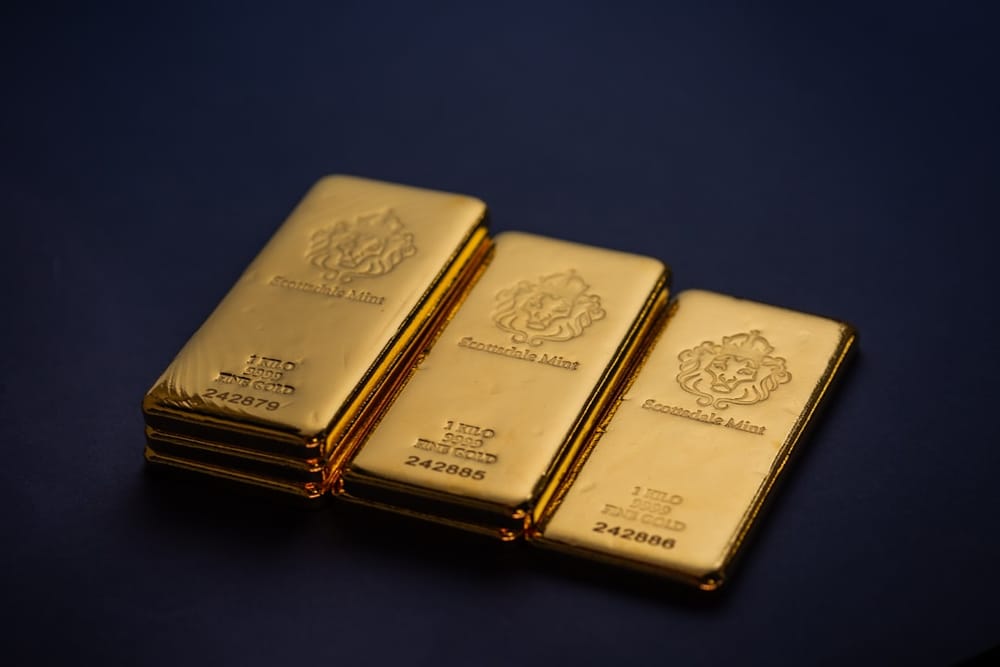
Sudan is one of Africa's largest gold producers. Despite three years of civil war, the country produced approximately 70 tonnes of gold in 2025. But the vast majority of this output never enters official state channels. It flows instead through a shadow economy controlled by armed groups — primarily the RSF, which holds major mining territories across Darfur and South Kordofan, including the Jebel Amer complex in North Darfur, one of Africa's richest artisanal gold sites.
A landmark investigation published by Chatham House in March 2025 documented the pipeline in granular detail: gold extracted from RSF-controlled mines is flown — often on charter flights — to the United Arab Emirates, where refineries process it alongside legitimately sourced bullion. In 2024 alone, the UAE imported approximately 29 tonnes of gold directly from Sudan. Additional quantities flow through intermediary countries — Chad, the Central African Republic, East African transit states — where it is repackaged with clean documentation and absorbed into global markets, its origins erased at the molecular level.
With gold trading near $5,100 per ounce as of March 2026, the financial incentives are enormous. Billions of dollars flow out of Sudan's conflict zones annually, enriching armed groups and their international enablers while the civilian population is systematically starved, displaced, and destroyed.
But gold is the visible extraction — the commodity the world can track, quantify, and document. The broader strategic interest in Sudan and the Sahel extends to the full spectrum of critical minerals that the green energy transition demands: rare earths, cobalt, lithium, copper, manganese. Armed groups across the continent have positioned themselves as gatekeepers of this wealth. In Sudan, the RSF controls gold. Across the Sahel — Mali, Burkina Faso, Niger — Russia's Africa Corps, the successor to the Wagner Group, operates a security-for-concessions model: military support for governments in exchange for mining rights. Since 2022, investigations have linked over $2.5 billion in African gold exports to Russian-affiliated networks.
The war has a business model. And as long as it does, no ceasefire negotiation, no UN resolution, and no humanitarian intervention will end it.
The Green Energy Paradox
This is the central irony of our era: the critical minerals required to power the world's clean energy future — cobalt for batteries, lithium for energy storage, rare earths for wind turbines and electric motors, gold for semiconductor fabrication — are sourced from regions where extraction and conflict are inseparable.
Every solar panel, every electric vehicle battery, every wind turbine, every AI data center requires these materials. Global demand is accelerating faster than supply chains can adapt. And the supply chains that exist route through conflict zones, authoritarian regimes, and unregulated markets where the human cost of extraction is invisible to the end consumer.
The solar panel on a roof in California and the EV in a German driveway are downstream products of a supply chain that, at its origin point, may involve a conscripted miner in Darfur using mercury to amalgamate gold with his bare hands. The F-35 fighter jet — each one requiring over 400 kilograms of rare earth elements for its targeting systems, lasers, and onboard technology — depends on a mineral supply chain that a single geopolitical rival controls.
The clean energy transition is not optional. The world must make it. But the question of whether it will be built on the same extractive logic that created the climate crisis — different minerals, different geographies, identical human cost — is not rhetorical. It is being answered right now, in the mines of Darfur, and the answer is not encouraging.
Minerals are the profit.
A Generation Disappearing
The consequences of this system fall most heavily on children.
Nineteen million of them — roughly the entire school-age population of Germany — have no access to formal education. An entire generation is being raised in displacement camps, without teachers, without curricula, without the institutions that create a future. Some are absorbed into armed groups as child soldiers. Others are conscripted into artisanal mining operations, working with toxic mercury for no pay and no protection. Girls and young women face systematic sexual violence — documented by the United Nations as one of the most severe sexual violence crises in the world — and families stripped of resources resort to forced early marriage as a survival mechanism.
The world has seen what happens when a country loses a generation. Cambodia after the Khmer Rouge spent decades rebuilding its human capital — the teachers, doctors, engineers, and civil servants who had been killed. Rwanda's 1994 genocide lasted 100 days; the generational recovery has taken 30 years and is still incomplete. Sudan's crisis has now entered its third year with no ceasefire in sight. If it continues on its current trajectory, the reconstruction challenge will dwarf both precedents — not because the violence is more severe, but because the scale of displacement is larger, the institutional infrastructure is weaker, and international attention is more fractured.
45+ years rebuilding.
30+ years rebuilding.
Still incomplete.
19M children affected.
Will dwarf both.
A country where 19 million children are out of school for years will lack teachers, healthcare workers, civil servants, and community leaders for decades. The economic cost is measured in hundreds of billions in lost human capital. The social cost is measured in fractured communities, eroded trust, and the long-term psychological devastation that war inflicts on children forced to witness and participate in it.
This is not a temporary disruption. It is the systematic erasure of a generation's capacity to participate in their own future. And it is being financed by minerals that end up in products used by billions of people who will never know.
Why This Series
This article is the first in a six-part investigative series examining the intersection of Sudan's humanitarian catastrophe, global mineral supply chains, and the international architecture that sustains them.
The series will trace the gold pipeline from the mines of Darfur to the refineries of Dubai and into the global economy. It will examine the systemic structures — governmental, corporate, and institutional — that enable conflict minerals to flow with impunity. It will document the generational cost being paid by Sudan's children. It will look at Liberia, where a country that once funded civil war with blood diamonds has built an imperfect but real alternative. And it will propose a framework for structural change — not aspirational reform, but a concrete architecture for transforming mineral extraction from a driver of conflict into a catalyst for community development.
The information exists. The supply chains are documented. The actors are identified. The mechanisms are understood. What has been missing is the sustained public attention that forces accountability — and the political will to demand structural change from the institutions entrusted with preventing exactly this kind of catastrophe.
This series is an attempt to provide it. Not as an academic exercise, but as a call to action directed at the governments, corporations, financial institutions, and international bodies whose choices sustain this system — and who have the power, right now, to change it.
Part 2: "The Gold Pipeline: How Sudan's Wealth Flows Through Dubai" → Will be out on April 7th, 2026
This is Part 1 of "Blood Minerals of the Green Age," a six-part investigative series examining the intersection of Sudan's humanitarian catastrophe, global mineral supply chains, and the systems that sustain them.