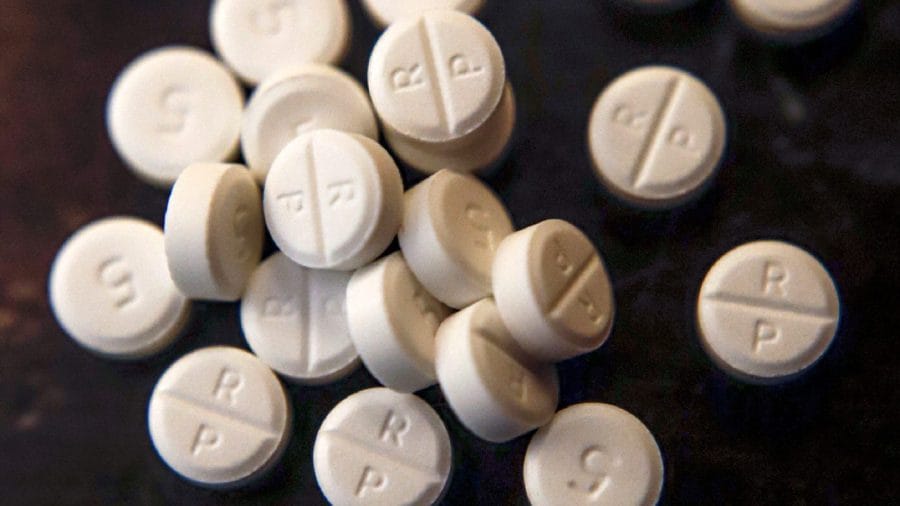
The official version says drug prohibition protects public health by restricting access to dangerous substances. The Drug Enforcement Administration schedules compounds, Congress passes laws targeting specific chemical structures, and border agents scan for known substances. This enforcement apparatus, we are told, keeps Americans safe from the deadliest drugs.
Cychlorphine just proved that story false. This synthetic opioid, recently detected in the illicit drug supply according to The Hill, exists precisely because of drug prohibition — not despite it. Its novel chemical structure evades existing restrictions on fentanyl and its analogs, making it harder to track, harder to restrict, and potentially more dangerous for users who have no idea what they're consuming.
The drug war has always operated on a fundamental misconception: that restricting supply reduces harm. But fifty years of evidence shows the opposite pattern. When authorities crack down on one substance, underground chemists innovate. When they ban specific chemical structures, manufacturers tweak molecules. Each enforcement wave doesn't reduce drug availability — it accelerates chemical innovation in the most dangerous possible environment: unregulated black markets where users become unwitting test subjects.
Cychlorphine represents the latest iteration of this deadly cycle. Unlike fentanyl, which at least has established medical uses and known dosing parameters, cychlorphine emerges from the shadows with no safety data, no quality control, and no way for users or even emergency responders to know what they're dealing with. The same pattern of policy-driven public health disasters repeats: prohibition doesn't stop drug use, it just makes drug use exponentially more dangerous.
The chemistry tells the real story. Fentanyl became dominant in the drug supply not because users preferred it, but because its potency made it easier to smuggle past interdiction efforts. A kilogram of fentanyl provides the same number of doses as fifty kilograms of heroin. When enforcement made moving bulk drugs riskier, the market adapted by concentrating potency. Now, with fentanyl analogs themselves under scrutiny, chemists have moved to entirely new structures like cychlorphine — compounds that technically don't violate existing laws because legislators haven't yet learned they exist.
This represents a total failure of prohibition as public health policy. Every restriction creates incentives for more dangerous innovation. The iron law of prohibition, first observed during alcohol prohibition when bootleggers moved from beer to concentrated spirits, operates with mathematical certainty: enforcement pressure always pushes markets toward more potent, more dangerous substances.
The human cost accumulates in emergency rooms and morgues. When someone overdoses on cychlorphine, naloxone may not work — or may require doses that deplete entire community supplies. Fentanyl test strips, distributed by harm reduction programs to help users avoid contaminated drugs, won't detect it. The entire infrastructure of overdose prevention, built in response to the last crisis, becomes obsolete overnight. This isn't an unintended consequence — it's the predictable result of forcing drug production into clandestine laboratories with no safety standards.
Federal agencies know this pattern. DEA chemists track new psychoactive substances emerging at a rate of one per week globally. They understand that scheduling one compound simply incentivizes the creation of ten more. Yet policy continues to chase chemistry in an endless game where each move makes the board more dangerous. The appearance of cychlorphine isn't a surprise to anyone who understands prohibition's incentive structure — it's exactly what the model predicts.
What makes cychlorphine particularly insidious is how it exposes the drug war's core lie about protecting communities. Working-class neighborhoods, communities of color, and rural areas struggling with economic devastation bear the brunt of both aggressive enforcement and deadly drug supplies. The same communities targeted by mass incarceration and deportation now face waves of synthetic opioids that exist only because of prohibition. It's a two-front war on the vulnerable: criminalization destroys families through imprisonment while prohibition-driven innovation destroys them through overdose.
The alternative path remains visible but politically untouchable. Regulated supply of pharmaceutical-grade opioids, combined with treatment on demand and social support, could eliminate the market for compounds like cychlorphine overnight. Users with access to consistent, known-potency substances don't seek out experimental synthetics. Countries that provide heroin-assisted treatment report virtual elimination of overdose deaths among participants. The evidence is clear, published in peer-reviewed journals, and completely ignored by American policymakers committed to prohibition regardless of outcomes.
Cychlorphine won't be the last synthetic opioid to emerge from prohibition's pressure. As long as policy treats drug use as a crime rather than a health condition, as long as interdiction takes precedence over treatment, as long as we pretend that making drugs illegal makes them disappear, underground chemists will continue innovating. Each new compound will be designed to evade the last round of restrictions, each iteration potentially more dangerous than the last.
The drug war created cychlorphine as surely as distilleries create whiskey. It's not a bug in the system — it's the system working exactly as its incentives dictate. Every seizure, every arrest, every new scheduling decision pushes the market toward more concentrated, more novel, more dangerous substances. Until policymakers acknowledge this basic reality, until they recognize that federal officials tasked with protection often undermine the very systems they oversee, communities will continue counting bodies while politicians claim they're winning a war that generates its own enemies.
The question isn't whether more synthetic opioids will emerge — they will, with mathematical certainty. The question is how many more people will die before America admits that prohibition doesn't stop drugs, it just makes them deadlier. Cychlorphine is just the latest proof of a pattern we've been documenting for decades. The evidence fills morgues while policy pretends not to see it.