Georgia's 14th Congressional District hasn't elected a Democrat since redistricting created it in 2012. The district gave Donald Trump 75% of its vote in 2020. Marjorie Taylor Greene won reelection here by 30 points before resigning to join Trump's cabinet. By every conventional measure, this is one of the most Republican districts in America.
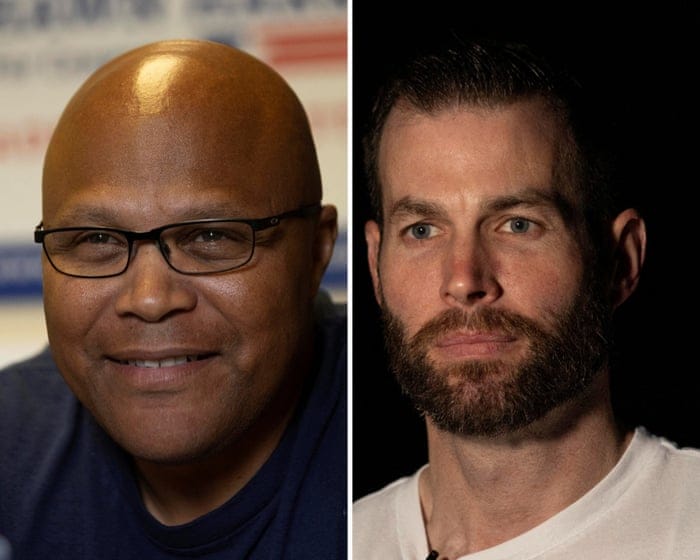
So when Democrat Shawn Harris pulled 37% of the vote in Tuesday's special election primary — the highest share of any candidate in a crowded field — and forced a runoff against Trump-endorsed prosecutor Clay Fuller, the result wasn't just surprising. It was a data point that suggests the political ground is shifting under the Republican Party's feet.
Harris won't necessarily win the April runoff. Fuller consolidated the Republican vote and will have the full weight of the GOP establishment and Trump's endorsement behind him. But the fact that a Democrat is competitive in Marjorie Taylor Greene's former seat — a district that includes the deep-red northwest Georgia counties of Whitfield, Murray, and Fannin — means something has changed. And according to interviews with voters and campaign observers, two issues are driving that change: the administration's chaotic Iran policy and its immigration crackdown.
The Iran factor is the more surprising of the two. Trump's decision to launch airstrikes against Iranian military infrastructure in February — followed by Iran's retaliatory strikes on U.S. bases in Iraq that injured 47 American service members — has created a political vulnerability that didn't exist six months ago. Voters in northwest Georgia, a region with deep military ties and a strong evangelical Christian population, are not reflexively anti-war. But they are reflexively skeptical of foreign entanglements that feel open-ended and poorly explained.
Harris, a former public school teacher and county commissioner, has centered his campaign on what he calls "reckless foreign policy" and the risk of a broader Middle East conflict. That message is landing in places Democrats usually write off. The administration's Iran policy has already cost it support among military families and defense hawks who worry the strikes were impulsive rather than strategic. In a district where military service is common and Gold Star families are visible, that skepticism has real political weight.
The immigration issue is more complex. Georgia's 14th District is overwhelmingly white and conservative, and Trump's hardline immigration enforcement was popular here in 2016 and 2020. But the administration's mass deportation push has created unintended economic consequences in a region that relies heavily on immigrant labor in poultry processing, carpet manufacturing, and agriculture. Dalton, the district's largest city, is the self-proclaimed "Carpet Capital of the World" — and the carpet industry depends on a workforce that is heavily immigrant.
When ICE raids in February swept up more than 200 workers across Whitfield County, the immediate impact was visible. Production lines slowed. Shifts went unfilled. Business owners who publicly supported Trump found themselves scrambling to replace workers they had relied on for years. Harris has framed the issue not as a defense of undocumented immigration but as a critique of enforcement without planning — a message that allows him to peel off business-aligned Republicans without alienating conservative voters who still want border security.
That framing is smart politics in a district where outright opposition to Trump's immigration agenda would be a nonstarter. But it also reflects a broader reality: the economic disruption from mass deportations is being felt most acutely in Republican-leaning rural and exurban areas, not in the urban centers where Democrats already dominate. If that pattern holds, it creates an opening for Democrats to compete in places they haven't been competitive in a decade.
The structural factors matter too. This is a special election with low turnout and a crowded field — Harris won 37% in a race with six Republicans splitting the vote. Runoffs historically favor the candidate with stronger turnout infrastructure, and Republicans have that advantage in Georgia's 14th. Fuller will consolidate the GOP vote, and Trump's endorsement will drive conservative turnout in ways that Harris will struggle to match.
But even if Harris loses the runoff, the fact that he forced one is significant. Special elections are often dismissed as anomalies, but they're also early-warning systems. Scott Brown's 2010 win in Massachusetts signaled the Tea Party wave that followed. Conor Lamb's 2018 win in Pennsylvania's 18th District previewed the Democratic takeover of the House. If a Democrat can pull 37% in Marjorie Taylor Greene's old district in March 2026, what does that mean for competitive districts in November?
The answer depends on whether the issues driving Harris's performance — Iran and immigration — remain salient through the midterms. The administration's foreign policy is unpredictable enough that another Middle East crisis is entirely possible. And the economic fallout from mass deportations will continue to compound as labor shortages ripple through supply chains. Both issues create vulnerability for Republicans in districts where Trump's margins were once unassailable.
Democrats should not mistake this for a mandate or a realignment. Georgia's 14th District is still deep red, and one strong showing in a special election does not erase the structural advantages Republicans have built through redistricting and voter suppression. But it does suggest that the Trump administration's policy failures are creating openings that didn't exist a year ago — and that Democrats who are willing to meet voters on their terms, rather than lecturing them about Trump's character, can compete in places the party has written off.
The runoff is April 15. If Harris wins, it will be the political upset of the year and a signal that the midterms are going to look very different than Republicans expect. If he loses but keeps the margin close, it will still be evidence that the ground is shifting. Either way, the fact that Marjorie Taylor Greene's old seat is even in play tells you everything you need to know about where the Republican Party stands six months before the midterms.