The Department of Homeland Security paid $47 million in commissions to political consulting firms with Trump administration ties for immigration enforcement advertising campaigns, according to internal documents obtained by Politico. The same week these payments were approved, DHS cut $52 million from humanitarian assistance programs at the southern border.
The commission structure reveals how the administration has transformed immigration enforcement messaging into a profit center for political allies. Firms that worked on Trump's 2024 campaign received contracts worth up to 15 percent commission on ad buys — triple the industry standard rate of 5 percent for government contracts. One Virginia-based firm with a single employee collected $8.3 million in commissions over six months.
These advertising campaigns promoted aggressive enforcement policies while border communities faced federal funding cuts. El Paso lost $12 million in federal support for migrant processing facilities. Brownsville saw its humanitarian aid budget slashed by 70 percent. Meanwhile, DHS spent $312 million on advertisements that immigration advocates describe as propaganda designed to terrorize immigrant communities.
The contracts went to firms with minimal advertising experience but deep political connections. Redstone Strategies, founded by a former Trump campaign digital director, received $127 million in DHS advertising contracts despite having no prior government work. The firm's commission structure guaranteed profits regardless of ad effectiveness — a arrangement that mirrors controversial Pentagon media contracts awarded to administration allies.
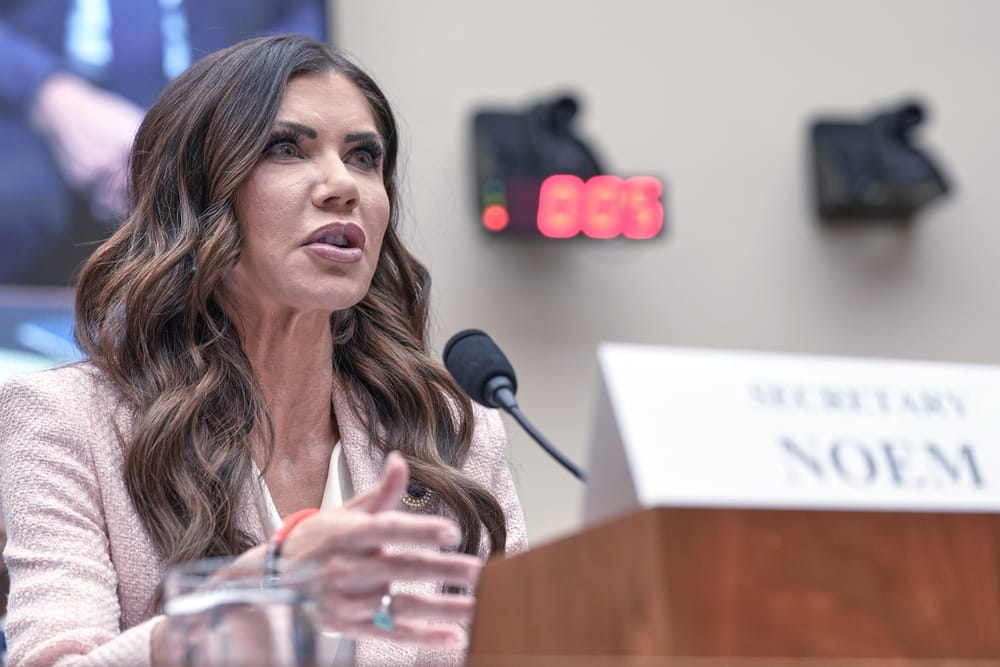
Internal White House emails show the advertising deals became a source of conflict between DHS Secretary Kristi Noem and budget officials. "These commission rates are indefensible," wrote one Office of Management and Budget analyst in a February memo. "We're paying political operatives three times market rate to run ads that serve no measurable enforcement purpose."
The advertising campaigns themselves focused on deterrence messaging aimed at potential migrants in Central America and enforcement messaging targeting sanctuary cities. But DHS's own analysis found no correlation between ad spending and migration patterns. Border crossings increased 12 percent during the heaviest advertising periods.
What the ads did accomplish was enriching political consultants. Commission payments flowed to firms that employed former Trump campaign staff, transition team members, and relatives of senior administration officials. One firm registered its LLC just two weeks before receiving its first DHS contract worth $43 million.
The pattern extends beyond simple cronyism. By routing enforcement messaging through political operatives rather than traditional government communications channels, DHS created a parallel propaganda infrastructure funded by taxpayers but controlled by partisan actors. This structure bypasses federal advertising standards and competitive bidding requirements.
Congressional investigators have begun examining the contracts. "We're talking about hundreds of millions in taxpayer dollars flowing to political operatives for ads that don't work," said a House Oversight Committee staffer who requested anonymity to discuss the ongoing investigation. "Meanwhile, actual border security programs are being defunded."
The commission structure particularly troubles government contracting experts. Federal regulations typically cap advertising commissions at 5 percent for cost-plus contracts. But DHS structured these deals as indefinite delivery contracts, exploiting a loophole that allows higher rates. The result: political firms collected three times the profit margin of defense contractors building actual border infrastructure.
This profiteering occurs against a backdrop of genuine humanitarian crisis at the border. As asylum seekers die in custody and border communities struggle without federal support, the administration prioritizes propaganda payments to political allies. The $47 million in commissions alone could have funded emergency shelter for 94,000 migrants or processing facilities in eight border cities.
The DHS advertising scandal reflects a broader pattern of the administration converting government functions into profit streams for loyalists. From no-bid technology contracts to sole-source defense deals, taxpayer funds increasingly flow to politically connected firms offering minimal value. What distinguishes the DHS case is the brazenness — paying campaign operatives triple commissions to run ineffective ads while cutting actual border services.
Secretary Noem defended the contracts in a statement to Politico, claiming the advertising campaigns "sent a strong message about enforcement." But sending messages and enforcing laws are different things. One generates commissions for political allies. The other requires the humanitarian programs and processing infrastructure that DHS just defunded to pay for those commissions.