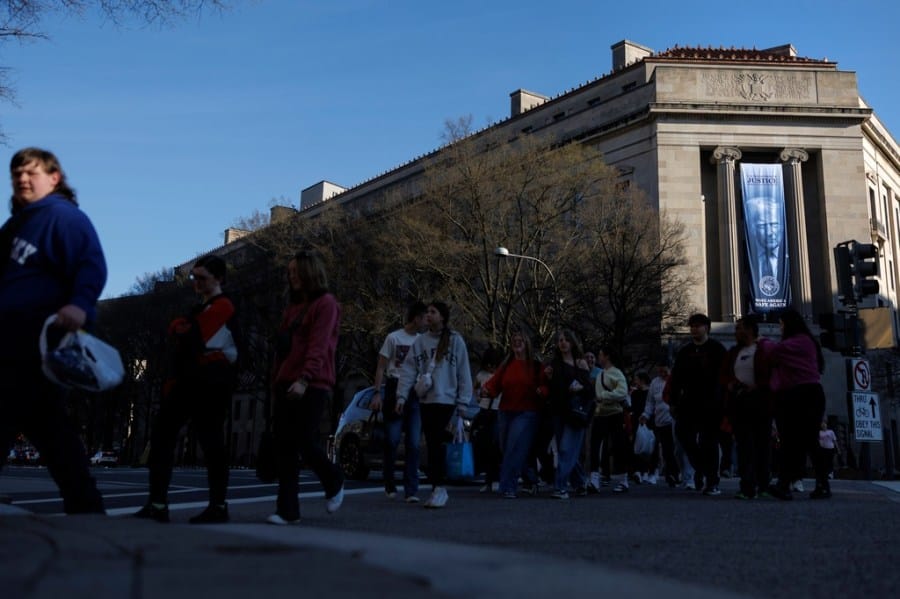
The Department of Justice has proposed a rule that would allow federal prosecutors to violate state ethics codes without facing professional consequences — effectively placing government lawyers above the disciplinary systems that govern every other attorney in America. The proposal, quietly advanced by the Trump administration, would grant the DOJ unprecedented power to suspend or override state bar oversight whenever it conflicts with the department's interpretation of federal interests.
This isn't merely an administrative adjustment. It's an attempt to create a class of lawyers who operate outside the ethical constraints that define the legal profession. The Hill reports that the rule would fundamentally alter the balance between federal power and state regulatory authority, violating core principles of federalism that have governed attorney conduct since the founding of the American bar.
The timing shows the calculation. As the Trump administration pursues aggressive prosecutions of political opponents and implements controversial immigration enforcement actions, it seeks to insulate its lawyers from the professional consequences of potential misconduct. State bar associations — which license attorneys and enforce ethical standards — represent the only independent oversight mechanism for prosecutorial behavior. Remove that oversight, and federal prosecutors become accountable only to their political appointers.
Consider what this means in practice. A federal prosecutor who lies to a court, withholds exculpatory evidence, or engages in selective prosecution based on political considerations would face no professional sanctions if the DOJ deemed those actions necessary for "federal interests." The same conduct that would result in disbarment for a private attorney would be protected when committed by a government lawyer.
The proposed rule exploits a longstanding tension in legal ethics. Federal prosecutors already operate under different rules than state attorneys — they can forum-shop across jurisdictions, deploy vast investigative resources, and invoke national security to shield their actions from scrutiny. But they've always remained subject to the same baseline ethical standards enforced by state bars. That's not a bug in the system; it's a feature designed to prevent the kind of unchecked power the Trump administration now seeks.
This move connects directly to the administration's broader assault on accountability mechanisms. The same DOJ that claims it needs exemption from state ethics rules has abandoned police accountability cases and pursued politically motivated prosecutions. The pattern is clear: concentrate power, eliminate oversight, and remove any external checks on government authority.
State bar associations aren't partisan institutions. They're professional regulatory bodies that enforce standards of conduct regardless of political affiliation. When they discipline prosecutors, it's typically for clear violations: hiding evidence, making false statements to courts, or engaging in conflicts of interest. These aren't political judgments — they're professional standards that protect the integrity of the justice system.
The federalism implications extend beyond legal ethics. If the DOJ can unilaterally exempt itself from state professional regulations, what prevents other federal agencies from claiming similar immunity? Could FBI agents ignore state licensing requirements? Could federal contractors bypass state safety regulations? The precedent would alter the relationship between federal and state authority.
Legal scholars who study prosecutorial misconduct understand what's at stake. The disciplinary process, while imperfect, provides the only meaningful accountability for prosecutors who abuse their power. Criminal defendants rarely have the resources to pursue civil lawsuits. Judicial sanctions are rare and often toothless. Professional discipline — the threat of losing one's law license — remains the most effective deterrent against prosecutorial overreach.
The administration frames this as streamlining federal operations and preventing "politically motivated" state actions against federal prosecutors. But there's no evidence of widespread political targeting of DOJ lawyers by state bars. What does exist is a documented pattern of prosecutorial misconduct that goes unpunished within the department's internal disciplinary system. The DOJ's Office of Professional Responsibility, tasked with investigating attorney misconduct, rarely imposes meaningful sanctions and operates with minimal transparency.
This proposal arrives as federal pressure on educational institutions and aggressive enforcement actions require prosecutors to push legal boundaries. Creating an ethics-free zone for government lawyers ensures they can pursue these cases without fear of professional consequences, no matter how far they stretch the law or violate procedural norms.
The mechanics of implementation matter. The rule wouldn't require congressional approval — it could be imposed through administrative action. State bars would find themselves in an impossible position: accept federal supremacy over their licensing authority or risk having their disciplinary actions declared void. Either outcome undermines the state-based system of professional regulation that has governed American law for centuries.
Opposition will likely emerge from unexpected quarters. Conservative legal organizations that champion federalism should recognize this as a direct assault on state sovereignty. Progressive groups concerned with prosecutorial accountability will see it as removing the last check on government overreach. State attorneys general — regardless of party — have an interest in preserving their states' authority to regulate professionals within their borders.
The international perspective adds another dimension. Most democratic nations maintain strict ethical oversight of government lawyers precisely because prosecutorial power poses unique dangers to civil liberties. Creating a class of prosecutors exempt from professional discipline moves the United States closer to the authoritarian systems where government lawyers operate as political instruments rather than officers of the court.
What makes this insidious is how it would normalize misconduct through regulatory capture. Once federal prosecutors know they're immune from state discipline, the professional norms that currently constrain behavior will erode. Younger attorneys will learn that ethical rules apply only to private practice, not government service. The culture of impunity will spread beyond individual cases to infect the entire federal legal apparatus.
The proposal's language matters less than its effect: creating a privileged class of lawyers who can violate professional norms without consequence. In a system already tilted toward prosecutorial power — where conviction rates exceed 95% and plea bargains dominate — removing the last independent check on prosecutor conduct abandons any pretense of balanced justice.
This isn't about protecting federal interests or preventing political interference. It's about power consolidation and eliminating accountability. A Justice Department that can shield its lawyers from ethical oversight while pursuing politically motivated prosecutions isn't seeking efficiency — it's building the infrastructure of authoritarian law enforcement. The only question is whether the legal profession and state governments will resist before this parallel system of unaccountable prosecution becomes permanent.