El Salvador's state of emergency — now in its fourth year — has detained 88,000 people without charges or trials, creating what families describe as a generation of children growing up without parents. Al Jazeera English documented the stories of families torn apart by mass arrests that President Nayib Bukele has defended as necessary to reduce gang violence, even as human rights organizations warn the policy has eliminated due process protections for nearly 2% of the country's adult population.
The emergency decree, first imposed in March 2022 following a spike in gang-related killings, suspended constitutional rights including the right to legal representation, the right to be informed of charges, and protections against arbitrary detention. What was initially presented as a temporary measure has been extended 32 consecutive times by El Salvador's legislature, with no end date announced. According to Al Jazeera's reporting, thousands of those detained have been held for years without formal charges, while their children navigate childhood without them.
Families interviewed by Al Jazeera described children who have stopped speaking, developed anxiety disorders, and dropped out of school after parents were arrested in dawn raids that offered no explanation and no paperwork. One mother recounted how her 8-year-old son watched police take his father and has since refused to sleep alone, convinced armed officers will return. Another family described a 12-year-old girl who now works selling fruit on the street to support her younger siblings after both parents were detained — her father for having a tattoo authorities claimed was gang-related, her mother for living in a neighborhood designated as gang territory.
The policy has been internationally lauded by conservative leaders as a model for crime reduction. Bukele's government reports that homicides have dropped dramatically since the emergency decree took effect, and the president's approval ratings remain high domestically. But Al Jazeera's investigation found that mass detention has relied on criteria as vague as living in certain neighborhoods, having tattoos, or being named by anonymous informants — with no opportunity for the accused to challenge evidence or even learn what they are accused of.
Human rights organizations have documented at least 308 deaths in custody since the emergency decree began, with families reporting that detained relatives showed signs of torture or severe malnutrition when they were allowed brief visits. The government has denied systematic abuse and attributed deaths to pre-existing health conditions or gang violence inside prisons. But lawyers and family members told Al Jazeera that authorities have refused to release medical records or conduct independent autopsies, making it impossible to verify official explanations — a pattern also seen in immigration custody deaths where families are similarly denied answers.
The emergency decree has also reshaped El Salvador's judicial system in ways that may outlast the policy itself. Judges who questioned the legality of mass detentions have been removed from their positions, while new legislation passed under the emergency framework allows trials to proceed with as many as 900 defendants at once — a process human rights lawyers describe as eliminating any meaningful opportunity for individual defense. Defense attorneys who spoke to Al Jazeera said they are often denied access to clients for months and are given as little as 24 hours to prepare for mass trials involving hundreds of people.
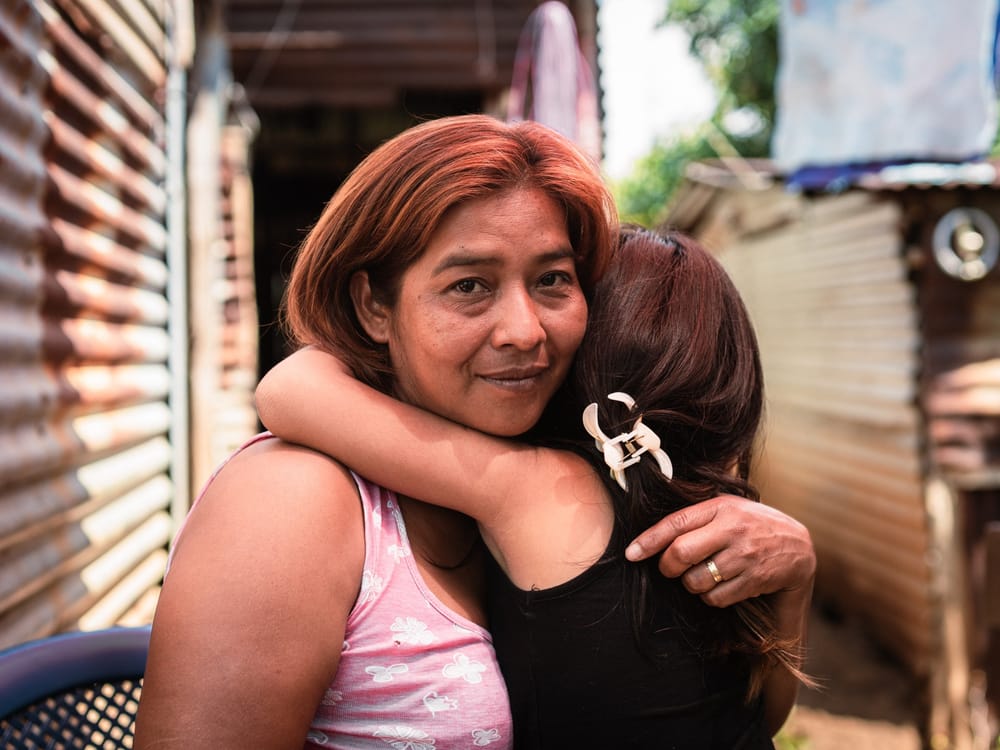
![Sara de Perez, 54, one of the mothers of those imprisoned under the state of emergency, pictured in the courtyard of El Rosario's church, El Salvador [Euan Wallace/ Al Jazeera]](https://www.tinselnews.com/content/images/2026/03/el-salvador-state-of-emergency-children-without-parents-mass-arrests-body-2.jpg)
What distinguishes El Salvador's approach from previous authoritarian crackdowns in the region is the extent to which it has been normalized through social media and international praise. Bukele has cultivated a global following by framing the policy as a necessary response to gang violence that previous governments were too weak to address. That narrative has been amplified by right-wing media outlets in the United States and Europe, where the emergency decree is frequently cited as proof that suspending civil liberties can reduce crime. The children left behind by mass arrests rarely appear in that coverage.
Families told Al Jazeera they are afraid to speak publicly about detained relatives, fearing retaliation or being accused of gang affiliation themselves. Several said they have been warned by neighbors to stop asking questions about their family members' whereabouts. Others described being turned away from prisons without explanation after traveling hours to attempt visits, only to be told their relative had been transferred to an undisclosed location. The result is a population of children who do not know where their parents are, whether they are alive, or when — if ever — they will return home — a crisis that echoes reports of parents deported without their children under U.S. immigration enforcement.
![Sara de Perez's granddaughter, 16, holding the Saint Benedict medallion which her grandmother gifted to her; her father used to wear a similar one. [Euan Wallace/ Al Jazeera]](https://www.tinselnews.com/content/images/2026/03/el-salvador-state-of-emergency-children-without-parents-mass-arrests-body-0.jpg)
As the emergency decree enters its fifth year with no indication it will be lifted, the question is not whether El Salvador has reduced gang violence, but what kind of society emerges when an entire generation grows up under a system that has normalized indefinite detention without charges. The children Al Jazeera profiled are not abstractions in a policy debate — they are the human cost of a security model that other governments are now studying as a potential template. What happens to them will determine whether this approach is remembered as a public safety success or a humanitarian disaster that traded one form of violence for another.