The specific human moment that captures Florida's latest educational purge came not in a boardroom but in classrooms across the state, where sociology professors learned their discipline — the systematic study of how societies function and fail — had been deemed too dangerous for graduation requirements. On Thursday, The Guardian US reported that Florida's Board of Governors voted to remove Introduction to Sociology as a core graduation component at all state universities, relegating a foundational academic discipline to elective status.
The decision affects approximately 430,000 students enrolled in Florida's 12 public universities. For generations, sociology has provided students with analytical tools to examine social inequality, institutional racism, gender dynamics, and the distribution of power in society. That's precisely why it had to go.
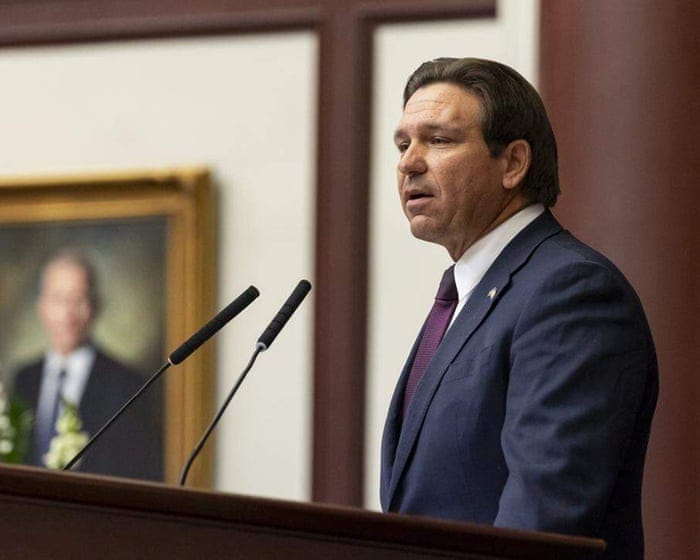
This has nothing to do with academic standards or curriculum reform. Florida's systematic dismantling of sociology represents something more calculated: the removal of any academic discipline that teaches students to analyze power structures, question institutional authority, or understand how social hierarchies perpetuate themselves. When Governor Ron DeSantis rails against "woke indoctrination," he means courses that give students the vocabulary and framework to critique the very systems his administration represents.
The pattern is unmistakable. Florida has already banned critical race theory in K-12 schools, restricted how teachers can discuss gender identity, eliminated diversity programs at universities, and demanded censored textbooks that remove references to structural inequality. Each restriction targets disciplines and concepts that help students understand how power operates in society.
Consider what sociology actually teaches. The discipline examines how social institutions shape individual outcomes — why ZIP codes predict life expectancy, how racial segregation persists through housing policy, why wealth concentrates across generations. It provides evidence-based analysis of social movements, from civil rights to labor organizing. It documents how political power translates into economic advantage. These are not opinions or ideologies; they are observable patterns backed by decades of peer-reviewed research.
The Board of Governors, hand-picked by DeSantis, made no pretense about academic justification. They simply declared sociology incompatible with their vision of higher education. The state that ranks 44th in teacher pay and 48th in per-student funding now dictates which academic disciplines deserve study. The same officials who claim to champion free speech and oppose cancel culture have literally canceled an entire field of academic inquiry.
This assault on sociology connects to a broader authoritarian playbook visible globally. In Hungary, Viktor Orbán's government forced Central European University to flee the country after attacking its sociology and gender studies programs. In Brazil, Jair Bolsonaro threatened to defund sociology and philosophy departments. In Turkey, Recep Tayyip Erdoğan purged sociologists from universities after the 2016 coup attempt. The pattern is consistent: authoritarian movements always target the academic disciplines that teach critical analysis of power.
The economic implications extend beyond academic freedom. Florida's universities compete for research funding, prestigious faculty, and talented students. Top sociology programs generate millions in research grants studying public health, criminal justice reform, urban planning, and social policy. By degrading sociology to elective status, Florida signals to scholars and research institutions that rigorous social science is unwelcome. The brain drain has already begun — prominent sociologists are leaving Florida's universities for institutions that value their work.
Students pay the steepest price. A business major who never takes sociology graduates without understanding how corporate hierarchies perpetuate inequality. An engineering student misses learning how infrastructure decisions shape community outcomes. Pre-med students lose exposure to social determinants of health. The state has decided these students should enter the workforce without tools to analyze the social systems they'll encounter and potentially perpetuate.
The timing exposes additional cynicism. This decision arrives as Florida faces cascading social crises that sociology directly addresses: soaring housing costs, climate-driven displacement, immigration policy impacts, and persistent racial wealth gaps. The state eliminates the discipline best equipped to study these problems precisely when its insights are most needed.
Faculty resistance is already organizing. Sociology professors report plans to integrate core sociological concepts into other courses, create interdisciplinary programs that preserve the discipline's insights, and develop free public lectures to ensure students can still access this knowledge. Some discuss coordinating with sociology departments at private Florida universities to offer transfer credits. The discipline that studies social movements now becomes one.
This is how academic freedom dies — not in dramatic raids but through bureaucratic votes that sound technical and boring. A board meeting that few attended. A curriculum change buried in administrative language. The word "sociology" removed from graduation requirements as if it were a typo being corrected. The banality masks the radicalism: an entire field of human knowledge deemed too dangerous for young minds.
Other states are watching. If Florida succeeds in marginalizing sociology without consequence, the template is established. Target the disciplines that study power. Eliminate the courses that examine inequality. Remove the requirements that teach critical thinking about social systems. Frame it all as opposing "indoctrination" while systematically indoctrinating students into accepting existing power structures as natural and unchangeable.
The students entering Florida's universities next fall will find their educational options artificially constrained. They can still major in sociology — for now — but most will never encounter its insights. They'll graduate without learning how social movements create change, how institutions perpetuate inequality, or how power operates through seemingly neutral policies. That's not an oversight. That's the goal.
What Florida's Board of Governors fears most is education itself. Specifically, the kind of education that enables citizens to analyze, question, and potentially transform the societies they inhabit. By removing sociology from core requirements, Florida doesn't protect students from ideology. It protects existing power structures from scrutiny. The state that claims to champion freedom has declared intellectual freedom too dangerous for its universities. The course that teaches students to question authority has been eliminated by authorities who cannot withstand questioning.