How Sudan's Wealth Flows Through Dubai and Into the Global Economy — And Why the World's Markets Don't Ask Questions
This is Part 2 of a six-part investigative series — beginning with Part 1: Blood Minerals of the Green Age, "Blood Minerals of the Green Age," examining the intersection of Sudan's humanitarian catastrophe, global mineral supply chains, and the systems that sustain them.
In the artisanal mining zones of North Darfur, the extraction process has changed little in centuries, except for one detail: the men and women who perform it no longer own the gold they dig from the earth. The Rapid Support Forces, the paramilitary organization that has controlled Sudan's most productive mining territories since 2023, determine who works, for how long, and at what price. The price is ruinous — significantly below the global market rate, a "conflict discount" that extracts value before the gold leaves the mining zone.
The work itself is simple and lethal. Miners use hand tools to excavate gold-bearing ore from shallow deposits. They then process the ore using mercury amalgamation — a medieval technology refined over centuries but no less toxic for its age. Mercury adheres to gold particles, forming a paste that can be squeezed and shaped. The miner's hands absorb the mercury directly through open cuts and abrasions — inevitable in this work. Their lungs absorb mercury vapor during heating, when the amalgam is warmed to separate the gold from the mercury. The mercury that doesn't enter their bodies drains into water sources that serve as drinking water, irrigation, and fishing grounds for communities downstream.
The health consequences are irreversible. Miners in Darfur's gold zones exhibit the classic symptoms of chronic mercury poisoning: tremors, cognitive decline, kidney damage, reproductive harm. Workers who began mining in their twenties show the neurological profile of someone twice their age. But there is no alternative income, no other market, no ability to refuse. The RSF controls the territory. Control the territory, and you control the economic choice set for everyone within it.
Once extracted and processed into rudimentary bars — often no more than 90 percent pure — the gold enters a commercial distribution network that operates with remarkable efficiency. Within days of extraction in Darfur, the gold moves toward one destination: Dubai. This is not a metaphor. It is the literal architecture of the conflict gold pipeline, and it is documented across dozens of investigations by Chatham House, the United Nations, and independent researchers.
In March 2025, the Royal Institute of International Affairs at Chatham House published a comprehensive investigation into the mechanisms of Sudan's gold trade. The findings, based on trade data, shipping records, and interviews with traders, refiners, and investigators, revealed that the United Arab Emirates imported approximately 29 tonnes of gold directly from Sudan in 2024 alone. Additional quantities — impossible to quantify precisely due to intermediary relabeling — arrived through secondary routes. The gold came from RSF-controlled mining zones. The destination was always Dubai.
The journey from mine to refinery involves multiple intermediaries and a carefully choreographed sequence of paperwork. A gold buyer — typically an RSF-affiliated merchant with access to working capital — purchases the gold from mining supervisors at predetermined prices. The buyer consolidates material from multiple mines, creating shipments of sufficient volume to justify transport costs. The gold is then loaded onto charter flights from Khartoum or directly from airfields in Darfur. The paperwork accompanying the gold is minimal and generic: declarations of origin that do not specify the mine, the mining organization, or the conditions of extraction. The flight lands in Dubai.
Dubai's position in the global gold trade is unparalleled. The emirate processes roughly 40 percent of the world's gold supply, according to industry estimates. This concentration occurs not by accident but by design. The UAE's Gold Centre, established in the 1990s, was built explicitly to position Dubai as a neutral ground for the global gold trade. Companies that might face scrutiny or regulatory pressure in Western markets can operate with minimal oversight in Dubai. The free trade zones — Special Economic Zones that sit partly outside UAE jurisdiction — provide an additional layer of regulatory distance. Refineries operating in these zones handle gold from every source: legitimately mined material from the United States, Canada, and Australia; artisanal gold from West African countries with functioning certification systems; and conflict gold from Sudan, Mali, and the Democratic Republic of Congo.
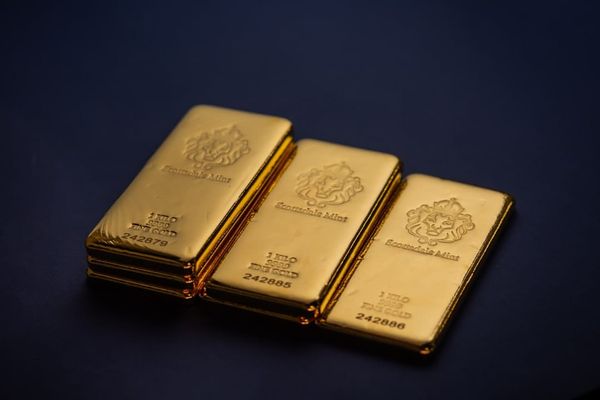
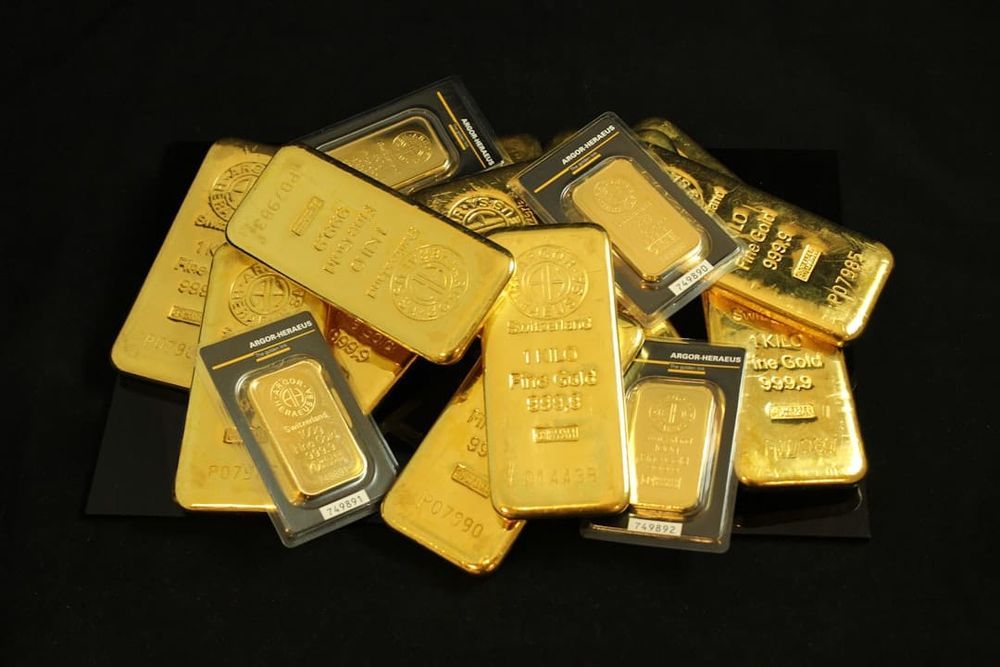
The refineries themselves are sophisticated operations, often ISO-certified and equipped to process raw gold into 99.99 percent pure bullion suitable for central bank reserves, electronic components, or jewelry manufacturing. The refining process is chemically complex — involving dissolution, precipitation, and electrorefining — but from a forensic perspective, it is perfectly opaque. Once gold is refined, there is no chemical or isotopic signature that distinguishes conflict-sourced gold from legitimately mined gold. The molecular structure is identical. A bar of refined gold from Darfur's RSF-controlled mines is physically, chemically, and legally indistinguishable from gold extracted from a major mining operation in Peru or Kazakhstan.
This indistinguishability is the foundation of the entire pipeline. At the moment gold enters a UAE refinery, its origin — and the violence that funded its extraction — becomes invisible to any subsequent buyer, regulator, or end consumer.
its origin — and the violence that funded its extraction —
becomes invisible to any subsequent buyer.
What makes the Dubai refining corridor function as a mechanism for conflict gold laundering is the absence of meaningful due diligence requirements at the point of import. The UAE does not require independent verification of gold origin before refining. Refinery operators rely on supplier documentation — the same paperwork that accompanied the gold on charter flights from Khartoum. The documentation typically consists of a certificate of origin (often provided by the supplier with minimal verification), an assay certificate (confirming gold purity), and a weight certificate. None of these documents are independently verified. None of them trace gold back to its specific mine of origin. The buyer and refiner accept the documentation at face value because the system is structured to discourage deeper inquiry.
When international organizations or media outlets have attempted to follow the supply chain backward — from refined gold in Dubai to its original source — they encounter a systematic architecture of opacity. The refinery provides assay certificates but claims commercial confidentiality regarding its suppliers. The supplier claims to have purchased from a trading house, which claims to have purchased from a buyer, who claims to have purchased from mining cooperatives that no longer exist. The chain of custody breaks down at exactly the point where accountability would require a connection to armed groups or conflict zones.
This is not accidental design. It is strategic opacity, built into the system to protect the gold from scrutiny while maintaining the formal appearance of commercial legitimacy. Every actor in the supply chain operates legally, with clean paperwork and transparent documents. No single actor bears visible responsibility for the supply chain's human or humanitarian consequences. The system is not a conspiracy; it is a structure.
Beyond Dubai's direct imports, a substantial volume of Sudanese gold reaches international markets through relabeling corridors — transit routes through third countries where gold is formally re-exported with falsified origin documentation. Chad is the primary relabeling corridor for Sudan's gold. Gold crosses Sudan's western border into Chad's capital, N'Djamena, where it is transferred to trading houses that provide Chadian export paperwork. The gold is then re-exported as a product of Chad, with certificates of origin, assay documentation, and export licenses bearing the Chadian government seal. The gold reaches final destinations — India, the United States, the European Union — with paperwork indicating Chadian origin. Buyers in these destinations have no way to distinguish Chadian-origin gold from Sudanese-origin gold that has been relabeled.
The Central African Republic serves an identical function, as do several East African countries with weak export controls and minimal mining infrastructure. These countries function as laundering hubs, providing legitimacy through their sovereign documentation while bearing none of the reputational or regulatory consequences. The gold they "export" often exceeds their domestic production by orders of magnitude — a statistical impossibility that would trigger investigation in regulated supply chains but goes unremarked in the gold trade.
This mechanism of relabeling is not new to gold. It is the exact technique that the conflict diamond industry perfected in the 1990s and 2000s, before the Kimberley Process created a certification system for diamonds. For diamonds, the process achieved partial success: a global certification scheme, mandatory country compliance, and independent verification mechanisms that, while imperfect, raised the cost and complexity of laundering conflict diamonds. For gold, no equivalent system exists. The gold trade operates under a patchwork of voluntary guidelines that provide recommendations but lack enforcement. Once gold is refined, the supply chain essentially ends. What happens upstream — the mines, the armed groups, the smuggling routes, the violence — is outside the scope of any binding international framework.
The Chatham House investigation documented the specific refineries where Sudanese gold enters the system. Several are owned by multinational precious metals companies with operations and reputations across the Middle East, Asia, and Europe. Others are standalone operations that specialize in high-volume, low-scrutiny processing. In interviews with investigators, refinery operators acknowledged that they do not conduct field visits to supplier mines. They do not employ supply chain auditors to verify conditions of extraction. Their due diligence consists of reviewing documents and conducting background checks on supplier organizations — checks that are effective at identifying criminal enterprises flagged in international databases but are ineffective at identifying newly formed trading companies, shell organizations, or suppliers operating within the gray zones of international business.
Once refined and certified, Sudanese gold enters the global distribution network at multiple points. Some gold is sold directly to central banks, which purchase it for sovereign reserves. The gold that left Darfur through violence and exploitation becomes a component of national wealth, stored in fortress-like vaults beneath Western financial capitals. Other gold is sold to manufacturers of electronic components, where it is used in semiconductor fabrication, circuit board assembly, and connector production. A smartphone manufactured in East Asia may contain gold atoms extracted through mercury poisoning in Darfur, with no mechanism for the manufacturer to know, and no incentive for the manufacturer to investigate. Still other gold enters jewelry supply chains, where it is melted, refined, and resold to retailers, who sell it to consumers with complete visibility into price and design but zero visibility into origin.
The final destination of the gold is irrelevant to the pipeline's efficiency. What matters is that once the gold reaches a refinery and is processed into pure bullion, it becomes fungible — interchangeable with any other gold, indistinguishable from any legitimately sourced material. The gold is no longer traceable. The origin is no longer visible. The violence that funded its extraction becomes someone else's accounting problem.
The scale of the Sudanese gold pipeline is staggering. Sudan produced approximately 70 tonnes of gold in 2025, with the vast majority extracted from RSF-controlled territories. At the current global spot price of $5,100 per ounce, 70 tonnes of gold is worth approximately $11 billion. Even accounting for the conflict discount — the substantial markdown at which RSF-affiliated buyers purchase gold from miners — the revenue flowing to armed groups amounts to billions of dollars annually. The RSF and affiliated trading organizations have access to capital, logistics networks, and refinery relationships that pre-date the conflict. They have optimized extraction to maximize volume, and gold revenue has become the organization's single most significant funding source — far exceeding any support from external state actors.
This gold revenue is not theoretical. It funds ammunition, vehicles, weapons, recruitment, and military operations. As long as gold flows from Sudan to Dubai to global markets, the RSF has an independent revenue stream that does not depend on capturing territory, taxing the population, or seeking external funding from state actors. The gold is the business model of the conflict.
The pipeline extends beyond Sudan into the broader Sahel region, powered by a different actor with direct ties to the Russian state. Africa Corps — the successor organization to the Wagner Group, now operating under the Russian Ministry of Defense — has established a presence across Mali, Burkina Faso, the Central African Republic, and Niger. The business model is standard: Africa Corps provides military and security support to governments and armed groups facing internal conflict, and in exchange receives mining concessions, direct access to minerals, and revenue-sharing agreements on gold and other precious materials.
In Mali, Africa Corps personnel operate openly in gold-producing regions, providing security in exchange for a percentage of gold production. In the Central African Republic, Russian-linked entities have obtained formal mining concessions and operate in partnership with local authorities. The gold extracted through these arrangements bypasses international markets entirely, instead moving through Russian-allied trading networks. Since 2022, intelligence investigations have linked over $2.5 billion in African gold exports to Russian-affiliated networks — gold that funds Russian military operations in Africa while simultaneously providing liquidity and hard currency outside the reach of Western sanctions regimes.
This convergence — RSF-controlled gold flowing to Dubai, Africa Corps-controlled gold flowing through Russian networks, transit countries relabeling gold for export — creates a dual pipeline where Sudan and the Sahel's mineral wealth funds multiple geopolitical agendas simultaneously. Each actor in the pipeline is isolated from the others, but all benefit from the same structural reality: the absence of mandatory supply chain transparency in the gold trade.
The gold that leaves Sudan is not stolen property — it is sold. The transactions have documentation. The refineries issue certificates. The bars are assayed and weighted. Every actor operates within the letter of the law, and most operate within its spirit. The system is not breaking laws; it is working perfectly within the framework of laws and regulations that were designed — whether intentionally or through negligence — to permit conflict gold to enter global supply chains.
And gold may be only the beginning.
Only 10% of Sudan's land has been surveyed for minerals. Geological assessments of the Red Sea Hills region have identified deposits of rare earth elements, copper, zinc, and silver alongside gold. Blue Nile State, on the South Sudan border, contains rare-earth-bearing chromite formations that have never been commercially developed. Across Africa, the same dynamic is accelerating: in the Democratic Republic of the Congo, Chinese firms control nearly 41% of cobalt extraction. In the broader Sahel, Russia's Africa Corps trades military support for mining concessions spanning gold, uranium, and other strategic minerals.
Gold is the commodity we can track — the one with documented pipelines, quantified tonnage, and identified transit routes. It is the visible extraction. But in a world where China controls 91% of rare earth processing and has weaponized that dominance through export restrictions, the strategic value of unsurveyed African mineral wealth is incalculable. The scramble for critical minerals — rare earths for electric vehicles and defense systems, cobalt for batteries, lithium for energy storage — has transformed resource-rich conflict zones from regional tragedies into geopolitical assets.
The gold pipeline documented in this article is the system we can see. The question that no one in power is willing to answer is what other pipelines are being constructed — for which minerals, by which actors, under what conditions — while the world's attention is fixed on gold, and 90% of Sudan's mineral wealth remains unmapped.
As long as the system functions this way, as long as gold refineries accept documentation without field verification, as long as central banks and manufacturers and jewelry retailers accept refined gold without origin verification, the pipeline will continue. And as long as the broader mineral wealth beneath Sudan remains unsurveyed and ungoverned, the incentives for every external actor — from Dubai to Moscow to Beijing — to prolong the conflict rather than resolve it will only intensify.
The question is not whether Sudan's gold will reach Dubai. It will. The question is whether anyone, at any point in the supply chain, will ask where it came from, what it funded, and what else is being extracted in the shadows while the world watches the gold.
The answer, based on nearly three years of documented evidence, is no.
← Part 1: "Blood Minerals of the Green Age"
Part 3: "The Architecture of Complicity" →
This is Part 2 of "Blood Minerals of the Green Age," a six-part investigative series.
← Part 1: Blood Minerals of the Green Age