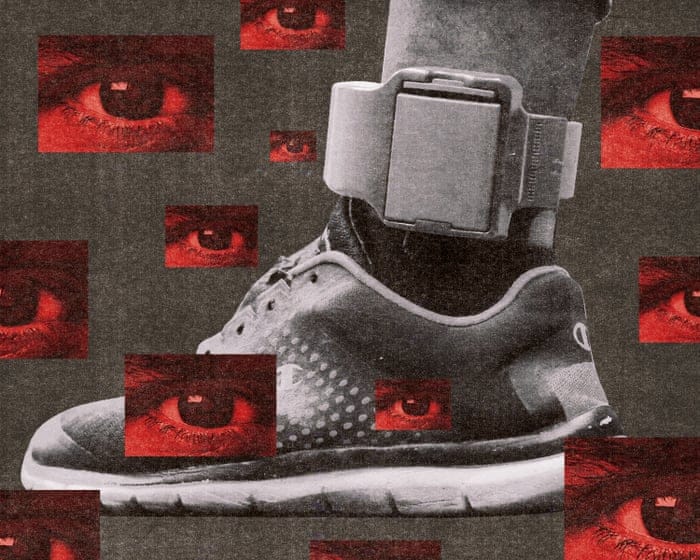
For five years, an asylum-seeking woman attended routine check-ins with immigration authorities without issue. At her most recent appointment in October, she was unexpectedly ordered to strap on an ankle monitor, according to her attorney, Deepa Bijpuria.
Bijpuria, a supervising attorney in the immigration unit of Legal Aid DC, described the client to The Guardian US as a single mom who fled her home country because of severe domestic violence, escaping while pregnant with her young daughter.
This woman's experience reflects a broader pattern: Immigration and Customs Enforcement (ICE) has doubled its use of ankle monitors on legal immigrants in the past year, according to advocates who say the uncomfortable devices that interfere with employment are designed to push people to self-deport.
The expansion of electronic monitoring represents a shift in immigration enforcement strategy — from detention facilities that cost taxpayers $150 per person per day to ankle monitors that cost $5 per day while imposing the burden of confinement directly onto asylum seekers trying to rebuild their lives. The monitors must be charged for hours daily, emit loud beeps during work hours, and create visible bulges that mark wearers as criminal suspects in their communities.
What makes this particularly cruel is the targeting of people who have done everything right. The woman in Bijpuria's case had attended every check-in for half a decade. She had not violated any immigration rules. She was pursuing her asylum claim through proper legal channels. Her reward for compliance was an electronic shackle that broadcasts her immigration status to every potential employer, every parent at her daughter's school, every person she encounters.
Immigration attorneys report that ICE has increasingly imposed ankle monitors on asylum seekers without criminal records, without flight risk assessments, and without explanation. The pattern suggests a deliberate strategy: make life so unbearable that people abandon valid asylum claims and return to the violence they fled.
The physical burden alone is substantial. Monitors must be charged for two to three hours daily, tethering wearers to wall outlets. The devices are bulky, visible through clothing, and cannot be removed even for sleeping or bathing. They emit GPS signals every few minutes and loud alerts if the battery runs low — often during work meetings or job interviews. One attorney described a client who lost three jobs because employers assumed anyone with an ankle monitor must be a criminal on parole.
Beyond the practical obstacles, the monitors impose a psychological weight that advocates compare to house arrest. Wearers report constant anxiety about battery life, GPS malfunctions that could trigger ICE enforcement, and the shame of explaining the device to their children. For survivors of domestic violence like Bijpuria's client, the inability to remove the monitor can trigger trauma responses related to physical restraint and control.
The doubling of ankle monitor use over the past year coincides with ICE's expanded surveillance capabilities through commercial data brokers. The agency now tracks immigrants through multiple overlapping systems — physical monitors, cellphone location data, and facial recognition databases — creating what privacy advocates call a digital deportation pipeline.
Legal challenges to the ankle monitor program have largely failed. Courts have ruled that electronic monitoring constitutes an "alternative to detention" rather than a punitive measure, even when imposed on people who were never detained and pose no flight risk. This legal fiction allows ICE to dramatically expand surveillance without the constitutional protections that would apply to criminal defendants.
The financial incentive structure reveals another layer of the problem. Private companies like BI Incorporated, a subsidiary of the GEO Group, profit from every ankle monitor deployed. The same corporations that run immigration detention facilities have pivoted to electronic monitoring as public pressure mounts against mass incarceration. The surveillance is privatized, the profits are guaranteed, and the human cost is borne entirely by asylum seekers.
Immigration advocates note that ankle monitors are particularly devastating for parents. Children of monitored parents report being bullied at school when classmates notice the device. Parents cannot participate in field trips or school events that might trigger GPS alerts. The message to children is clear: your parent is marked as dangerous, even though their only "crime" was fleeing violence and seeking safety through legal channels.
The broader context is a systematic effort to make legal immigration pathways so onerous that people give up. This aligns with the administration's documented pattern of family separations and the weaponization of bureaucratic processes against asylum seekers. When following the rules leads to punishment, the rule of law itself becomes a tool of oppression.
For the single mother who escaped domestic violence while pregnant, the ankle monitor represents a continuation of control and surveillance by different means. She fled one form of captivity only to find herself electronically shackled by the country where she sought refuge. Her five years of perfect compliance with immigration authorities counted for nothing when ICE decided she needed to be monitored like a flight risk.
The technology exists to track asylum seekers through phone check-ins or periodic office visits — methods that preserve dignity while ensuring compliance. Other countries manage asylum processes without forcing electronic monitors on torture survivors and domestic violence victims. The choice to use ankle monitors that interfere with employment, trigger trauma, and mark people as criminals is deliberate.
As ICE doubles down on electronic monitoring, the human cost multiplies. Every parent who can't coach their child's soccer team because of GPS restrictions, every survivor who can't sleep because the monitor triggers memories of restraint, every worker who loses a job because of unexplained beeping during meetings — these are not unfortunate side effects. They are the intended outcomes of a system designed to break people who have already survived unimaginable hardship.
The expansion of ankle monitoring reveals the true nature of current immigration enforcement: not security, not law and order, but calculated cruelty designed to force voluntary departures. When a single mother who followed every rule for five years gets an ankle monitor without warning or explanation, the message is unmistakable. This country will make your life unbearable until you leave, no matter how valid your claim for protection, no matter how perfectly you comply, no matter what violence awaits you back home.