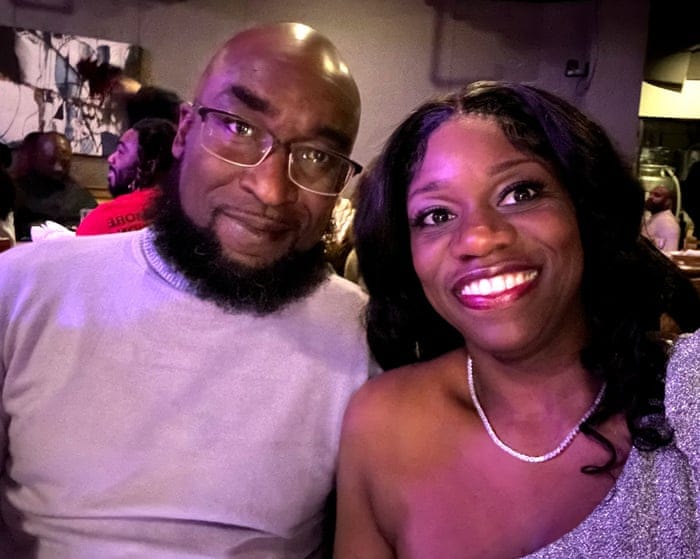
Mildred Danis-Taylor stood in a crowded Capitol Hill hearing room on March 4, making sure Homeland Security Secretary Kristi Noem could see her. As Georgia Representative Lucy McBath took the microphone, Danis-Taylor and two of her daughters remained standing—a physical testament to 14 months of fighting for a man who can no longer stand on his own.
The man is Rodney Taylor, Danis-Taylor's husband, a double amputee who has been detained at ICE's Stewart detention center in south Georgia since January 2025. According to testimony McBath delivered to Congress, Taylor has endured conditions that violate both federal disability law and basic human dignity: inadequate prosthetics, inaccessible facilities, and medical neglect that has left him dependent on other detainees for basic mobility.
Stewart detention center, operated by private prison corporation CoreCivic under a $65 million annual ICE contract, houses approximately 1,900 people in Lumpkin, Georgia—a town of 1,100 residents located 140 miles from Atlanta. The facility has documented 5 deaths since 2017 and faces multiple lawsuits alleging medical neglect. For disabled detainees like Taylor, the facility's failures go beyond inadequate healthcare to fundamental accessibility violations that would be illegal in any other federal facility.
"I have a fire inside," Danis-Taylor told The Guardian US after the hearing. The fire has driven her to abandon her job, drain her savings, and relocate temporarily to Georgia to advocate for her husband's release. She visits him twice weekly, each visit requiring a 280-mile round trip from Atlanta to the remote facility.
Taylor's case exposes a systematic pattern across ICE's detention network, where 42 people have died in custody since Trump took office, many from preventable medical conditions. But disability advocates say the treatment of detainees with physical disabilities represents a particularly egregious violation of federal law. The Americans with Disabilities Act requires all government facilities to provide reasonable accommodations—a mandate ICE routinely ignores in its detention centers.
According to immigration attorneys familiar with Stewart, Taylor is forced to rely on other detainees to push his wheelchair, help him shower, and assist with basic daily tasks—creating a dangerous dependency in an environment where violence and exploitation are common. The facility's medical unit has repeatedly failed to provide properly fitting prosthetics, leaving Taylor unable to walk independently despite being ambulatory before his detention.
The confrontation between Danis-Taylor and Noem occurred during a House Homeland Security Committee hearing ostensibly focused on border security funding. But McBath used her questioning time to read Taylor's case into the congressional record, forcing the DHS secretary to acknowledge the human cost of expanded immigration enforcement. Noem offered no specific response to the allegations, stating only that DHS would "review all detention conditions."
CoreCivic, which earned $1.9 billion in revenue last year primarily from ICE contracts, declined to comment on Taylor's specific case but stated that Stewart "meets or exceeds all contractual requirements for detainee care." Those contractual requirements, however, do not explicitly mandate ADA compliance—a loophole that allows private detention contractors to operate facilities that would be illegal if run directly by the federal government.
Taylor's immigration case stems from a decades-old drug conviction for which he already served his sentence. Under current immigration law, certain past convictions can trigger deportation proceedings even after someone has lived legally in the United States for decades. Taylor, who came to the U.S. legally from Jamaica, had been a permanent resident for over 30 years before ICE detained him.
The human impact extends beyond Taylor himself. Danis-Taylor estimates she has spent over $40,000 on legal fees, travel costs, and supporting her husband in detention—money the family had saved for retirement. Their adult daughters have taken time off work to help advocate for their father's release. The family's middle-class stability, built over decades, has been systematically dismantled by the costs of fighting detention.
Similar stories emerge from ICE facilities across the country. A 2022 DHS Office of Inspector General report found "immediate risks to detainee health and safety" at multiple facilities, including inadequate medical care for detainees with chronic conditions. For disabled detainees, these inadequacies become life-threatening. Without proper accommodations, routine medical emergencies become catastrophic, and basic dignity becomes impossible to maintain.
The Biden administration had promised to reform ICE detention, including ending contracts with private prison companies. Instead, the agency has expanded its detention capacity to over 38,000 beds daily, with private contractors operating approximately 80% of ICE detention space. The profit motive creates perverse incentives: CoreCivic receives the same per-day payment for detaining someone regardless of their medical needs, making expensive accommodations for disabled detainees a direct threat to profit margins.
Legal experts note that Taylor's case could set important precedent. If federal courts rule that ICE detention facilities must fully comply with the ADA, it could fundamentally reshape the detention system—potentially making it too expensive to detain people with significant disabilities. Several federal lawsuits currently pending seek to establish exactly this principle.
Meanwhile, Danis-Taylor continues her twice-weekly drives to Lumpkin, each visit a reminder of what the family has lost. She describes watching her husband's physical and mental health deteriorate, seeing a man who was once independent now unable to move without help. The prosthetics ICE provides don't fit properly. The wheelchair is manual, not electric, requiring upper body strength Taylor no longer possesses after 14 months of inadequate nutrition and limited movement.
During her congressional confrontation, Danis-Taylor held a photo of her husband from before his detention—standing upright on properly fitted prosthetics, smiling at a family gathering. The contrast with his current condition, she says, should shame everyone involved in maintaining this system. "They're treating him worse than an animal," she said. "At least animals in shelters get proper veterinary care."
The broader pattern is clear: ICE has created a parallel detention system that operates outside the basic standards required of every other federal facility. For disabled detainees, this means being trapped in facilities that literally cannot accommodate their existence—a form of additional punishment layered onto civil immigration detention. The profits flow to companies like CoreCivic. The costs are borne by families like the Taylors, who lose everything fighting a system designed to be unwinnable.
Noem's promise to "review" detention conditions rings hollow against this reality. Without enforceable ADA requirements, without real oversight of private contractors, and without recognition that disabled people deserve dignity even in detention, the review will change nothing. Rodney Taylor will remain in his manual wheelchair in a facility built for the able-bodied, dependent on the kindness of other detainees for survival, while his wife drives 280 miles to watch him deteriorate.
The fire inside Mildred Danis-Taylor burns for a simple reason: her husband's treatment violates not just immigration law or disability law, but basic human decency. That she had to stand in Congress to make this point—that it took a representative reading her husband's suffering into the congressional record to get even a pro forma response—reveals how thoroughly the system has abandoned its obligations. In Stewart detention center, profit margins matter more than prosthetics. Corporate contracts supersede human dignity. And a double amputee remains trapped in a facility that, by its very design, denies his humanity.