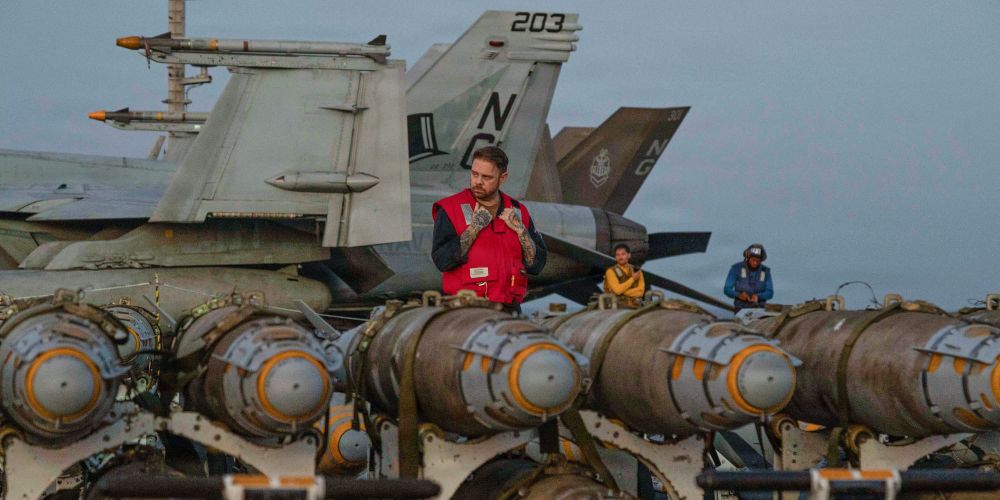
The United States is waging a war against Iran that The Intercept reports could cost trillions of dollars over multiple generations — and Congress has never authorized a single dollar of it. "My kids' kids, and probably their kids, are going to be paying for this," one official briefed on the conflict told the outlet. No vote. No budget hearing. No public accounting of what this war will actually cost American families.
This is not speculation about future escalation. The war has already cost $12 billion, all of it spent without congressional approval. The trillion-dollar projections reported by The Intercept account for long-term military operations, reconstruction costs the U.S. will inevitably shoulder, veteran care and disability claims that will span decades, and the economic disruption from oil supply shocks that have already sent gas prices to $5.80 per gallon. The Iraq War, which was at least preceded by a congressional authorization, ultimately cost over $3 trillion when long-term obligations were included. Iran is a larger country with a more capable military and deeper regional alliances. The costs will be worse.
The constitutional breakdown here is total. Article I, Section 8 of the Constitution grants Congress — not the president — the power to declare war and appropriate funds for military operations. The War Powers Resolution of 1973 requires the president to notify Congress within 48 hours of committing armed forces and limits such deployments to 60 days without congressional authorization. None of these constraints have been observed. The administration has relied on decade-old authorizations for the use of military force (AUMFs) passed after September 11, 2001, and the 2002 Iraq invasion — authorizations that were never intended to cover a war with Iran and that multiple legal scholars have said do not apply here. The AUMF and War Powers debate has become one of the central legal controversies of the conflict.
Congress has the power to stop this. It could refuse to appropriate funds. It could pass a resolution demanding withdrawal. It could hold hearings that force officials to publicly justify the costs and strategy. It has done none of these things. Instead, members of Congress vote to fund the war while performing concern about its consequences. Seven Senate votes to rein in the war have all failed, with the result being a war that operates outside democratic accountability, funded through continuing resolutions and emergency supplemental bills that never receive scrutiny as war spending.
The officials who spoke to The Intercept described a war with no defined objectives, no exit strategy, and no honest internal assessment of what victory would even look like. The administration has said it will keep bombing Iran until it gets "better terms" — a formulation so vague it could justify indefinite conflict. The costs are not theoretical. Working families are already paying them at the gas pump, in grocery prices tied to transportation costs, and in the federal budget cuts that will be justified by war spending.
The generational debt burden is the point where policy becomes moral failure. The officials quoted in The Intercept's reporting are warning that children not yet born will inherit the financial obligation for a war they had no voice in authorizing. This is not how democracies are supposed to function. Wars of choice — and this is a war of choice, not self-defense — require public debate, congressional authorization, and honest accounting of costs. None of that has happened. What has happened is that the executive branch has claimed the power to commit the country to trillion-dollar wars on its own authority, and Congress has let it.
The path forward is narrow but clear. Congress must immediately hold hearings on the projected costs of the Iran war, demand full budget transparency from the Pentagon and State Department, and force a vote on whether to authorize continued military operations. If the war cannot survive public scrutiny and a congressional vote, it should not be fought. The alternative is a permanent state of unauthorized war, funded through accounting tricks, with costs deferred onto generations who will have no memory of how it started or why.