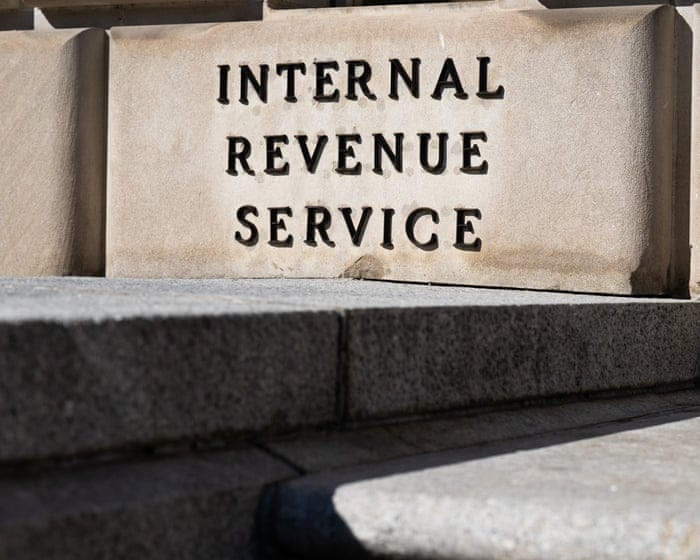
The Internal Revenue Service can't account for $51 million in political donations from the second half of 2025 — not because the money is missing, but because the agency's systems are failing. The technical glitch, first identified by the Center for Political Accountability and reported exclusively to The Guardian US, emerged after the Department of Government Efficiency (DOGE) eliminated more than a quarter of the IRS workforce through budget cuts.
The $51 million represents contributions to state-level election groups, including governor and attorney general races — the very offices that determine voting access, criminal justice policy, and corporate regulation in states across the country. Without visibility into who is funding these campaigns, voters are walking into 2026 elections blind to the financial interests shaping their ballots.
This isn't a story about government inefficiency. It's a story about what happens when you deliberately break the machinery of accountability. The IRS didn't randomly develop a technical problem that happens to benefit dark money groups. The agency lost the staff and resources needed to maintain its systems after DOGE's cuts, creating exactly the kind of opacity that benefits wealthy political donors who prefer to operate without scrutiny.
The Center for Political Accountability, a non-profit that has tracked corporate political spending for two decades, discovered the gap while conducting routine analysis of campaign finance data. What they found was a black hole: contributions that should appear in federal disclosure databases simply don't exist in any searchable or analyzable form.
"We're talking about state attorney general races where the winner will decide whether to prosecute corporate crime, enforce environmental law, or protect voting rights," a researcher familiar with the data told The Guardian. "These aren't small local elections. These are races that shape national policy, and we have no idea who's buying influence."
The timing matters. State-level races have become the new frontier for political spending precisely because they offer more bang for the buck than federal races. A million dollars in a gubernatorial race can swing an election. That same million in a presidential race is a rounding error. Corporate interests and ideological groups have poured money into these races for years, but at least there was disclosure. Now, thanks to the IRS glitch, even that minimal transparency has evaporated.
To understand how we got here, you need to understand what DOGE actually did to the IRS. The cuts weren't surgical — they were sledgehammer blows that fell hardest on the divisions responsible for maintaining disclosure systems and enforcing tax law against wealthy individuals and corporations. The agency lost 27% of its workforce in six months, according to federal personnel data. But some departments saw cuts of 40% or more.
The technology infrastructure team — the people responsible for maintaining the very databases now experiencing "glitches" — was particularly hard hit. Sources within the agency describe a skeleton crew trying to maintain systems designed for a much larger workforce, with no budget for upgrades or outside contractors to fill the gaps.
This is what austerity looks like in practice: not just longer wait times for tax refunds, but the systematic breakdown of transparency mechanisms that make democracy function. When you fire the people who maintain disclosure databases, those databases stop working. When databases stop working, money flows in darkness.
The $51 million figure only covers the second half of 2025 — meaning the actual amount of dark money flowing through broken disclosure systems could be significantly higher. The CPA's analysis suggests this is a conservative estimate based on historical patterns and partial data they were able to reconstruct through alternative sources.
State election officials are sounding alarms, but they have limited power to address a federal agency's technical failures. Several secretaries of state have written to the Treasury Department demanding immediate action, but their letters have gone unanswered. The IRS, for its part, has acknowledged the technical problems but says it lacks the resources to fix them quickly.
"We're being asked to do more with less, and something has to give," an IRS spokesperson told The Guardian. "We're prioritizing core tax collection functions. Election disclosure databases are important, but they're not our primary mission."
That statement itself reveals the problem. Campaign finance disclosure isn't some nice-to-have feature of democracy — it's a fundamental requirement for voters to understand who is trying to influence their government. When that transparency disappears, voters are left to guess which corporate interests or billionaire donors are bankrolling the candidates on their ballots.
The beneficiaries of this opacity are easy to identify. Corporate political action committees, dark money groups, and wealthy individuals who prefer their political spending remain hidden all benefit when disclosure systems fail. These aren't hypothetical benefits — we can see the effects in real time as previously traceable money disappears into the void.
Take gubernatorial races, where the CPA identified the largest gaps in disclosure. These races determine who controls state regulatory agencies, who appoints judges, and who signs or vetoes legislation on everything from abortion access to corporate tax rates. A governor friendly to fossil fuel interests can gut environmental enforcement. A governor backed by private prison companies can expand incarceration. Without disclosure, voters can't connect those dots.
The same dynamic plays out in attorney general races, where corporate interests have particular incentive to invest. State AGs decide whether to join federal lawsuits, whether to investigate corporate wrongdoing, and whether to enforce consumer protection laws. The National Association of Attorneys General has become a massive target for corporate influence operations, with companies spending millions to wine and dine AGs at luxury resorts. Now that spending can happen in darkness.
This isn't the first time technical "glitches" have conveniently benefited powerful interests. In 2019, the FEC's disclosure website went dark for weeks during a critical pre-election period. In 2021, several states reported database failures that prevented real-time disclosure of campaign contributions. Each time, officials promised fixes. Each time, the problems mysteriously recurred when disclosure mattered most.
But the IRS situation is different in scale and cause. Previous disclosure failures could be attributed to aging technology or unexpected technical problems. This failure is the direct result of deliberate policy choices to gut the agency's workforce. You can't maintain complex databases without database administrators. You can't ensure data integrity without quality control staff. You can't fix problems quickly without adequate technical support. DOGE eliminated all of these positions in the name of efficiency.
The response from campaign finance reform advocates has been swift but limited in impact. Groups like Common Cause and the Campaign Legal Center have filed freedom of information requests seeking details about the technical failures and staffing cuts. They've received form letters in response citing the agency's reduced capacity to process FOIA requests — another consequence of the staffing cuts.
Meanwhile, state-level candidates are navigating an entirely new landscape where disclosure rules exist on paper but not in practice. Some campaigns have voluntarily disclosed their donors through press releases or campaign websites, but these voluntary disclosures lack the standardization and verification of official IRS databases. Voters are left to trust that campaigns are being honest about their funding sources — a trust that campaign finance laws were specifically designed to eliminate the need for.
The international perspective offers a stark contrast. The European Union implemented real-time campaign finance disclosure in 2019, with contributions appearing in searchable databases within 48 hours. South Korea requires disclosure within 24 hours. Canada maintains a fully staffed elections agency whose sole job is ensuring transparency in political financing. The United States, which once led the world in campaign finance transparency, now can't even maintain basic disclosure for state-level races.
Corporate interests have taken notice. Political spending strategists, speaking on background to trade publications, describe the IRS glitch as a "window of opportunity" for influence operations that might otherwise face public scrutiny. One lobbyist told a corporate governance newsletter that his clients were "reassessing their political giving strategies" in light of the reduced disclosure requirements.
This is how democracy erodes: not in dramatic moments of constitutional crisis, but in technical failures that conveniently benefit the powerful. A database glitch here, a staffing cut there, and suddenly the mechanisms of accountability stop functioning. The forms of democracy remain — we still have elections, disclosure laws still exist on paper — but the substance dissolves.
The path forward requires both immediate and long-term solutions. In the immediate term, Congress could appropriate emergency funding to hire contractors to fix the IRS databases and process the backlog of disclosure reports. Several bills to do exactly this have been introduced but face opposition from the same forces that pushed for the DOGE cuts in the first place.
Longer term, campaign finance experts argue for moving disclosure functions out of the IRS entirely. The Federal Election Commission was designed to handle federal campaign disclosure but has never had jurisdiction over state races. Creating a new agency or expanding the FEC's mandate would require legislation that seems unlikely in the current political climate.
Some states are taking matters into their own hands. California and New York have proposed state-level disclosure systems that would bypass federal databases entirely. But this patchwork approach creates its own problems — campaigns would need to navigate different disclosure requirements in different states, and voters would need to check multiple databases to get a complete picture of political spending.
The technical details matter here because they reveal the scope of the problem. The IRS databases don't just track simple contributions from individuals to campaigns. They're supposed to capture the complex web of PACs, super PACs, 501(c)(4) organizations, and other entities that funnel money through multiple layers before it reaches candidates. When these databases fail, it's not just individual contributions that disappear — entire networks of influence become invisible.
The $51 million gap identified by the CPA likely represents only direct contributions that should have been easily traceable. The actual amount of political money flowing through broken disclosure channels could be orders of magnitude larger when you factor in independent expenditures, issue advocacy, and other forms of indirect political spending.
This story connects to broader patterns of institutional breakdown across federal agencies. The Federal Risk and Authorization Management Program's failures with Microsoft's cloud security showed what happens when oversight agencies lack the resources to do their jobs. The Environmental Protection Agency's reduced enforcement capacity has allowed increased corporate pollution. Now the IRS joins the list of agencies whose core functions have been deliberately broken.
The human cost of this breakdown isn't abstract. When voters don't know who's funding their candidates, they can't make informed decisions. When corporate interests can buy influence without disclosure, policy outcomes favor those interests over public needs. The grandmother facing rising prescription drug costs doesn't know that her state attorney general took money from pharmaceutical companies. The family breathing polluted air doesn't know their governor's campaign was funded by the very companies violating environmental laws.
This is what makes the IRS "glitch" so insidious. It doesn't prevent elections from happening. It doesn't stop people from voting. It just ensures they're voting in darkness, without the information needed to understand whose interests their candidates really serve. It's a form of voter suppression that doesn't prevent voting — it just makes informed voting impossible.
The Center for Political Accountability plans to continue tracking what data it can access through alternative means, but its researchers acknowledge they're fighting a losing battle. "We're trying to reconstruct campaign finance patterns using partial data and educated guesses," they told The Guardian. "It's like trying to solve a puzzle where most of the pieces have been hidden."
As the 2026 election cycle accelerates, the stakes of this transparency breakdown will only grow. Every governor's race, every attorney general election, every state legislative campaign will operate under cover of darkness created by the IRS's technical failure. Voters will make choices that shape their lives for years without knowing who paid to influence those choices.
The irony is bitter. DOGE promised to make government more efficient by cutting waste. Instead, it created a form of inefficiency that specifically benefits the wealthy and powerful — the inability to track political money. This isn't a bug in the system. For those who benefit from dark money, it's a feature. The only question now is whether enough people will demand the transparency that democracy requires, or whether we'll accept voting in darkness as the new normal.
The IRS glitch isn't just a technical problem. It's a democracy problem. And until we treat it with the urgency it deserves, that $51 million in dark money will be just the beginning of what disappears from public view.