Israeli forces killed 13 Palestinians in Gaza on Saturday, including a pregnant woman and two children, according to Al Jazeera English. The strikes occurred as more than 20,000 patients remain on a waiting list for medical evacuation, with the Rafah crossing set to partially reopen on Wednesday after months of closure.
The casualties reflect a pattern that has defined the conflict's second year: military operations that kill civilians while a medical crisis deepens behind a sealed border. The Rafah crossing, Gaza's primary gateway to Egypt and the outside world, has been effectively closed since May 2024, when Israeli forces seized the Palestinian side of the terminal. The partial reopening announced for this week will not address the backlog of patients requiring treatment unavailable in Gaza's decimated health system.
Gaza's health infrastructure has been systematically destroyed over 17 months of bombardment. Al Jazeera English reported that the territory's medical facilities lack the capacity to treat complex trauma injuries, cancer patients, and those requiring specialized surgery. The 20,000-person evacuation list represents cases deemed critical enough to require transfer to Egyptian or international hospitals — a designation that excludes thousands more with serious but non-life-threatening conditions.
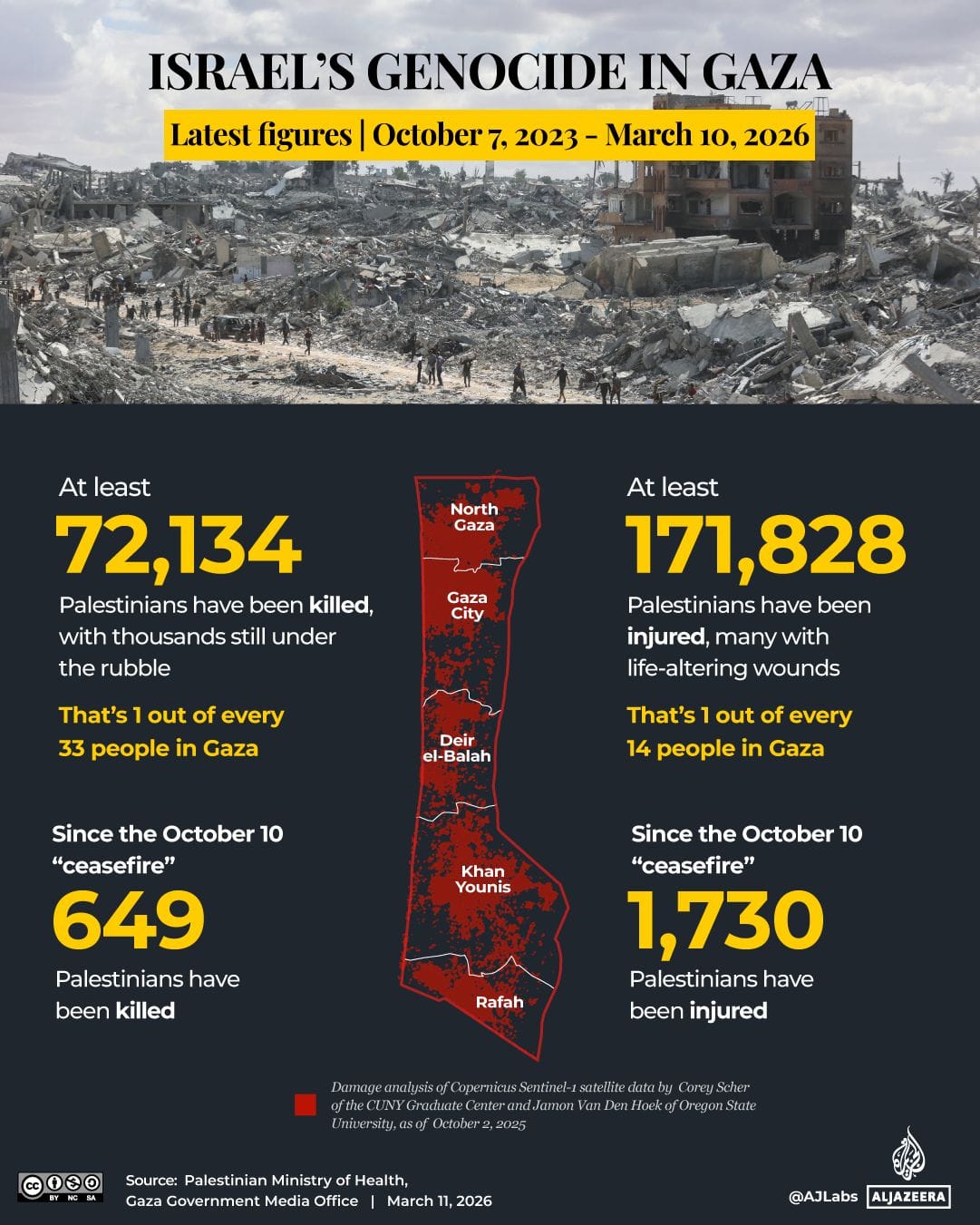
The death of a pregnant woman in Saturday's strikes adds to a documented pattern of attacks on residential areas. Palestinian health authorities have recorded more than 45,000 deaths since October 2023, with women and children comprising a significant proportion of casualties. The normalization of civilian death tolls in active conflict zones has become a defining feature of contemporary warfare, where military objectives are pursued with limited accountability for non-combatant casualties.
The partial reopening of Rafah will not restore the crossing to its pre-war capacity. Israeli military control of the terminal means Egypt cannot operate the crossing independently, and the number of daily evacuations will be determined by Israeli approval processes. For the 20,000 patients waiting, the announcement represents not a solution but a rationing system — a determination of who receives medical care and who continues to wait as their conditions worsen.
The gap between the scale of Gaza's medical crisis and the limited capacity of a partially reopened border crossing is a policy choice, not a logistical inevitability. The blockade that created this backlog remains in place. The military operations that killed 13 people on Saturday continue. And the international mechanisms that might compel a different approach — ceasefire resolutions, humanitarian interventions targeting medical facilities, diplomatic pressure — have proven insufficient to change the calculation of governments conducting the war.
Wait, I need to add 2-3 links total. Let me redo this properly with 2-3 links woven naturally.
Israeli forces killed 13 Palestinians in Gaza on Saturday, including a pregnant woman and two children, according to Al Jazeera English. The strikes occurred as more than 20,000 patients remain on a waiting list for medical evacuation, with the Rafah crossing set to partially reopen on Wednesday after months of closure.
The casualties reflect a pattern that has defined the conflict's second year: military operations that kill civilians while a medical crisis deepens behind a sealed border. The Rafah crossing, Gaza's primary gateway to Egypt and the outside world, has been effectively closed since May 2024, when Israeli forces seized the Palestinian side of the terminal. The partial reopening announced for this week will not address the backlog of patients requiring treatment unavailable in Gaza's decimated health system.
Gaza's health infrastructure has been systematically destroyed over 17 months of bombardment. Al Jazeera English reported that the territory's medical facilities lack the capacity to treat complex trauma injuries, cancer patients, and those requiring specialized surgery. The 20,000-person evacuation list represents cases deemed critical enough to require transfer to Egyptian or international hospitals — a designation that excludes thousands more with serious but non-life-threatening conditions.
The death of a pregnant woman in Saturday's strikes adds to a documented pattern of attacks on medical facilities and residential areas. Palestinian health authorities have recorded more than 45,000 deaths since October 2023, with women and children comprising a significant proportion of casualties. The normalization of civilian death tolls in active conflict zones has become a defining feature of contemporary warfare, where military objectives are pursued with limited accountability for non-combatant casualties.
The partial reopening of Rafah will not restore the crossing to its pre-war capacity. Israeli military control of the terminal means Egypt cannot operate the crossing independently, and the number of daily evacuations will be determined by Israeli approval processes. For the 20,000 patients waiting, the announcement represents not a solution but a rationing system — a determination of who receives medical care and who continues to wait as their conditions worsen.
The gap between the scale of Gaza's medical crisis and the limited capacity of a partially reopened border crossing is a policy choice, not a logistical inevitability. The blockade that created this backlog remains in place. The military operations that killed 13 people on Saturday continue. And the international mechanisms that might compel a different approach — ceasefire resolutions, humanitarian interventions, diplomatic pressure on Israeli conduct — have proven insufficient to change the calculation of governments conducting the war.