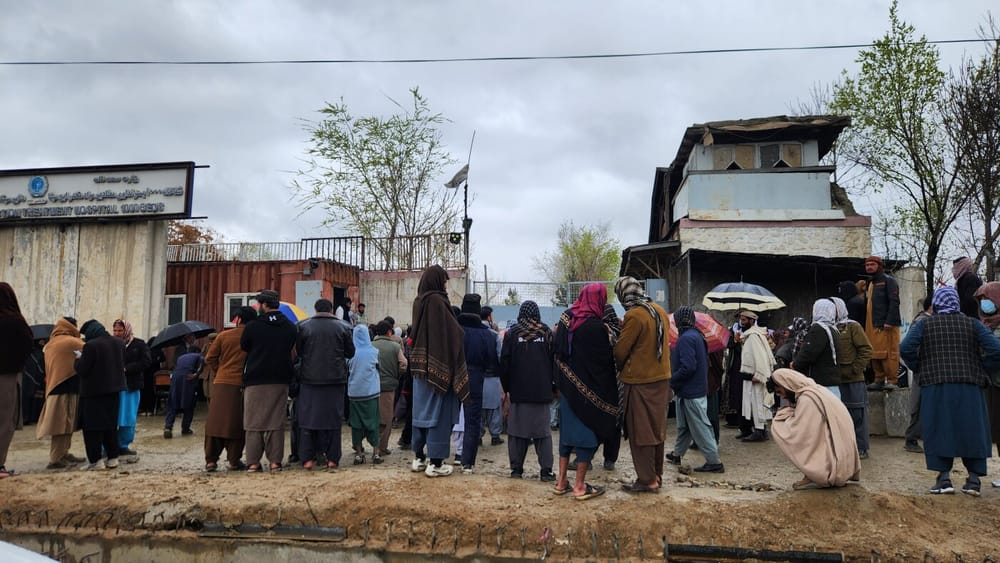
Pakistan and Afghanistan's Taliban government have declared a truce following an airstrike on a Kabul rehabilitation center that killed over 100 people, NPR News reported. At the Emergency Hospital in Kabul, dozens of families crowded around a thick book to check the names of victims, according to the United Nations count. The diplomatic breakthrough came not from sustained international pressure, but from the sheer scale of civilian death that even hostile governments could not ignore.
The strike targeted a facility housing people in drug rehabilitation — a population already marginalized, now obliterated in a conflict most of the world stopped paying attention to years ago. The rehabilitation center was not a military installation. The people inside were not combatants. They were civilians seeking treatment in a country where basic health infrastructure has collapsed under decades of war, and where the international community that promised reconstruction has long since moved on.
What makes this truce significant is not just the body count that forced it, but the near-total absence of American media coverage in the days leading up to the strike. Afghanistan disappeared from U.S. news cycles almost immediately after the 2021 withdrawal, treated as a closed chapter rather than an ongoing humanitarian crisis. The same outlets that spent twenty years embedding reporters with American troops and framing every Taliban advance as a threat to U.S. interests now struggle to find Afghanistan on the editorial calendar. When over a hundred people die in a single bombing, it merits a wire brief — if that.
This is not an accident of news judgment. It is a structural feature of how American media covers war. U.S. outlets center American strategic interests and political debates, not the lived reality of people in conflict zones. Afghanistan mattered to American newsrooms when U.S. troops were dying there. It mattered when it could be used as a talking point in domestic political fights over withdrawal timelines. It stopped mattering the moment the last American plane left Kabul, even as the war continued, even as people kept dying, even as the humanitarian catastrophe deepened.
The truce between Pakistan and the Taliban government is fragile and tactical, not a resolution. Pakistan has been conducting airstrikes in Afghan territory for months, claiming it is targeting militant groups. Afghanistan's Taliban government has responded with its own cross-border operations. Civilians on both sides have paid the price. The rehabilitation center bombing was not an aberration — it was the logical endpoint of a conflict prosecuted with no accountability and no international oversight, in a country the world decided it was done caring about.
Regional outlets and humanitarian organizations have continued documenting the crisis. The UN has maintained its presence and its casualty counts. Local Afghan journalists, many of whom fled the country after the Taliban takeover, have kept reporting on what is happening to their communities. But their work does not break through to American audiences because American editors have decided Afghanistan is no longer a story worth sustained attention. The same media ecosystem that turned every Taliban statement into breaking news during the withdrawal now treats mass civilian casualties as background noise.
This pattern repeats across every conflict zone where U.S. strategic interests shift. Sudan's drone war has killed hundreds in recent weeks, but it remains underreported because there are no American troops involved and no domestic political angle to exploit. Yemen's humanitarian crisis, fueled by a Saudi-led coalition using U.S. weapons, gets occasional coverage when a particularly horrific bombing forces it onto the agenda — then disappears again. Afghanistan is following the same trajectory, except faster and more completely.
The families checking names at the Emergency Hospital in Kabul are not abstractions. They are people trying to find out if their loved ones survived a bombing that should have been international news for days. Instead, it was a footnote, a wire story, a data point in a conflict that American audiences have been told is over. The truce that followed is being framed as a diplomatic development between two governments. The civilian deaths that forced it are already fading from view.
What this reveals is not just editorial failure, but a moral one. American media spent two decades telling the public that Afghanistan mattered, that the U.S. had obligations there, that the lives of Afghan civilians were part of the story. The moment those obligations became inconvenient, the moment there was no longer a domestic political fight to narrate, Afghanistan ceased to exist as a subject worthy of sustained coverage. The people who live there, who are still dying there, are left to crowd around hospital registries while the outlets that once claimed to care have moved on to the next crisis that fits the editorial template.
The truce will likely collapse. The underlying causes of the conflict — border disputes, militant safe havens, collapsed governance, regional power struggles — remain unresolved. When it does collapse, and when the next mass casualty event occurs, American newsrooms will have the same choice they had this time: cover it as if Afghan lives matter, or treat it as noise from a country they have decided is no longer worth the effort. The pattern so far suggests which choice they will make.