A super PAC backing Texas Attorney General Ken Paxton is running television ads in Palm Beach, Florida this weekend. There are no Texas voters there. There is no Senate primary debate scheduled there. There is, however, one person: Donald Trump, who is spending the weekend at Mar-a-Lago while a competitive Republican Senate runoff in Texas hangs in the balance.
The Lone Star Liberty PAC's decision to air ads in Palm Beach, as reported by The Hill, is not a campaign strategy. It is a commercial transaction dressed up as one. The message is not aimed at persuading undecided voters in a general election. It is aimed at persuading one man to deliver an endorsement that could determine the outcome of a Senate race — and the PAC is spending money in the specific geographic location where that man happens to be this weekend.
This is how endorsements work now in the Republican Party. They are not earned through ideological alignment or coalition-building. They are purchased through proximity, flattery, and the willingness to spend money in ways that signal loyalty. Paxton's PAC is running ads on Trump's television. The subtext is impossible to miss: we are willing to spend money to reach you, specifically, because your word is worth more than any voter contact operation we could fund in Texas.
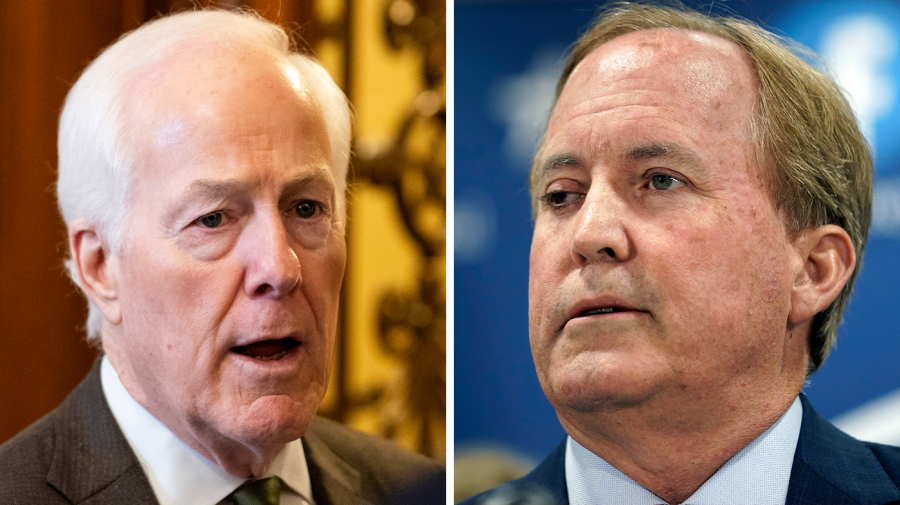
Paxton is facing a runoff against establishment-backed opponent and former Texas Senator John Cornyn, who has his own set of powerful allies and donors. But in a Republican primary, institutional support is no longer the deciding factor. Trump's endorsement is. And Trump has made clear over years of transactional politics that his endorsements are available to those who show the right combination of personal loyalty and willingness to publicly align with his interests. Paxton, who survived an impeachment trial in 2023 after being accused of corruption and abuse of office, fits the profile.
The Texas Senate race is not an isolated case. Across the country, Republican candidates are learning that the path to Trump's endorsement runs through Mar-a-Lago — literally and figuratively. Some make pilgrimages to the resort. Others, like Paxton's PAC, buy ads on the local stations Trump watches. The effect is the same: the endorsement process has been reduced to a private negotiation between a candidate's financial backers and a former president who treats his political capital as a commodity to be traded.
What makes this particular maneuver notable is how little effort anyone involved is making to disguise it. Paxton's PAC is not running these ads in Houston or Dallas, where Texas voters might see them. It is running them in Palm Beach, where the only audience that matters is Trump. The decision is so transparent that it functions as its own form of signaling — not just to Trump, but to other Republican candidates watching. This is how you do it. This is what it costs. This is the game.
The broader implication is that Republican primary voters in Texas — and in every other state where Trump's endorsement is in play — are not the real electorate. They are the ratifying body for a decision that has already been made through a process they are not part of. The candidates are not campaigning for their votes. They are campaigning for Trump's attention, and Trump's attention is available to whoever is willing to spend the most money in the most visible way.
Cornyn, for his part, has his own advantages: name recognition, institutional backing, and a record of legislative accomplishment that appeals to traditional Republican donors. But in a party where Trump's influence has reshaped the entire incentive structure, those advantages are secondary. What matters is whether Trump decides to weigh in, and if he does, which candidate he picks. Paxton's PAC is betting that a few hundred thousand dollars spent on Palm Beach television is a worthwhile investment in influencing that decision.
The Texas runoff is scheduled for late May. Trump has not yet issued an endorsement. Paxton's PAC will keep running ads in Palm Beach as long as Trump is there to see them. The voters in Texas will get their say eventually. But the decision that matters most is being made in a resort in Florida, by a man watching television, while super PACs compete to buy space on his screen.