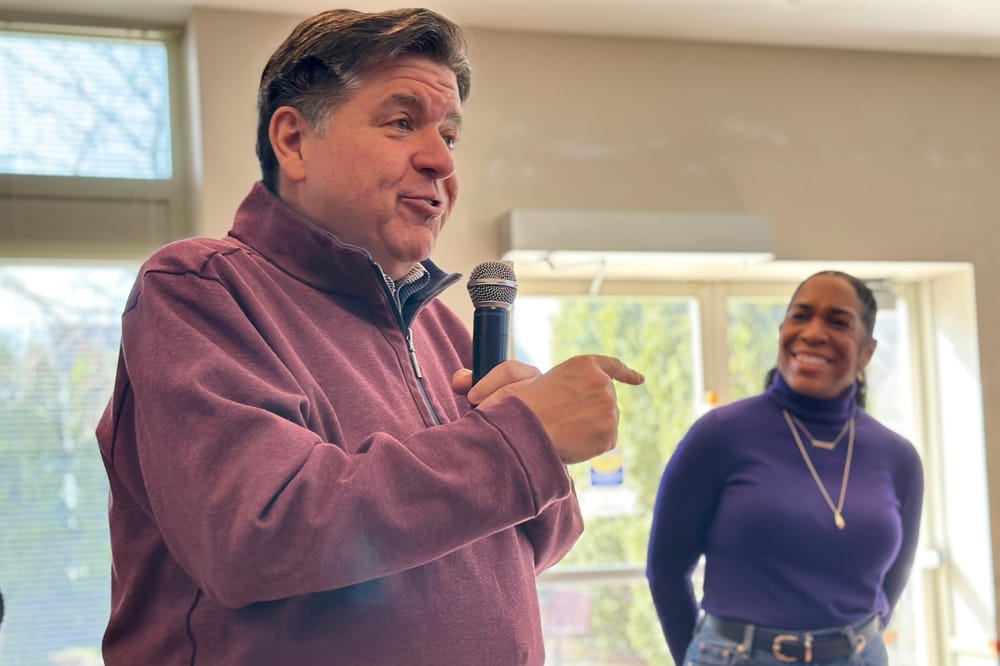
Illinois Governor JB Pritzker needs Black political leaders for his presumed 2028 presidential run. But first, he has to explain why he spent millions to defeat the Congressional Black Caucus's chosen candidate in a recent primary — a move that Black leaders say exposed how white billionaire Democrats treat their political institutions as obstacles rather than partners.
The contradiction is stark: Democratic billionaires claim to champion racial equity while using their wealth to override the political choices of Black leadership. In Illinois, this pattern just played out with unusual clarity when Pritzker, worth an estimated $3.5 billion, poured resources into lifting Juliana Stratton to victory over the CBC's preferred candidate, according to Politico's reporting on the lingering tensions.
This isn't merely about one primary or one billionaire governor. It's about a Democratic Party that relies on Black voters as its most loyal constituency while allowing megadonors to veto the political decisions of Black institutions. The Congressional Black Caucus represents decades of organizing, coalition-building, and strategic political development within Black communities. When a single billionaire can override that collective judgment with a checkbook, it reveals whose power the party actually respects.
The timing makes Pritzker's calculation transparent. As he positions himself for a potential presidential campaign, he needs the very Black leaders he just undermined. The governor who Democrats are eyeing for 2028 must now reconcile his actions with his ambitions. Black political leaders are making clear that endorsements aren't automatic — especially when their institutional choices are treated as suggestions rather than decisions.
What makes this particularly galling is the asymmetry of the relationship. Black voters provide Democrats with their margin of victory in state after state. Black political organizations do the groundwork of registration, turnout, and mobilization that no amount of television advertising can replicate. Yet when it comes to candidate selection — the fundamental act of political power — a billionaire's preference trumps the CBC's endorsement.
This dynamic extends beyond Illinois. Across the country, Democratic megadonors pour millions into primaries to ensure their preferred candidates win, often overriding the choices of Black political organizations, labor unions, and grassroots groups. They frame this as supporting "electable" candidates, but electability often seems to mean candidates who won't challenge the economic arrangements that made these donors billionaires in the first place.
The Illinois primary also demonstrates how money doesn't just buy elections — it buys the power to define political legitimacy. When Pritzker's millions lifted Stratton to victory, it sent a message about whose endorsement really matters in Democratic politics. The CBC can deliberate, organize, and endorse, but a billionaire's super PAC has the final say.
For 2028 hopefuls like Pritzker, this creates a strategic problem. Presidential primaries require authentic support from Black voters, particularly in early states like South Carolina. Television ads and consultant-crafted messaging can't manufacture the credibility that comes from genuine partnership with Black political institutions. The governors and senators now maneuvering for 2028 will discover that memories of primary interventions last longer than campaign cycles.
The path forward requires more than reconciliation meetings or photo opportunities. It demands structural changes to how Democratic politics values Black political leadership. That means respecting CBC endorsements even when they conflict with donor preferences. It means understanding that Black political institutions aren't just turnout machines to be activated in November — they're legitimate sites of political decision-making whose choices should carry weight.
Until Democratic billionaires learn this lesson, they'll keep facing the same contradiction: claiming to represent racial justice while using their wealth to override Black political power. Pritzker's primary intervention made this contradiction visible. His presidential ambitions may depend on whether he can resolve it — particularly as federal probes targeting Black and Latino communities remind voters which party is supposed to stand on the side of racial equity.