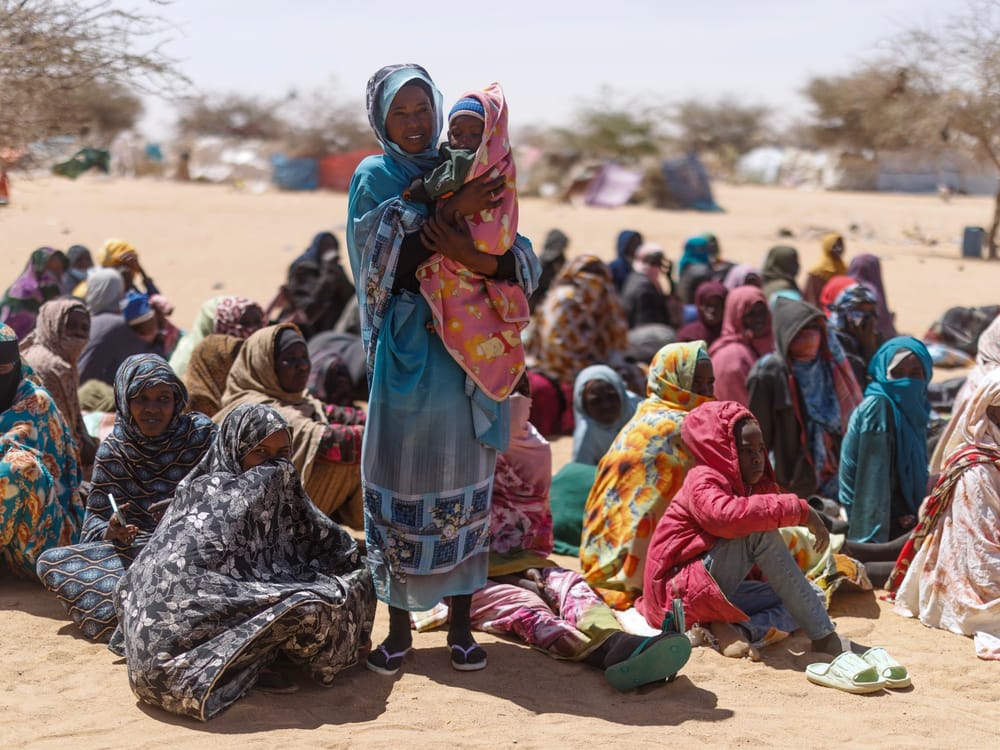
Sexual violence has become the "defining feature" of Sudan's civil war, according to a new report from Doctors Without Borders that documents systematic assault against women as a weapon of conflict. The humanitarian organization's findings, based on direct testimony from survivors and medical records, describe a war being "fought on women's bodies" as rival military factions use rape and sexual torture as instruments of territorial control.
The report arrives as Sudan's war between the Sudanese Armed Forces and the paramilitary Rapid Support Forces enters its second year with minimal international attention despite a documented death toll exceeding 15,000 and displacement of more than 8 million people. What distinguishes this conflict from others, according to Doctors Without Borders, is not the presence of sexual violence but its systematic deployment across geographic regions and demographic groups — a pattern that suggests coordination rather than isolated incidents.
Survivors interviewed by medical staff described attacks occurring during household raids, at checkpoints, and in displacement camps. The assaults follow a documented pattern: armed groups enter civilian areas, separate women and girls from male family members, and commit sexual violence as other fighters prevent intervention. Medical records show injuries consistent with gang rape, sexual torture, and assault with objects. The youngest survivor documented in the report was 11 years old.
The systematic nature of the violence serves a strategic function. Sexual assault in conflict zones operates as a form of ethnic cleansing — making territory uninhabitable for targeted populations by ensuring survivors cannot remain in their communities. Women who report assaults face social ostracization in conservative societies where rape carries stigma for victims rather than perpetrators. Families flee rather than risk repeated attacks. The territory empties without a single bullet fired at military targets.
Sudan's war has received a fraction of the media coverage devoted to conflicts in Ukraine or Gaza, despite comparable civilian casualties and displacement. The UN warned last month that drone warfare killed more than 200 people in a single week, yet major American outlets rarely feature Sudan in their international coverage. The pattern mirrors historical media treatment of African conflicts — framed as incomprehensible ethnic violence rather than wars with identifiable actors, specific causes, and external enablers.
The Doctors Without Borders report documents what international law defines as crimes against humanity when sexual violence is committed as part of a widespread or systematic attack against a civilian population. The International Criminal Court has jurisdiction over Sudan — the country is a signatory to the Rome Statute — but prosecutions require political will from member states to support investigations and enforce arrest warrants. That will has been absent. No major power has called for an ICC investigation into sexual violence in Sudan's current war.
Medical organizations operating in Sudan face systematic obstruction. The Doctors Without Borders report notes that humanitarian workers cannot access large swaths of territory controlled by either faction. Survivors who reach medical facilities often arrive weeks after assaults, limiting evidence collection and increasing health risks from untreated injuries and sexually transmitted infections. The organization operates 8 facilities in Sudan providing post-rape care; all report capacity constraints and supply shortages.
The strategic use of sexual violence in Sudan follows a pattern documented in conflicts from Bosnia to Rwanda to Myanmar — wars where rape functioned as a military tactic with command-level approval. The Doctors Without Borders report stops short of asserting command responsibility, but the systematic nature of attacks across different regions controlled by both factions suggests coordination beyond individual soldier initiative. Someone is ordering this, or at minimum, permitting it as policy. Healthcare workers who excavated colleagues from mass graves in Gaza have argued that the world's failure to hold commanders accountable in one conflict licenses the same conduct in the next.
What happens next depends on whether international institutions treat sexual violence in Sudan as a war crime requiring accountability or as an unfortunate but inevitable feature of African conflicts. The Doctors Without Borders report provides documentation sufficient for ICC investigations. The question is whether any government with ICC influence will demand them. The pattern suggests they will not — that women in Sudan will continue to bear the cost of a war the world has decided not to notice, and that sexual violence will remain an effective military tactic precisely because it carries no consequences for commanders who deploy it.