What happens to 14 million health insurance policies when a single court ruling takes effect? It depends on the institutions tasked with enforcing that ruling — and whether those institutions have the infrastructure, the political will, and the physical space to carry out what the policy demands. The Trump administration is now answering a parallel question: What happens when you promise mass deportations but lack the detention capacity to hold families and children while you process them? The answer, according to The Guardian, is that you convert airport barracks into holding cells.
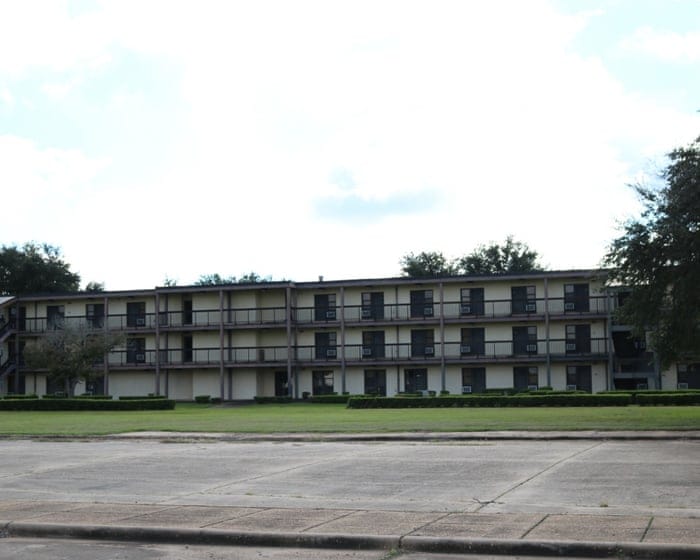
The administration is moving forward with plans to establish what officials are calling a "first of its kind" short-term detention facility at Alexandria International Airport in rural Louisiana. The facility would hold migrant families and unaccompanied children in converted barracks adjacent to an active runway that has already become a central hub for deportation flights. The site is not a purpose-built detention center. It is an airport with available real estate and a runway long enough to accommodate the chartered flights that have become the logistical backbone of the administration's immigration enforcement agenda.
The choice of location is not incidental. As Tinsel News has reported, immigrant families are already preparing for the worst. Alexandria is not a border town. It is not a major metropolitan area with existing immigration court infrastructure or legal services networks. It is a regional airport in central Louisiana with limited public transit, few immigration attorneys within a hundred miles, and a runway that can handle large aircraft. The facility's proximity to the runway is the point — families detained there would be held only as long as it takes to process their paperwork and load them onto a deportation flight. The administration is designing the system for speed, not due process.
This is accountability journalism's central question made literal: who did this, and who bears the cost? The administration approved the expansion. The families and children detained at Alexandria will bear the immediate human cost. But the systemic cost — the precedent being set, the infrastructure being normalized, the legal and moral lines being redrawn — will outlast this administration. Private contractors are already profiting from the expansion of deportation flight operations, and Alexandria represents the next phase of that infrastructure build-out: not just planes, but the holding facilities designed to feed them.
The use of airport facilities for immigration detention is not new. ICE has used airport hangars and terminals for short-term holding before. But those were typically emergency overflow measures, not permanent facilities designed specifically to detain families and children. What makes Alexandria different is the intent. This is not a stopgap. It is a model. The administration is seeking to establish a template for rapid-processing detention sites that can be replicated at other regional airports with available space and cooperative local governments. Louisiana has both. The pattern of targeting vulnerable populations extends beyond U.S. borders.
The legal framework for family detention has been contested for years. A 1997 consent decree known as the Flores Settlement Agreement set standards for the detention of minors, requiring that children be held in the least restrictive setting possible and released without unnecessary delay. Subsequent court rulings reinforced those standards, and the Obama administration largely moved away from family detention after legal challenges and public outcry. The Trump administration's first term attempted to expand family detention, but capacity constraints and legal battles limited the scale. Now, with a second term and a compliant judiciary on key immigration questions, the administration is building the infrastructure it lacked the first time.
The barracks at Alexandria are a physical manifestation of a policy choice: that the speed of deportation matters more than the conditions of detention, and that children can be held in facilities designed for transience rather than care. The administration's framing — that this is a "short-term" facility — is doing rhetorical work. Short-term for whom? A child held in a converted barracks for three days experiences those three days in full. A family separated from legal counsel, from translation services, from any meaningful opportunity to contest their removal, experiences that separation as a denial of due process, regardless of whether the facility calls itself temporary.
Advocacy groups have documented systemic failures in immigration detention facilities for years — inadequate medical care, lack of access to legal representation, prolonged separation of families, and conditions that fall below federal standards for the treatment of children. Alexandria is being designed to operate at the margins of those standards, not exceed them. The barracks will meet the minimum requirements because the minimum is what the system is built to deliver.
The political economy of this expansion is straightforward. Louisiana's government has been cooperative with federal immigration enforcement in ways that other states have not. The state has existing contracts with ICE for detention bed space, and local officials in Alexandria have welcomed federal investment in airport infrastructure. The facility will bring federal dollars and jobs to a rural area, and those economic incentives make political opposition less likely. The families detained there will have no local constituency and limited access to the legal networks that exist in larger cities. That is not an accident. It is the strategy.
The progressive policy question is equally straightforward: what is the alternative, and who is fighting for it? The alternative to mass detention is not open borders — it is a functioning asylum and immigration court system that does not require locking up families to process their cases. It is community-based alternatives to detention, which cost less and have higher compliance rates than incarceration. It is adequate staffing for immigration courts so that cases do not take years to resolve. It is a legal immigration system that reflects labor market realities and does not force people into undocumented status because no legal pathway exists. None of those alternatives are being pursued because the administration's goal is not efficient immigration processing. It is the visible exercise of state power against a vulnerable population.
The timeline for Alexandria's expansion is not yet public, but the fact that the administration is already briefing reporters suggests the infrastructure decisions have been made. The next phase will be operational: hiring detention staff, negotiating contracts with transportation providers, and setting processing protocols that will determine how long families are held and under what conditions. Those decisions will be made by mid-level bureaucrats and contractors, not by elected officials, and they will happen with minimal public scrutiny unless journalists and advocates force the details into the open.
What Alexandria represents is the normalization of immigration detention as a permanent feature of American governance — not an emergency measure, not a temporary response to a crisis, but a standing infrastructure designed to process human beings at the speed of a chartered flight. The barracks will be built. The families will be detained. The flights will take off. And the question that will remain is whether anyone with the power to change this system will choose to do so, or whether the infrastructure being built now will simply become the baseline for the next administration, and the one after that.