What happens when the White House decides a 1920 maritime law is standing between Americans and cheaper gasoline?
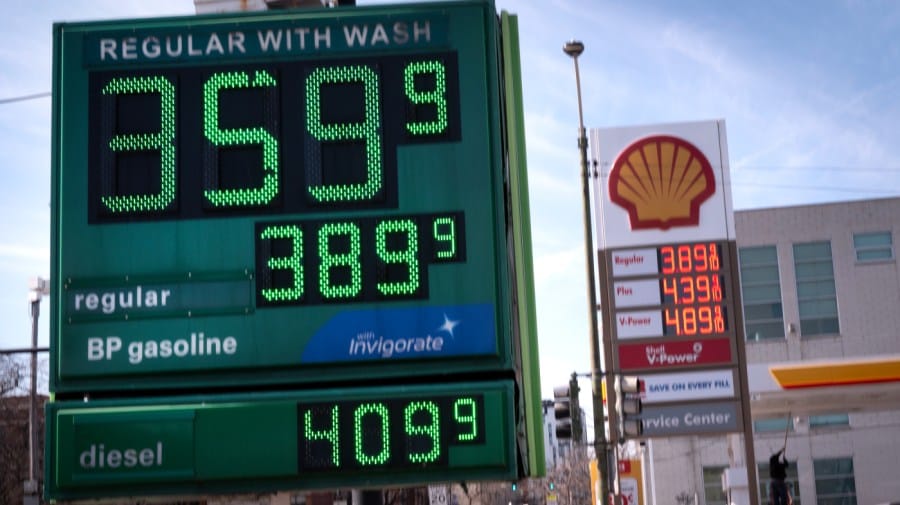
President Trump told Fox News host Brian Kilmeade on Friday that his administration is examining a waiver to the Jones Act — the century-old statute requiring that goods shipped between U.S. ports travel on American-built, American-owned, and American-crewed vessels — as a tool to bring down fuel prices that have surged since the U.S. launched military operations in Iran two weeks ago.
The logic is straightforward: waiving the Jones Act would allow foreign-flagged tankers to carry fuel between U.S. ports, theoretically increasing supply and lowering costs at the pump. The consequences are more complicated. Suspending the Jones Act would functionally end what remains of the U.S. maritime industry, eliminate thousands of union jobs, and hand control of coastal shipping to foreign corporations operating under flags of convenience with minimal labor protections.
Trump framed the potential waiver as a temporary emergency measure to address gas prices that have climbed as global oil markets react to escalating tensions in the Middle East. But temporary waivers have a way of becoming permanent facts on the ground — and the Jones Act has been under sustained attack from free-market advocates, oil companies, and logistics firms for decades. A crisis-driven suspension would give those interests exactly what they have been lobbying for: access to cheaper foreign shipping at the expense of American workers.
The Jones Act, formally known as the Merchant Marine Act of 1920, was designed to ensure that the U.S. maintained a domestic shipbuilding industry and a fleet of vessels that could be mobilized in wartime. It has done that, barely. The U.S. now has fewer than 100 oceangoing Jones Act-compliant vessels in active service, down from more than 250 in the 1980s. American shipyards that once built commercial cargo ships now survive primarily on military contracts. The industry employs roughly 650,000 workers directly and indirectly, according to a 2019 study by PwC commissioned by the industry trade group Transportation Institute — jobs concentrated in coastal states where alternatives are limited.
Waiving the Jones Act would allow foreign vessels — many registered in countries with minimal labor and environmental standards — to compete directly for domestic shipping routes. Those ships are cheaper to operate because they pay lower wages, face fewer safety regulations, and avoid U.S. taxes. The result would not be a level playing field. It would be the elimination of the field entirely. U.S.-flagged vessels cannot compete with ships that pay crews a fraction of American wages and operate under regulatory frameworks designed to minimize costs, not protect workers.
The oil and gas industry has been pushing for Jones Act reform for years, arguing that the law raises transportation costs and limits supply. That argument has some merit in specific cases — Puerto Rico, Hawaii, and Alaska face higher shipping costs in part because of Jones Act requirements — but it elides the broader question of who benefits when those protections disappear. The answer is not American workers or American communities. It is multinational shipping conglomerates and oil companies looking to shave costs by offshoring yet another sector of the economy.
The timing of Trump's statement is notable. Gas prices are a politically sensitive issue, and the administration is facing pressure to show it can mitigate the economic fallout from its military actions in Iran. A Jones Act waiver offers the appearance of decisive action without requiring the kind of sustained policy work that would actually address fuel costs — like releasing strategic petroleum reserves, negotiating with OPEC, or investing in renewable energy infrastructure to reduce dependence on volatile oil markets.
But the politics of the Jones Act are more complicated than Trump may anticipate. The law has traditionally enjoyed bipartisan support because it protects jobs in states that matter electorally — Louisiana, Texas, Washington, and Pennsylvania all have significant maritime industries. Labor unions, including the AFL-CIO and the International Longshore and Warehouse Union, have consistently defended the Jones Act as one of the few remaining protections for American workers in a globalized shipping industry. Waiving it would put Trump at odds with the labor constituency he has courted and alienate lawmakers in states where shipyard jobs are economically and politically significant.
There is also a national security dimension that free-market critics of the Jones Act tend to ignore. The U.S. military relies on the domestic maritime industry to provide sealift capacity in wartime — the ability to move troops, equipment, and supplies by sea. That capacity depends on maintaining a fleet of U.S.-flagged vessels and the shipyards that build and repair them. Allowing the industry to collapse in the name of cheaper gas would leave the U.S. dependent on foreign shipping in a future conflict, a vulnerability that defense officials have repeatedly warned against.
The progressive policy response here is not to defend the Jones Act uncritically — the law has real limitations, and coastal communities do pay higher prices for goods as a result — but to recognize that gutting labor protections in the name of short-term price relief is a bad trade. The better approach would be targeted investment in domestic shipbuilding, support for maritime workers transitioning to green energy industries, and serious engagement with the structural factors driving fuel prices rather than symbolic gestures that transfer wealth and power to foreign corporations.
What Trump is proposing is not a solution to high gas prices. It is a giveaway to an industry that has spent decades lobbying to dismantle the last protections for American maritime workers. The question is whether lawmakers will recognize that — or whether the politics of gas prices will override the long-term economic and national security interests that the Jones Act was designed to protect. The answer will determine whether the U.S. shipbuilding industry survives the next decade, and whether the jobs it supports disappear along with the rest of American manufacturing that has been sacrificed to the logic of global cost-cutting.