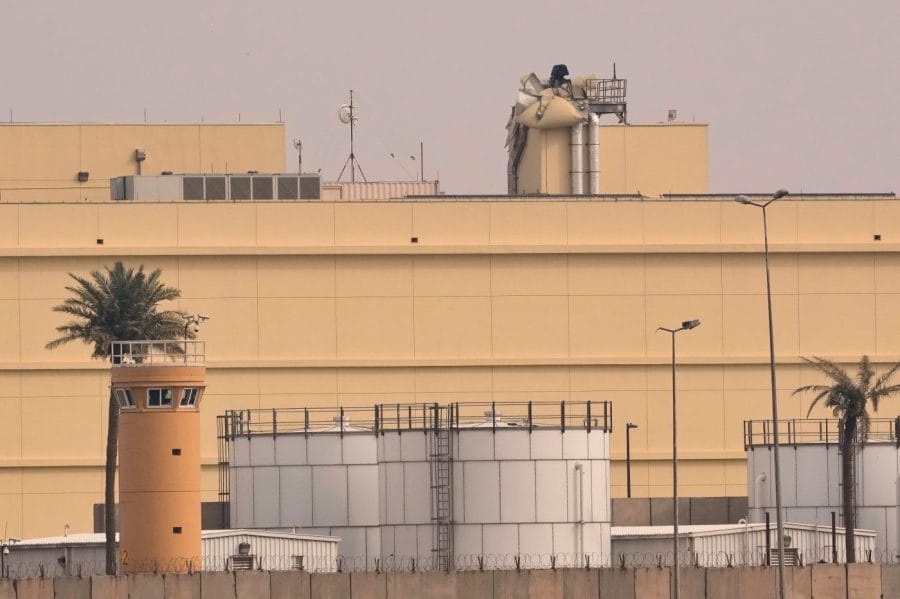
The missile that struck the U.S. Embassy in Baghdad on Saturday destroyed the compound's air defense system without causing a single injury — a level of precision that security analysts say was no accident. The strike, first reported by The Hill citing Al Jazeera and Associated Press sources, marks the most direct attack on American diplomatic infrastructure in Iraq since the October 2023 escalation began.
Iraqi security sources told Al Jazeera that the missile specifically targeted and destroyed the embassy's defensive capabilities. The Associated Press confirmed the projectile struck a helipad inside the heavily fortified Green Zone compound. This surgical targeting — disabling defenses while avoiding casualties — suggests Iran-backed militias are calibrating their attacks to probe American resolve without triggering the kind of mass-casualty event that would demand military retaliation.
The timing is particularly significant. Just weeks ago, the Biden administration claimed that Trump's election victory had deterred Iranian aggression, with officials suggesting that Tehran and its proxies were pulling back to avoid confrontation with the incoming administration. Saturday's strike demolishes that narrative. If anything, regional militias appear to be testing boundaries precisely because they calculate Washington is distracted by its political transition.
"They're sending a very specific message," said Renad Mansour, Iraq expert at Chatham House, in comments to regional media. "You can't protect your own embassy's air defenses, but you claim you're winning? This is about capability, not just symbolism."
The attack also exposes the fundamental contradiction in U.S. policy toward Iraq. Washington maintains approximately 2,500 troops in the country under the banner of fighting ISIS, but their actual mission has evolved into containing Iranian influence — a mission that Iraqi parliament voted to end in 2020 following the U.S. assassination of Iranian General Qassem Soleimani. The Iraqi government, caught between its security dependence on Washington and its political ties to Tehran, has proven unable or unwilling to prevent such attacks.
For Iraqi civilians, this latest escalation represents another step toward their country becoming a battlefield for U.S.-Iran tensions. The Green Zone, once Baghdad's government center, has transformed into a fortified American outpost that ordinary Iraqis cannot enter. Each rocket attack and retaliatory strike pushes Iraq further from sovereignty and closer to permanent proxy war status. As civilian casualties from U.S. strikes continue to mount across the region, Iraqis understand they will pay the price for any miscalculation.
The precision of Saturday's strike also raises uncomfortable questions about embassy security. How did attackers know exactly where to hit to disable air defenses? The implication — that militias have detailed intelligence on embassy defensive systems — suggests either a catastrophic security breach or surveillance capabilities that render current protections obsolete. Neither explanation offers comfort to the thousand-plus Americans still working in what was supposed to be an impregnable compound.
Regional analysts note that Iran-backed groups have shifted tactics since U.S. defense contractors deployed new AI targeting systems across the Middle East. Rather than mass rocket barrages that these systems can intercept, militias are using precision strikes designed to achieve specific tactical goals while staying below the threshold for major retaliation. It's an escalation through sophistication rather than scale — and it's working.
The Biden administration's response will likely follow a familiar pattern: condemn the attack, launch limited airstrikes against militia weapons depots in Syria or Iraq, and insist that deterrence is working. But Saturday's precision strike reveals that deterrence has already failed. When militias can disable embassy defenses at will, claims of strategic victory ring hollow. The question now is not whether escalation will continue, but how many more red lines will be crossed before Washington admits its Iraq policy is failing.