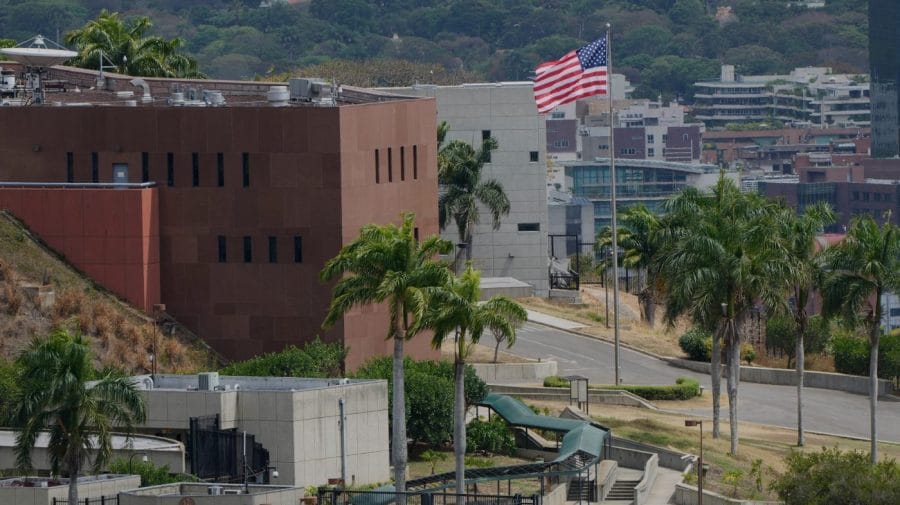
The pattern has become familiar: Washington condemns authoritarian regimes in public while quietly negotiating with them behind closed doors when economic interests align. Venezuela represents the latest example of this contradiction, as U.S. officials raised the American flag at the embassy in Caracas on Saturday for the first time in seven years—signaling a warming of relations with the same Maduro government the United States still officially considers illegitimate.
"The morning of March 14, 2019, the American flag was lowered for the final time at U.S. Embassy Caracas," U.S. Chargé d'Affaires to Venezuela Laura F. Dogu wrote, according to The Hill. The symbolic act marks a significant shift in U.S.-Venezuela relations, coming at a moment when global oil markets remain volatile and Washington seeks new energy partnerships.
The timing reveals the calculation. Venezuela holds the world's largest proven oil reserves—roughly 300 billion barrels—at a moment when U.S. military actions in the Middle East have disrupted global energy supplies. The Maduro government, which the United States attempted to overthrow through sanctions and recognition of opposition leader Juan Guaidó as "interim president" from 2019 to 2023, suddenly looks like a potential partner rather than a pariah.
This normalization comes despite no meaningful change in Venezuela's human rights situation. According to Human Rights Watch's 2024 report, the Maduro government continues to hold more than 260 political prisoners. Torture remains systematic. Independent media operates under constant threat. The same repression that justified breaking diplomatic ties in 2019 persists today.
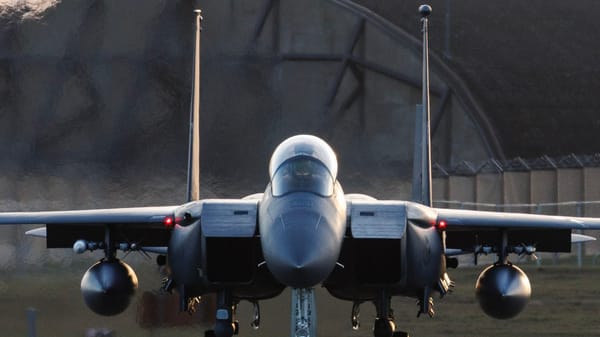
The contradiction extends beyond Venezuela. While quietly normalizing relations with Maduro, the Trump administration maintains its aggressive posture toward other oil-producing nations like Iran, where recent military escalation has sent oil markets into chaos. The difference appears to be geographic proximity and the potential for direct energy partnerships that bypass Middle Eastern supply chains.
Venezuelan opposition figures have watched this shift with dismay. Many risked their lives supporting U.S.-backed efforts to restore democracy. Now they see the American flag flying again in Caracas while their colleagues remain in prison. The message is clear: authoritarian governance becomes acceptable when it serves U.S. economic interests.
The State Department has offered no explanation for why human rights concerns that necessitated closing the embassy in 2019 no longer apply. No conditions appear to have been attached to this normalization—no prisoner releases, no restoration of press freedom, no timeline for democratic elections. The flag went up unconditionally.
This approach to foreign policy—where principles bend to accommodate resource needs—has consequences beyond Venezuela. It signals to authoritarian leaders worldwide that repression carries no permanent cost if you control something Washington wants. It tells dissidents and democracy activists that American support depends more on commodity prices than constitutional principles. As Russia benefits from disrupted Middle Eastern oil markets, the Venezuela normalization suggests a broader realignment where energy security trumps stated democratic values.
The flag-raising in Caracas represents more than renewed diplomatic presence. It acknowledges what critics have long argued: that U.S. foreign policy operates on parallel tracks, with public rhetoric about democracy and human rights running separately from private negotiations over resources and strategic advantage. Venezuela's oil reserves have not changed since 2019. Neither has its government's authoritarian character. What has changed is Washington's calculation of what it needs and what it is willing to overlook to get it.