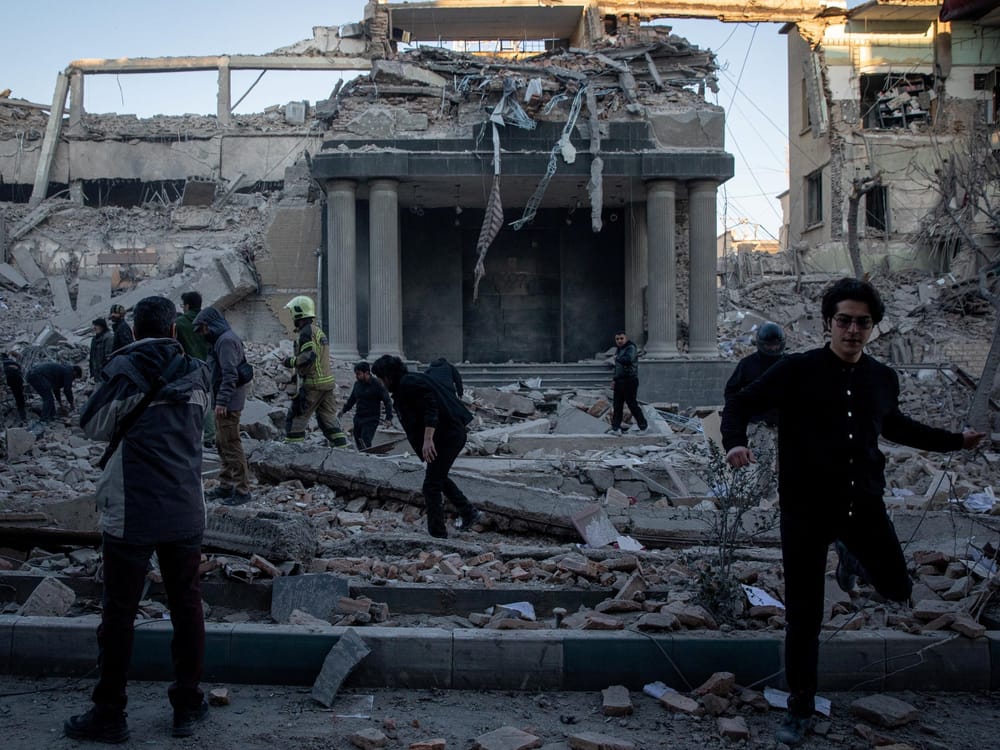
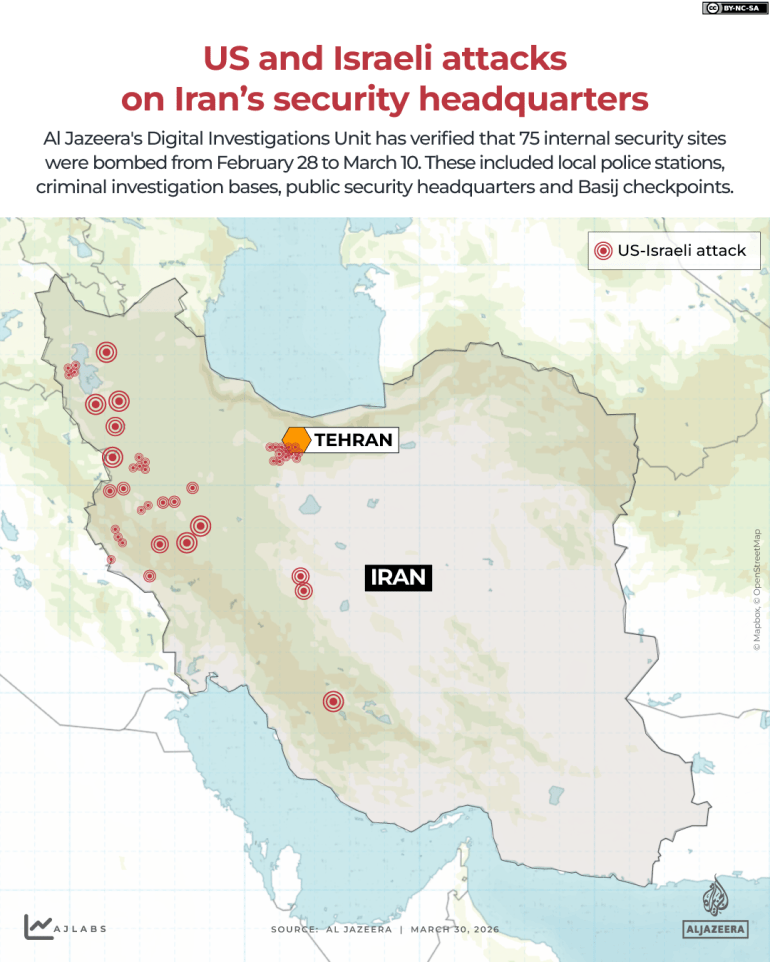
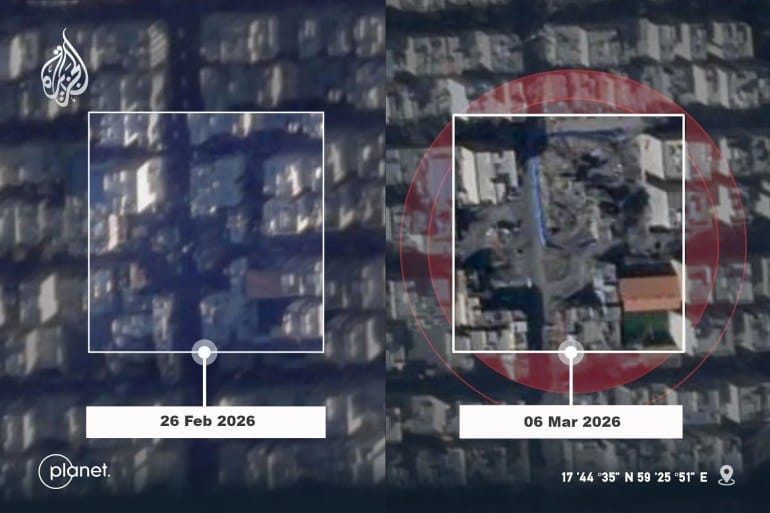
The United States and Israel have bombed more than 75 Iranian police facilities located in populated residential areas, Al Jazeera English reported in an investigation published Sunday. The strikes targeted internal security infrastructure — police stations, detention centers, and administrative offices — rather than military installations, marking a strategic shift toward dismantling Iran's capacity to maintain domestic order.
The investigation found that these facilities were deliberately selected despite their locations in densely populated urban centers, where civilian casualties become nearly inevitable. Iranian police forces operate primarily as civil law enforcement and internal security agencies, not military units engaged in external combat operations. The systematic nature of the targeting — spanning multiple cities and provinces — suggests a coordinated strategy to degrade Iran's ability to control its own territory from within.
This pattern of strikes raises fundamental questions about the stated objectives of the military campaign. If the goal is to neutralize Iran's nuclear program or military capacity, targeting civilian police infrastructure serves a different purpose: creating internal chaos and undermining the state's monopoly on domestic security. The distinction matters. Bombing military sites is an act of war between states. Bombing the institutions that maintain civil order is an attempt to collapse governance itself.
The choice of targets also complicates any future de-escalation. Military infrastructure can be rebuilt through defense budgets and international arms markets. Internal security systems — the networks of local police stations, the administrative records, the community relationships that enable law enforcement — take years to reconstruct. Communities lose not just buildings but the institutional memory and trust that make policing functional. In conflict zones from Iraq to Libya, the collapse of internal security infrastructure created power vacuums that armed groups and militias filled within weeks.
According to Al Jazeera English, the facilities were struck across multiple Iranian provinces, indicating a nationwide campaign rather than isolated tactical decisions. The geographic spread of the bombings suggests access to detailed intelligence about Iran's internal security architecture — the kind of mapping that requires either extensive surveillance networks or cooperation from sources inside Iran's security apparatus.
The targeting of police facilities in residential areas also shifts the burden of the conflict onto Iranian civilians in ways that military strikes on remote bases do not. When a police station in a neighborhood is destroyed, residents lose access to emergency services, criminal complaint systems, and the basic administrative functions that police facilities provide. The secondary effects — increased crime, vigilante justice, sectarian score-settling — follow predictably. Iranian civilians are already bearing the economic and humanitarian costs of a military stalemate that has failed to achieve its stated objectives.
The investigation also documents strikes on detention facilities, raising the possibility that prisoners were killed or escaped during the bombings. Iran's detention system holds political prisoners, common criminals, and individuals detained under the country's strict social control laws. Destroying these facilities without accounting for the people inside them creates a humanitarian crisis that extends beyond the immediate blast radius. Families lose contact with detained relatives. Prisoners face injury or death without trial. Escaped detainees may face extrajudicial violence from communities or security forces.
Western media coverage of the Iran conflict has largely centered on military strategy and geopolitical positioning, treating the war as an abstraction debated in Washington and Tel Aviv. The systematic destruction of civilian police infrastructure tells a different story — one in which the objective is not just military defeat but the comprehensive dismantling of Iran's capacity to govern itself. That strategy has a name: regime collapse through internal destabilization. It has been attempted before, in Iraq and Libya, with consequences that continue to destabilize entire regions decades later.
The question now is whether this targeting pattern represents official policy or operational mission creep by military planners operating without clear civilian oversight. Congress has not authorized this war, and there is no public record of debate over whether destroying Iran's internal security infrastructure serves American strategic interests. The strikes continue, the facilities are destroyed, and the people who relied on them for basic civil order are left to navigate the chaos that follows.