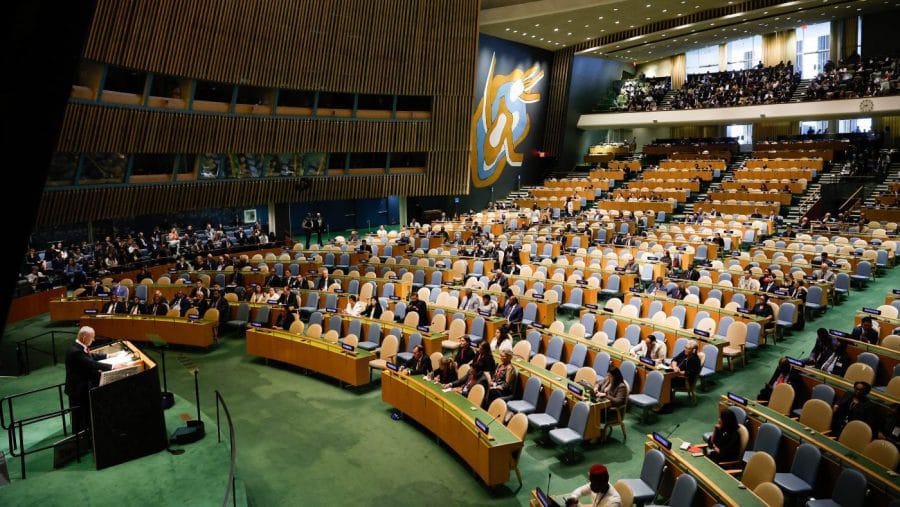
The United States government officially refuses to acknowledge that the transatlantic slave trade constitutes the "gravest crime against humanity" in history. That became clear Wednesday when American diplomats joined only Israel and Argentina in voting against a United Nations General Assembly resolution that would have made that designation formal — and opened discussions about reparations for centuries of forced labor, murder, and cultural destruction.
The resolution, led by Ghana and supported by the African Group at the UN, passed with 123 votes in favor. But the opposition and abstentions tell a more damning story about how former colonial powers and beneficiaries of slave labor continue to resist accountability. All 27 European Union members abstained, unwilling to support even symbolic recognition of their role in trafficking an estimated 15 million Africans across the Atlantic between the 16th and 19th centuries.
The vote exposes a fundamental divide between nations still grappling with slavery's legacy and those determined to avoid any acknowledgment that might carry financial or moral obligations. While 52 countries abstained — a diplomatic way of avoiding the issue entirely — the three "no" votes came from nations with particular stakes in preventing any reparations framework from emerging.
For the United States, where 246 years of chattel slavery built the economic foundation of the nation, the vote represents a continuation of decades of resistance to reparations discussions at any level. The Hill reported the vote without providing the US delegation's justification for opposing the measure, but the pattern is clear: American officials consistently block any international mechanism that might establish precedent for reparations claims.
The resolution's language was neither radical nor unprecedented. The designation of slavery as humanity's gravest crime aligns with historical consensus about the scale, duration, and intergenerational trauma of the transatlantic slave trade. Conservative estimates place the death toll in the tens of millions when including those who died during capture, transport, and enslavement. The systematic destruction of African societies, the theft of labor that built Western wealth, and the ideological apparatus of racial hierarchy created to justify it represent a crime whose effects persist in every measurable social outcome today.
Yet the Biden administration, which has made symbolic gestures toward racial equity domestically, joined the Trump-era pattern of opposing international accountability for slavery. This contradiction illuminates how American exceptionalism operates: acknowledgment of historical wrongs is acceptable only when it carries no binding obligations and remains entirely within US control.
The European abstentions reveal a different but related dynamic. Nations like Britain, France, Spain, Portugal, and the Netherlands — whose museums display wealth extracted through slave labor, whose ports grew rich from human trafficking, whose industrial revolutions depended on slave-produced cotton and sugar — chose diplomatic neutrality rather than historical honesty. Their abstentions allow them to avoid both the moral clarity of support and the reputational damage of opposition.
Israel's "no" vote reflects its alliance with US positions at the UN and its own resistance to reparations frameworks that might set precedents for Palestinian claims. Argentina's opposition under its current right-wing government aligns with broader resistance to historical accountability movements across Latin America, where European colonialism and slavery also left deep scars.
The resolution's call for reparations discussions — not even binding commitments, merely discussions — proved too threatening for these powers to support. This resistance occurs while formerly enslaved populations and their descendants continue to face systemic disadvantages directly traceable to slavery and its aftermath. In the United States, the racial wealth gap means the average white family has eight times the wealth of the average Black family. Similar disparities exist across the Americas and in European nations with significant African diaspora populations.
Ghana's leadership on this resolution carries particular weight. As a major departure point for enslaved Africans, Ghana has become a site of memory and reckoning with the slave trade's legacy. The government has pursued initiatives like granting citizenship to diaspora Africans and creating memorial sites at former slave castles. Their diplomatic push for international recognition represents an attempt to move beyond symbolism toward substantive acknowledgment.
The timing matters. This vote comes as racial justice movements worldwide have pushed slavery's ongoing effects into mainstream discourse. From the Movement for Black Lives to Caribbean nations' reparations campaigns, formerly colonized and enslaved peoples are demanding more than museums and monuments. They want the wealth stolen from their ancestors returned, or at least acknowledged in ways that enable material redress.
The US vote also contradicts its stated commitment to human rights leadership globally. American diplomats routinely condemn other nations' human rights violations and historical crimes. Yet when asked to apply the same standards to America's foundational crime, the answer is a clear "no." This selective morality undermines US credibility on human rights issues and reveals how power, not principle, drives American positions at international bodies.
The abstaining European nations face their own reckoning. Many have begun returning looted artifacts to African nations, acknowledging that colonial theft cannot be separated from their museum collections. Yet they stop short of extending that logic to the humans who were stolen, sold, and worked to death to build European wealth. The abstentions represent an attempt to have it both ways — avoiding the reputational cost of voting "no" while ensuring no binding framework for reparations emerges.
This isn't merely about history. The vote reflects ongoing global inequalities rooted in slavery and colonialism. African nations continue to export raw materials to former colonial powers who profit from processing them. Caribbean islands devastated by climate change — caused primarily by industrialized nations built on slave labor — receive lectures about development while being denied resources for adaptation. The same nations that grew rich from slavery now impose structural adjustment programs that perpetuate poverty in formerly enslaved regions.
The resolution's defeat in practical terms — it passed but without support from the world's wealthiest nations — ensures that international reparations discussions remain stalled. Without US and European support, no binding framework can emerge. The nations that benefited most from slavery maintain veto power over attempts to address its legacy.
Yet the vote also demonstrates growing Global South unity on this issue. The 123 nations supporting the resolution represent a clear majority of the world's population, even if they lack the economic power of the opposers and abstainers. This coalition includes not just African nations but countries across Asia, Latin America, and the Pacific who understand how slavery and colonialism shaped the current world order.
For Americans, this vote should prompt questioning about what "leadership" means when the US stands virtually alone in opposing recognition of history's gravest crime. It reveals how deeply the American state remains invested in avoiding any framework that might quantify what was stolen and what is owed. As domestic movements for reparations gain momentum in cities and states, the federal government's international position shows how far Washington remains from meaningful acknowledgment. This pattern extends beyond reparations: the US recently demonstrated the same instinct to silence UN accountability efforts when it sanctioned a UN Special Rapporteur for documenting war crimes.
The path forward requires breaking the diplomatic stalemate that allows former slave-trading nations to block accountability indefinitely. Whether through regional bodies, bilateral agreements, or domestic policies, the push for reparations will continue. The UN vote simply clarifies where governments stand: with historical truth and its implications, or against them. The United States has chosen its side, joining only two other nations in refusing to call slavery what it was — history's gravest crime against humanity. That position speaks louder than any diplomatic rhetoric about American values or human rights leadership.