Somewhere between sports gambling and stock trading, a new market has emerged where users can wager on whether Israel will strike Iranian nuclear facilities, how many civilians will die in Gaza, or whether a head of state will be assassinated by year's end. According to BBC News, prediction markets have hosted millions of dollars in bets related to conflicts in Iran and Gaza — and the regulatory infrastructure to govern them barely exists.
This is not hypothetical. Platforms like Polymarket, Kalshi, and PredictIt are processing real money on real wars, and the bets are getting more granular and more disturbing. Will there be a ground invasion by March? Will a specific leader be removed from power? Will civilian death tolls exceed a certain threshold? These are not parlor games or thought experiments — they are financial instruments with real liquidity, real incentives, and real consequences for how information about war is produced and consumed.
The problem is not just that war betting is grotesque — though it is. The problem is that these markets create financial incentives for outcomes that harm people. When someone holds a position that pays out if civilian casualties exceed 10,000, they have a vested interest in that threshold being crossed. When traders can profit from military escalation, they have an incentive to amplify rumors, spread disinformation, or pressure decision-makers toward conflict. The market does not care about human cost. It cares about being right — and being right means someone else was wrong, often fatally.
Prediction markets bill themselves as information aggregators, tools for forecasting that harness the wisdom of crowds. Proponents argue they are more accurate than polls or expert panels because participants have skin in the game. But skin in the game becomes a moral hazard when the game is whether a city gets bombed. The same financial mechanism that might efficiently price the likelihood of an interest rate hike becomes a grotesque incentive structure when applied to human suffering.
And the regulatory response has been almost nonexistent. The Commodity Futures Trading Commission (CFTC), which has jurisdiction over some prediction markets, has taken a narrow view of what qualifies as a regulated commodity. Event contracts — bets on elections, policy outcomes, or geopolitical events — occupy a legal gray zone. Some platforms operate offshore to avoid U.S. jurisdiction entirely. Others have successfully argued that their contracts are not gambling because they serve a hedging or informational function. The result is a patchwork of oversight that leaves the most ethically troubling markets effectively unregulated.
This is not an accident. The prediction market industry has spent years lobbying for a light regulatory touch, framing itself as innovation rather than speculation. It has cultivated relationships with academics who study forecasting, with venture capitalists who see a new asset class, and with libertarian policymakers who view any market restriction as government overreach. The industry's argument is that prediction markets are fundamentally different from gambling because they produce socially valuable information. But that argument collapses when the information being produced is "how many people will die" and the social value is unclear at best.
The comparison to tech industry lobbying against AI regulation is instructive. In both cases, an emerging industry is racing ahead of regulators, building infrastructure and user bases before rules can catch up. In both cases, the industry frames itself as too novel and too complex for traditional regulatory frameworks. And in both cases, the result is that harm is deferred, externalized, and treated as an acceptable cost of innovation.
There is also a darker possibility: that these markets are not just predicting events but influencing them. If a prediction market shows a 70 percent probability of military strikes within 48 hours, does that information get used by actors who have the power to make strikes happen? If a market moves dramatically based on insider information, does that signal intent to adversaries or allies? Prediction markets are supposed to aggregate dispersed knowledge, but in geopolitics, knowledge is power — and the line between forecasting and shaping outcomes is thinner than the industry wants to admit.
Some platforms have started pulling back. After public outcry, a few markets delisted contracts on civilian casualties or political assassinations. But these decisions are voluntary, inconsistent, and easily reversed. Self-regulation is not regulation. It is public relations. And as long as war betting remains profitable, platforms will find ways to host it — if not directly, then through subsidiaries, offshore entities, or decentralized protocols that are even harder to police.
What makes this moment particularly dangerous is the convergence of prediction markets with cryptocurrency infrastructure. Decentralized prediction markets built on blockchain technology operate outside traditional financial systems entirely. They cannot be shut down by a single regulator or jurisdiction. They process transactions in crypto, making it harder to trace money flows or enforce sanctions. And they are being marketed as censorship-resistant, which in practice means resistant to any accountability at all.
Progressive policymakers are starting to notice. Some members of Congress have called for CFTC hearings. Consumer protection advocates are pushing for clearer definitions of what qualifies as gambling versus forecasting. But the legislative process is slow, and the industry is moving fast. By the time a regulatory framework is in place, prediction markets on war, pandemics, and political violence could be too embedded in the financial system to extract without collateral damage.
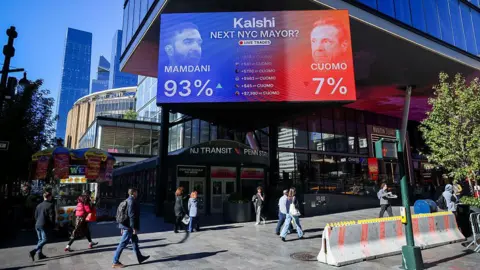
The question is not whether prediction markets should exist. The question is what should be off-limits. Financial markets already restrict certain kinds of speculation — you cannot buy life insurance on a stranger, for example, because it creates an incentive for that person to die. The same principle should apply here. If a market creates financial incentives for human suffering, it should not be legal to operate it. If a contract turns war into a commodity, it should be banned. And if an industry cannot police itself on basic questions of morality, then regulators need to do it for them.
Right now, the only constraint on war betting is public disgust — and that is not enough. Regulators need clear authority to shut down contracts that commodify violence. Platforms need enforceable standards, not voluntary guidelines. And Congress needs to decide whether the informational value of prediction markets, if any, outweighs the moral cost of turning human tragedy into a tradable asset. Because every dollar wagered on whether a city will be bombed is a dollar that says some things should not have a price — and this is one of them.