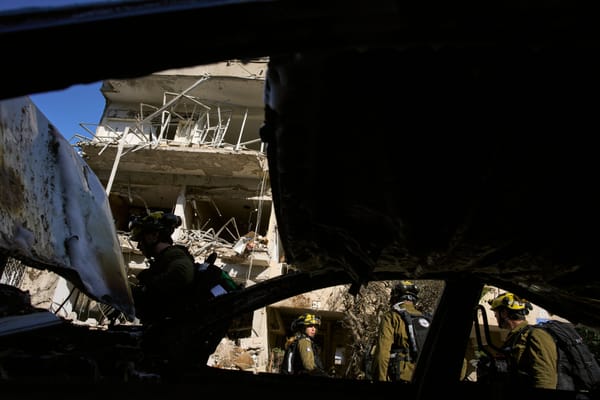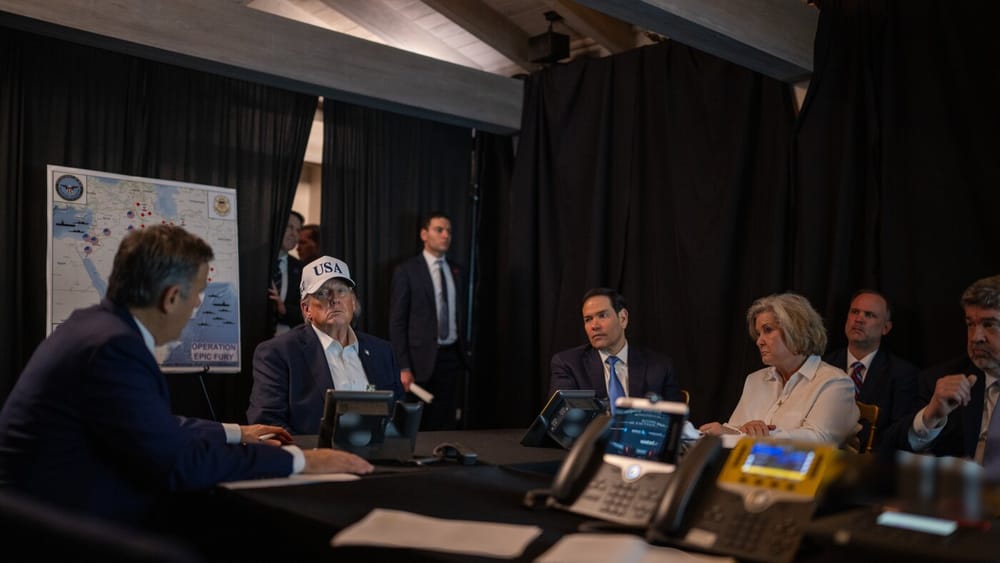
The White House is blending real footage of missile strikes and destruction in Iran with clips from video games, action movies, and sports highlights in official social media videos, according to NPR News. The videos present war as spectacle — a curated entertainment product designed for maximum engagement on platforms built to reward sensationalism.
This is not a new propaganda technique adapted for social media. This is something more corrosive: the deliberate erasure of the line between real violence and simulated violence, packaged by the institution responsible for ordering that violence. When the White House edits footage of actual bombings to mimic the aesthetic grammar of Call of Duty or Marvel movies, it is not just selling a war. It is training audiences to experience war as content — something to scroll past, react to with an emoji, share if the production value is high enough.
The people being killed in those strikes are not NPCs. They do not respawn. Their families are not background characters in someone else's hero narrative. But the video editing choices — the quick cuts, the dramatic music, the intercutting of fictional explosions with real ones — work to dissolve that distinction. The goal is not to inform. It is to desensitize through entertainment.
This approach serves a specific function: it makes opposition to the war feel like a failure of imagination, a refusal to appreciate the spectacle. If war looks like a blockbuster, then questioning it feels like being a bad audience member. The framing is not "Should we be doing this?" but "Isn't this impressive?" The administration is not making an argument for military action. It is producing a franchise.
Gamification of war is not metaphorical. It is a documented strategy. The Pentagon has partnered with combat sports leagues to blur the line between state violence and entertainment. Defense contractors sponsor esports tournaments. Military recruitment ads are designed to look like game trailers. The White House videos are the logical endpoint: the war itself, presented in the aesthetic language of games, with real human casualties edited into the montage.
The people most affected by this framing are not just the Iranians living under bombardment, though they bear the greatest cost. It is also the American public, whose capacity to process the moral weight of war is being systematically dismantled. When violence is presented as a visual effect, opposition to it requires first breaking through a layer of aesthetic conditioning. You have to remind yourself that what you are watching is real — and that the people who made the video are counting on you forgetting.
This is not a side effect of social media-native communication. It is a choice. The White House could release factual updates on military operations. It could provide context, legal justification, and accountability for civilian casualties. Instead, it is producing hype reels. The message is clear: war is not a policy decision to be debated. It is a product to be consumed, and your job as a citizen is to watch, react, and move on to the next post.
What happens when a generation grows up unable to distinguish between real war and simulated war — not because they are confused, but because their government deliberately taught them not to? That is not a hypothetical. That is the strategy currently being deployed by the institution with the most powerful military in human history. And it is working exactly as designed.