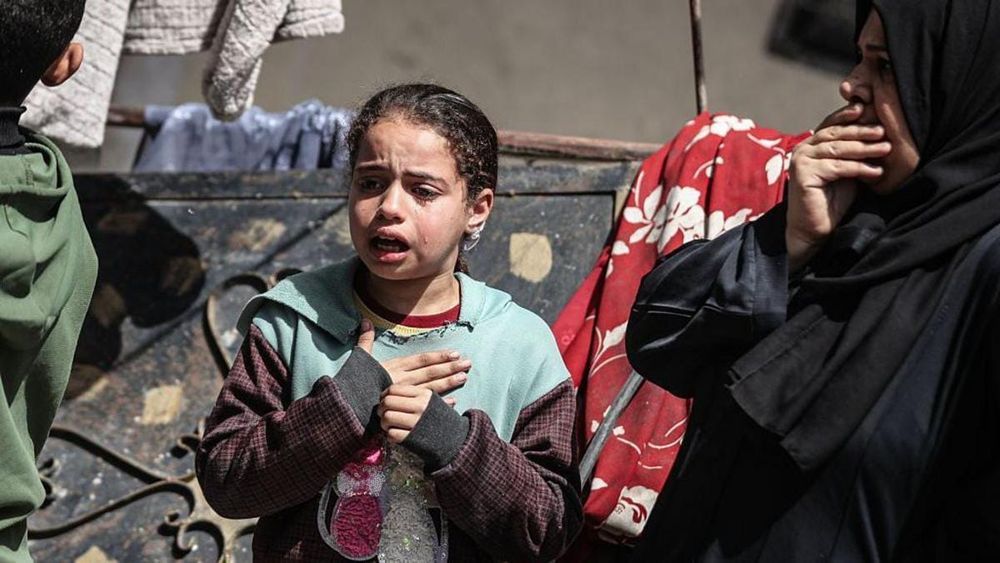
The World Health Organization suspended all medical evacuations from Gaza after Israeli troops shot and killed a Palestinian contractor driving an approved evacuation vehicle, BBC News reported. The Israeli military stated that troops fired at the vehicle because they believed it posed "an immediate threat." The WHO did not accept that explanation as sufficient to resume operations. The evacuations stopped.
This is where the official framing ends and the documented reality begins. The WHO suspension is not a cautious pause by a neutral health body caught in crossfire. It is the foreseeable consequence of a pattern — one in which attacks on humanitarian workers and medical infrastructure in Gaza have continued with sufficient regularity that the organizations responsible for keeping people alive can no longer operate safely. The question is not whether this incident was a mistake. The question is what system produces these mistakes, and who benefits from the result.
Gaza's medical infrastructure has been under sustained pressure since October 2023. As Tinsel News has previously documented, healthcare workers in Gaza have recorded the systematic destruction of medical facilities, and those records form part of a broader case that attacks on medical infrastructure have not been incidental to the conflict — they have been a feature of it. Medical evacuation routes exist precisely because the healthcare system inside Gaza cannot handle the volume or severity of injuries it is absorbing. When those routes are closed, patients who require surgery, dialysis, cancer treatment, or neonatal care face a simple arithmetic: the care does not exist inside Gaza, and they can no longer get out.
The WHO has not disclosed how many patients are currently waiting for medical evacuation, but a figure of approximately 20,000 people awaiting transfer has been cited in recent reporting, including by Tinsel News in coverage of Israeli strikes that killed 13 people in Gaza, including a pregnant woman and two children, as that evacuation backlog continued to grow. Twenty thousand people is not an abstraction. It is twenty thousand individual medical cases — each one a person who has already survived something, who has been assessed by a clinician as requiring care that does not exist where they are, and who is now waiting on a process that has just been halted because the vehicle carrying the previous patient was shot.
The Israeli military's stated justification — that troops believed the vehicle posed an immediate threat — is the same formulation that has appeared in dozens of previous incidents involving the deaths of aid workers, medical personnel, and civilians in marked vehicles in Gaza. The pattern is consistent enough that it demands a structural explanation, not a case-by-case one. Either the military's rules of engagement make it possible to fire on clearly marked humanitarian vehicles with near-impunity, or the coordination mechanisms that are supposed to protect those vehicles are not functioning, or both. The Israeli military has not publicly addressed which of these conditions applies. The WHO has not said whether it was given advance notification protocols that were followed or ignored. What is documented is the outcome: a contractor is dead, and medical evacuations have stopped.
The suspension also arrives at a moment when international oversight of Israeli military conduct in Gaza faces active suppression. The United States has vetoed multiple UN Security Council resolutions that would have established independent monitoring mechanisms. As Tinsel News has reported, the U.S. sanctioned a UN official for documenting war crimes — a direct signal to international bodies about the cost of accountability work in this conflict. The WHO, operating inside that environment, is making a rational institutional calculation: it cannot send contractors into a zone where the military that controls the zone has just killed one of them, without any indication that the circumstances that produced that killing have changed.
There is also a question of what the suspension costs, measured in people. Medical evacuations from Gaza are not elective. The patients on those lists have conditions that will worsen without treatment. Dialysis patients who miss sessions face organ failure. Cancer patients whose treatment windows close face disease progression that may become untreatable. Neonates and pediatric patients with surgical needs face timelines that are not flexible. Every day the WHO suspension holds is a day in which the gap between what those patients need and what they can access widens. Some of those patients will not survive the suspension. That cost is not hypothetical — it is the direct consequence of the killing of one contractor on one road.
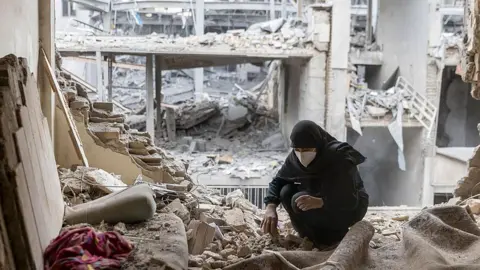
The WHO has not announced conditions for resumption. The Israeli military has not announced any review of the incident that would produce changed procedures. The contractor who was killed has not been named in available reporting. What is named is the system: a humanitarian operation that requires the cooperation of a military force to function, operating in a territory where that military force has repeatedly demonstrated it will fire on the vehicles and personnel that system depends on. Until the Israeli military provides a credible account of what happened and a credible mechanism for preventing it from happening again, the WHO's suspension is the only rational response available to it — and the 20,000 people waiting for evacuation are the ones paying the price for a situation they did not create and cannot escape.