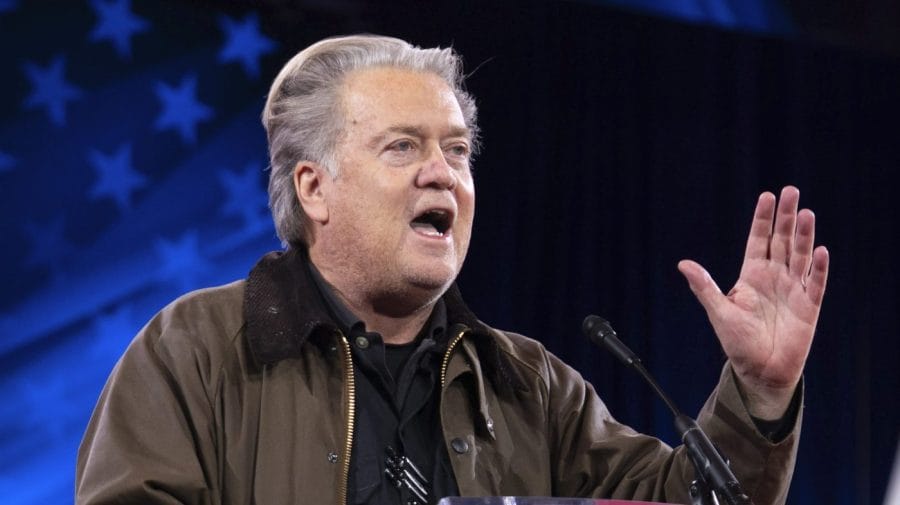
Immigration and Customs Enforcement officers at airports aren't just checking documents — they're rehearsing for the 2026 midterm elections. That admission came directly from Steve Bannon, the former White House strategist who helped architect the first Trump administration's immigration crackdown, during a conversation with conservative lawyer Mike Davis on his "War Room" podcast.
"We can use what's happening with these ICE [officers] helping out at..." Bannon said, according to The Hill, before explicitly connecting the airport operations to electoral strategy. His statement confirms what voting rights advocates have long suspected: federal immigration enforcement is being deliberately deployed to create an atmosphere of fear that suppresses voter turnout in communities of color.
The deployment of ICE officers to assist with "airport operations" — a vague mandate that allows for broad interpretation — represents more than routine immigration enforcement. When a key architect of Trumpist politics openly describes these deployments as electoral preparation, the systematic transformation of federal law enforcement into a tool of partisan voter suppression becomes undeniable.
This isn't the first time immigration enforcement has been weaponized around elections. In 2018, ICE conducted workplace raids in Tennessee just days before a competitive Senate race. In 2020, Border Patrol checkpoints appeared in predominantly Latino neighborhoods in Arizona during early voting. Each time, officials claimed these were routine operations. Bannon's admission strips away that pretense.
The mechanics of voter intimidation through immigration enforcement are straightforward. When ICE maintains a visible presence in airports — transportation hubs that millions of Americans must use — it creates a chilling effect that extends far beyond undocumented immigrants. U.S. citizens who "look foreign" report increased harassment. Mixed-status families avoid travel. The message is clear: certain Americans should think twice before participating in public life.
What makes Bannon's framing particularly telling is his use of "test run" language. Political operatives test tactics they intend to scale up. If airport deployments are the test, the 2026 implementation could involve ICE presence at polling places, in predominantly immigrant neighborhoods, or along routes to voting locations. The actual goal? Creating an environment where naturalized citizens, legal residents with citizen family members, and anyone who might be profiled stays home on election day.
Federal law prohibits voter intimidation, including "deploying law enforcement officers in a manner that violates the Voting Rights Act." But enforcement of these protections has weakened considerably. The Justice Department's Civil Rights Division, which would typically investigate such violations, has seen its voting rights enforcement capacity systematically dismantled under the new administration. Meanwhile, the Deputy Attorney General has suggested armed immigration agents monitor voting sites, normalizing the use of federal law enforcement as an electoral tool.
The broader pattern extends beyond ICE. The same week as Bannon's comments, military policies began targeting religious minorities, while federal agencies started demanding proof of "sincere" religious belief for basic accommodations. Each policy, examined alone, might seem like bureaucratic overreach. Viewed together, they form a coordinated effort to make certain Americans feel unwelcome in their own country.
Immigration enforcement as electoral strategy has deep roots in American history. In the 1920s, raids in Mexican-American neighborhoods intensified before elections. In the 1950s, "Operation Wetback" deliberately targeted citizens alongside undocumented immigrants to suppress Latino political participation. The Voting Rights Act of 1965 was supposed to end such tactics. Bannon's casual admission suggests those protections exist now only on paper.
Davis, Bannon's podcast guest, didn't challenge the electoral framing. Instead, the conservative lawyer who has been floated for senior Justice Department positions treated voter suppression through federal law enforcement as a legitimate political tactic. This normalization of authoritarian methods — discussing them openly on podcasts rather than in shadowed strategy sessions — marks a new phase in American democratic decline.
The response from congressional Democrats has been notably muted. While several members have raised concerns about ICE's expanding presence at airports, none have directly addressed Bannon's admission that these deployments serve an electoral purpose. This silence enables the transformation of immigration enforcement from a policy tool into a weapon of mass disenfranchisement.
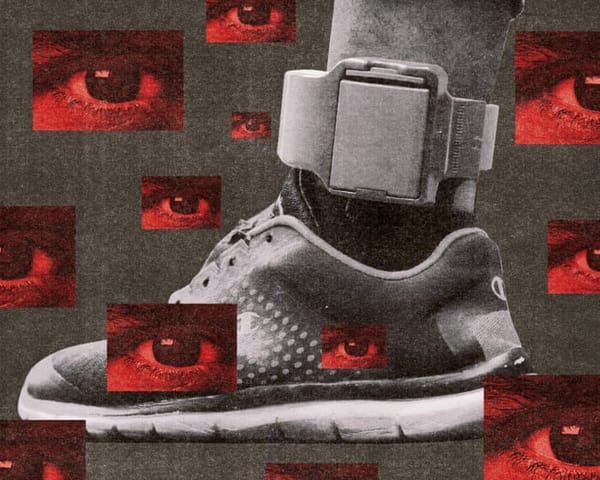
For communities targeted by this strategy, Bannon's admission changes nothing about their daily reality. They already knew that every ICE uniform at an airport, every checkpoint on a highway, every raid at a workplace served to remind them that their participation in American democracy is conditional. What's new is the shamelessness — the open acknowledgment that federal resources are being deployed not for public safety but for partisan advantage. This comes as ICE purchases location data from brokers to track people without warrants, expanding its surveillance reach far beyond airports and checkpoints.
The 2026 midterms are 18 months away. If airport deployments are indeed a "test run," as Bannon claims, then federal immigration enforcement is currently gathering data on which tactics most effectively create fear, which communities are most vulnerable to intimidation, and which deployments generate the least pushback. Every traveler who sees ICE at their gate, every family that cancels a trip rather than risk an encounter, every citizen who starts carrying their passport to domestic flights — all become data points in an electoral strategy that treats the Constitution as a suggestion rather than law.
When those charged with enforcing immigration law openly admit they're using that power to influence elections, they're confessing to a form of electoral manipulation that would trigger international condemnation if it happened anywhere else. But because it's happening here, wrapped in the language of border security and public safety, it's treated as just another political tactic rather than what it actually is: an authoritarian test run happening in plain sight at America's airports.