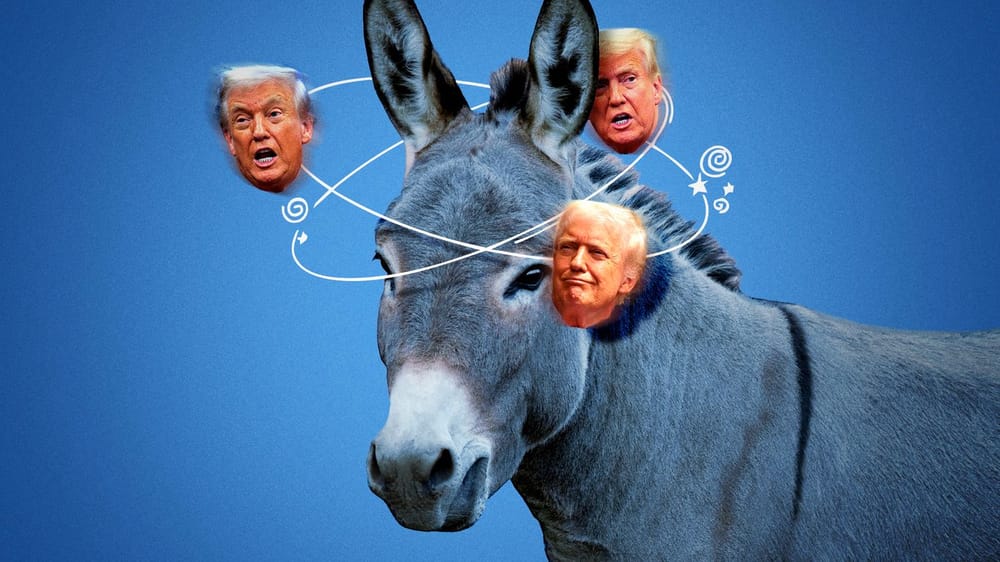
The Democratic Party establishment believes it has a Trump problem. What it actually has is a working-class problem — and the party's early planning for 2028 shows it still doesn't understand the difference.
According to top party strategists who spoke to Axios, Democrats are "barreling toward an identity crisis" as they prepare for a presidential election without Donald Trump on the ballot. Jim Messina, Barack Obama's 2012 campaign manager, warns that "you can't win a presidential election on opposition alone." David Plouffe, who ran Obama's 2008 campaign and advised Kamala Harris in 2024, says Democrats must be able to win in "what are now red states." Both are correct about the problem. Neither seems willing to name its actual cause: the party's systematic betrayal of working people over four decades.
The most damning evidence comes from the party's own polling. An NBC survey cited by Axios found that 52% of voters view the Democratic Party negatively, while only 30% see it positively — worse ratings than they give the GOP. On the economy, Democrats have no advantage despite widespread anger over continuing high prices under Trump. This isn't a messaging problem. It's the predictable result of a party that spent the Clinton and Obama years deregulating Wall Street, signing trade deals that gutted manufacturing, and telling displaced workers to "learn to code."
The standard Democratic counter-argument goes like this: the party has passed meaningful legislation that helps working families, from the Affordable Care Act to the American Rescue Plan. Republicans obstruct popular programs. Voters are misinformed by right-wing media. All of this is true. It's also irrelevant. When Democrats controlled the White House and both chambers of Congress in 2021-2022, they killed the $15 minimum wage, abandoned paid family leave, and let the expanded child tax credit expire — lifting 3.7 million children back into poverty. These weren't Republican victories. They were Democratic choices.
Here's what party strategists won't say: working-class voters didn't abandon the Democratic Party. The Democratic Party abandoned them first. It happened when Bill Clinton signed NAFTA and watched 700,000 manufacturing jobs disappear. It happened when Obama bailed out banks while 10 million families lost their homes. It happened when Biden promised to be "the most pro-union president in history" and then forced rail workers to accept a contract without paid sick days — only to watch a train carrying toxic chemicals derail in East Palestine, Ohio, three months later.
The consultants quoted in the Axios piece are right that Democrats are "deeply divided over what they'd do if they returned to power." But the division isn't really about policy. It's about power. The party's donor class — tech executives, Wall Street, real estate — has material interests directly opposed to those of working families. You cannot simultaneously represent Amazon warehouse workers and Amazon shareholders. You cannot fight for tenants while taking money from BlackRock. The "division" is actually a choice the party refuses to make.
Messina says Democrats' "new vision should focus on the economy." But which economy? The one where stock prices hit record highs while real wages stagnate? The one where private equity firms buy up single-family homes while families sleep in cars? Democrats don't need a new message about the economy. They need a different relationship to capital.
Consider what's happening right now, as Trump's policies create genuine economic chaos. Gas prices are spiking due to his Iran escalation. Immigration raids are disrupting food supply chains. Tariff threats are driving up costs. This should be the opposition party's moment. Instead, Democrats are polling worse than the GOP because voters reasonably ask: when you had power, what did you do for us? The answer — not enough to matter — explains why immigrant families writing wills in case of deportation don't trust Democrats to protect them any more than Republicans.
The path back to power isn't complicated. It requires choosing sides. Support striking workers unconditionally. Break up monopolies that prey on families. Guarantee healthcare as a right, not a consumer product. Build public housing. Cancel student debt. Tax wealth, not work. These aren't radical positions — they're overwhelmingly popular. What's radical is a party that claims to represent working people while systematically betraying their interests.
Democrats will likely gain seats in the 2026 midterms, as the opposition party usually does. Trump's approval ratings are already underwater. But mistaking reflexive anti-Trump sentiment for actual support would be catastrophic. In 2028, when Trump is gone and voters ask what Democrats stand for, "we're not MAGA" won't be enough. Neither will tweaks around the edges of a system that's failing most Americans. The party needs more than new messaging. It needs to pick a side in the class war it's been pretending doesn't exist. Until it does, it will keep losing working-class voters to anyone — including demagogues and charlatans — who at least acknowledges their pain is real.