A single specific, sourced statistic reframes conventional understanding: 139 documented incidents of voter intimidation occurred at U.S. polling places in 2022, according to the Brennan Center for Justice — the highest number recorded since the organization began tracking such incidents in 2012. Now the Deputy Attorney General of the United States is asking why federal immigration agents shouldn't be added to that environment.
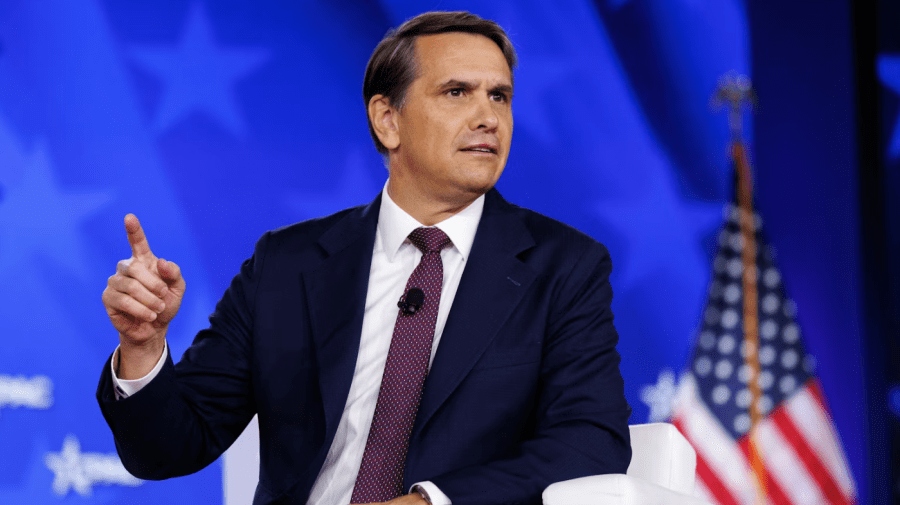
"Why is there an objection to sending ICE to polling stations?" Todd Blanche said Thursday at the Conservative Political Action Conference, as The Hill reported. "Illegals can't vote. It doesn't make any sense."
The statement from the nation's second-highest law enforcement official transforms what was once considered an extreme proposal into a matter of federal policy consideration. Blanche, who serves directly under Attorney General Pam Bondi, oversees the Civil Rights Division — the very office historically charged with preventing voter intimidation.
Federal law explicitly prohibits the deployment of armed federal agents at polling places except in extraordinary circumstances. The Posse Comitatus Act and subsequent civil rights legislation created these barriers after decades of armed intimidation kept Black voters from the polls across the South. Immigration and Customs Enforcement agents carry weapons, have arrest powers, and operate under a mandate that encourages questioning anyone they suspect might be undocumented.
The practical effect of ICE presence at polling sites would be immediate and measurable. In Arizona's Maricopa County, where 31% of residents are Latino, election officials already struggle with voters' fears about immigration enforcement. A 2020 study by the Latino Policy and Politics Initiative at UCLA found that 68% of Latino voters in mixed-status families — where some members are citizens and others are not — reported concerns about encountering immigration enforcement that affected their likelihood to vote.
Blanche's framing — that objections "don't make any sense" because "illegals can't vote" — deliberately misses the documented reality. The presence of armed federal agents checking immigration status would deter not just non-citizens (who already face severe federal penalties for illegal voting that virtually never occurs) but millions of Latino citizens who might fear interrogation, detention, or harassment of family members.
This represents a fundamental shift in how the Justice Department views its role in elections. Previous administrations of both parties maintained clear separation between immigration enforcement and voting access. Even the Trump administration's first term, despite aggressive immigration policies, did not formally propose stationing ICE at polling places.
The timing connects to a broader pattern. Steve Bannon recently admitted that ICE deployments at airports serve as a "test run" for voter intimidation operations in 2026. The administration has already demonstrated willingness to use federal law enforcement for political messaging, with high-profile immigration raids coinciding with political events.
State election officials across the political spectrum have consistently opposed federal agent presence at polls. In 2020, when rumors circulated about potential federal deployments, secretaries of state from both parties issued statements emphasizing that state and local officials, not federal agents, oversee election security. The National Association of Secretaries of State has maintained this position, noting that federal agent presence would likely decrease voter turnout without any corresponding benefit to election integrity.
The legal framework Blanche appears to be testing would require significant reinterpretation of existing law. The Civil Rights Act of 1964 and the Voting Rights Act of 1965 specifically address intimidation at polling places. Federal courts have consistently ruled that even the presence of off-duty law enforcement in uniform can constitute illegal voter intimidation if deployed to create a chilling effect on minority communities.
What makes Blanche's statement particularly significant is his position within the Justice Department hierarchy. As Deputy Attorney General, he oversees day-to-day operations of federal law enforcement. His public questioning of why ICE shouldn't monitor polling places signals to U.S. Attorneys and federal agents that such deployments might receive support from Justice Department leadership.
The infrastructure for such a deployment already exists. ICE operates under broad authority that allows agents to question anyone within 100 miles of any U.S. border — an area that includes the entire states of Florida, Delaware, Hawaii, Maine, and Michigan, and encompasses most major U.S. population centers. The agency's 287(g) program already embeds immigration enforcement within local law enforcement in numerous jurisdictions.
International election observers have repeatedly noted that the presence of armed security forces at polling places serves as a key indicator of democratic backsliding. The Organization for Security and Co-operation in Europe, which monitors U.S. elections, specifically tracks unauthorized security presence at polls as a violation of democratic norms.
The proposal's real impact would fall disproportionately on communities where citizens live alongside non-citizens — precisely the diverse urban and suburban areas where political margins have narrowed in recent elections. In Texas's Harris County, home to Houston, an estimated 400,000 U.S. citizens live in mixed-status families. Similar patterns exist in politically crucial areas of Arizona, Nevada, Georgia, and North Carolina.
Blanche made his comments at CPAC, where the audience responded with enthusiasm. But the venue matters less than the speaker: when the Deputy Attorney General of the United States publicly questions why armed federal agents shouldn't monitor polling places, he's not making idle speculation. He's normalizing federal voter intimidation as a legitimate policy option, transforming what was once unthinkable into something the Justice Department might actually do.