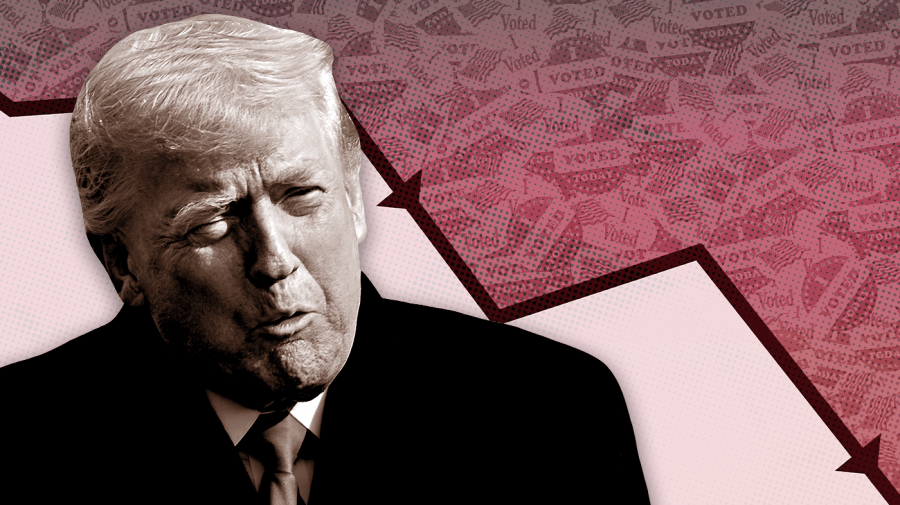
The Department of Homeland Security official responsible for securing federal elections believes the voting machines he is tasked with protecting should be banned entirely. ProPublica reported that David Harvilicz, who oversees DHS's election security programs, has publicly advocated for eliminating electronic voting systems — a position more commonly associated with election conspiracy theorists than federal cybersecurity officials.
Harvilicz's role at DHS places him at the center of federal efforts to defend election infrastructure from foreign interference and cyberattacks. His office coordinates with state and local election officials, provides security guidance, and responds to threats against voting systems. Yet according to ProPublica's investigation, Harvilicz has expressed skepticism about the very technology his agency is charged with securing, arguing that hand-counted paper ballots should replace electronic systems nationwide.
The contradiction is not merely philosophical. Election security experts across the political spectrum have repeatedly confirmed that modern voting machines — particularly those with paper ballot backups and robust audit procedures — are among the most secure methods of conducting elections at scale. The Cybersecurity and Infrastructure Security Agency, which operates within DHS, has called the 2020 election "the most secure in American history." Harvilicz's position places him at odds with the consensus of his own department and the broader cybersecurity community that has spent years building defenses against actual threats: foreign hacking attempts, disinformation campaigns, and infrastructure attacks.
What makes this appointment particularly troubling is the timing. Distrust in election systems has been weaponized as a political tool, with unfounded claims about voting machine manipulation used to justify voter suppression laws and election subversion efforts across multiple states. When the federal official responsible for election security echoes those claims — even in the abstract language of advocating for hand-counted ballots — he provides institutional credibility to a movement that has undermined public confidence in democratic processes. The danger is not that Harvilicz will sabotage voting machines. The danger is that his position signals to election officials, lawmakers, and the public that the federal government's commitment to defending electronic voting infrastructure is conditional at best.
This is not the first time federal agencies tasked with protecting democratic institutions have been led by officials whose public positions contradict their institutional responsibilities. The Pentagon recently imposed editorial controls on military journalism after political pressure from the White House, and the Pentagon's media loyalty pledge drew a federal court ruling that the restrictions violated the First Amendment. A pattern is forming: officials who should be defending institutional integrity are instead being selected for their willingness to undermine it.
The practical consequences are already visible. State election officials who rely on DHS guidance now face the prospect of receiving security recommendations from someone who fundamentally opposes the systems they use. Local jurisdictions that have invested millions in voting technology certified by federal agencies must now wonder whether that certification carries the weight it once did. And foreign adversaries who have spent years probing U.S. election infrastructure for weaknesses now see a federal election security chief whose public position suggests the entire system is flawed — a propaganda gift that no disinformation campaign could have manufactured on its own.
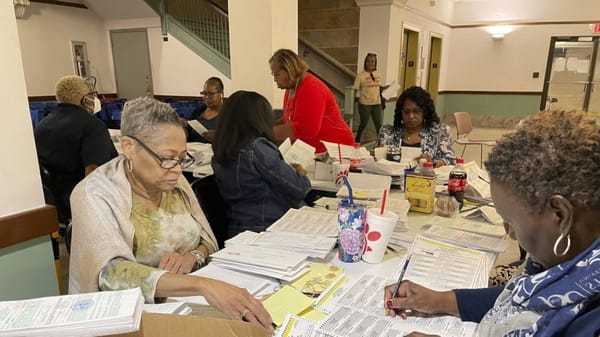
Election security is not a theoretical exercise. It requires officials who understand that the goal is not perfect systems — no such thing exists — but resilient ones. Systems with paper trails, audit capabilities, and multiple layers of verification. Systems that can be defended, tested, and trusted. Harvilicz's advocacy for eliminating voting machines does not reflect a more secure alternative; hand-counted ballots at scale introduce their own vulnerabilities, including human error, slower results that create windows for disinformation, and logistical challenges that disproportionately burden under-resourced jurisdictions.
The question now is whether DHS leadership will address the contradiction at the heart of its election security program, or whether Harvilicz's appointment represents a deliberate choice to install skepticism at the center of the federal government's election defense infrastructure. If it is the latter, the damage will not be measured in hacked machines or altered vote counts. It will be measured in the erosion of institutional credibility, the collapse of coordination between federal and state election officials, and the growing belief among the public that the officials responsible for protecting democracy do not believe in the systems they are tasked with defending. The Supreme Court, meanwhile, is weighing mail ballot grace period rules that could force states to count millions fewer votes — adding yet another layer of institutional pressure on the already strained architecture of American election administration.