A single overlooked statistic buried in Treasury Department data shows the scale of the energy crisis gripping American households: 140 million barrels of Iranian oil will soon flood global markets through emergency sanctions relief — roughly equivalent to 20 days of total U.S. consumption. This sharp reversal of longstanding economic warfare against Tehran represents more than a policy shift. It constitutes an admission that the administration's military escalation in the Persian Gulf has backfired catastrophically on American consumers.
The Treasury Secretary's announcement to BBC News frames the sanctions relief as a technical adjustment to "quickly bring" oil to markets. But the timing exposes a deeper contradiction. Just weeks after Pentagon strikes on Iranian infrastructure helped trigger the closure of the Strait of Hormuz — through which 21% of global petroleum passes — the administration now scrambles to undo its own economic weapon against Tehran. The result: American families face $6-per-gallon gasoline while oil companies report record quarterly profits exceeding $200 billion industry-wide.
The human cost of this policy whiplash extends far beyond pump prices. In Houston's Fifth Ward, where median household income hovers at $27,000, residents now spend nearly 18% of their monthly budget on gasoline — up from 11% before the crisis. Maria Gonzalez, who commutes 47 miles daily to her hospital cleaning job, told local reporters she's begun skipping meals to afford the drive. Her story repeats across working-class communities from Appalachia to the Central Valley, where public transit remains nonexistent and driving isn't a choice but survival.
What makes this crisis particularly galling is its predictable nature. Energy analysts had warned for months that military action against Iran would trigger precisely this scenario. A December 2024 Congressional Budget Office report — largely ignored by media focused on the administration's tough-on-Iran rhetoric — projected that Hormuz disruption would add $2.30 to every gallon of gas within 60 days. Those projections proved conservative. The actual increase has reached $2.85 in states like California and Nevada, where refinery capacity was already strained.
The sanctions relief mechanism itself demonstrates the administration's desperation. Rather than fully lifting restrictions — which would require admitting the failure of the maximum pressure campaign — Treasury will issue monthly waivers allowing specific buyers to purchase Iranian crude. This byzantine system ensures Tehran receives payment through intermediary banks while maintaining the fiction that sanctions remain in place. The 140 million barrels represent just the first tranche; internal documents suggest up to 500 million barrels could flow over six months if prices don't stabilize.
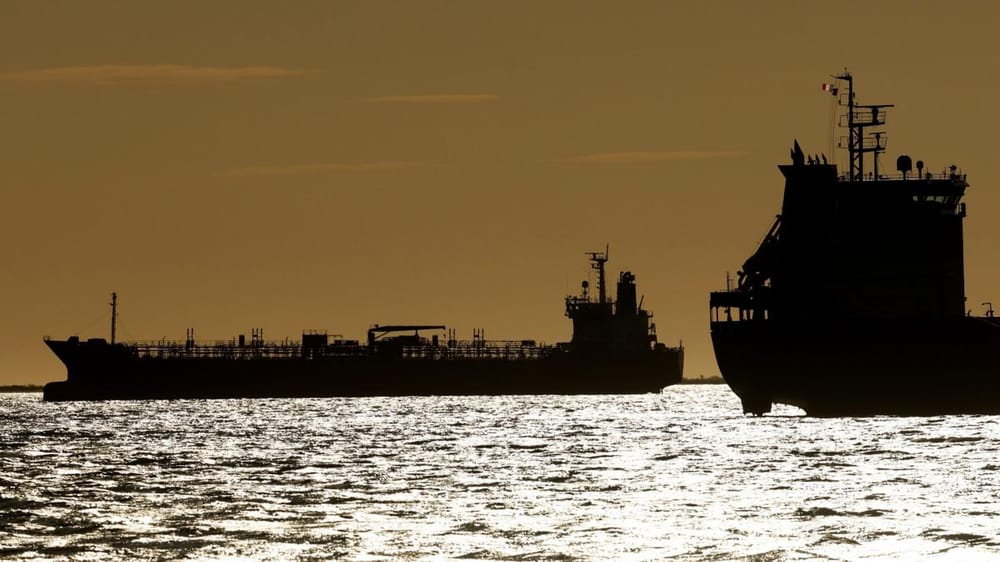
Iran's oil minister, speaking to regional media, called the American reversal "predictable" and noted that Tehran had spent two years building alternative export networks through China and India. Those shadow tanker fleets — often sailing with transponders disabled to evade satellite tracking — have kept Iranian production at 3.2 million barrels daily despite sanctions. The emergency relief essentially legitimizes trade routes that were already operating, while handing Tehran a propaganda victory it will surely exploit.
The broader pattern here extends beyond one administration's policy confusion. For three decades, Washington has wielded economic sanctions as a supposedly bloodless alternative to military force. But as Tinsel News has documented, these measures consistently harm civilian populations while strengthening the very regimes they target. In Iran's case, sanctions have impoverished the middle class, devastated hospitals struggling to import medical equipment, and consolidated power among Revolutionary Guard-connected businesses that control smuggling networks.
The current crisis also exposes American energy infrastructure's fragility. Despite being the world's largest oil producer at 13 million barrels daily, the U.S. remains critically dependent on global price stability. Refinery locations, pipeline networks, and strategic reserve sites reflect decades of policy assuming cheap, freely flowing petroleum. When that assumption breaks — as it has with Hormuz's partial closure — no amount of domestic drilling can prevent price spikes that ripple through every sector of the economy.
Consider the downstream effects already manifesting. Trucking companies report diesel costs eating 45% of revenue, up from 30% pre-crisis. Those expenses translate directly to consumer goods: a University of Michigan study found grocery prices rising 8.2% monthly in transportation-dependent rural areas. Airlines have added fuel surcharges averaging $47 per domestic ticket. School districts from Maine to Arizona warn of potential bus service cuts as fuel budgets explode. The energy crisis, manufactured through military adventurism, has become an everything crisis.
Meanwhile, the geopolitical consequences multiply beyond Washington's control. Russia, previously constrained by sanctions over Ukraine, now sells oil at premium prices to European buyers desperate for non-Middle Eastern sources. Saudi Arabia, ostensibly an American ally, has refused requests to increase production, preferring to maximize profit from the crisis. China has negotiated long-term contracts with Iran at below-market rates, essentially subsidizing its manufacturing sector at American expense. Each development weakens U.S. influence while enriching adversaries.
The administration's public messaging around the sanctions relief has been muted, relegated to Treasury Department press releases rather than presidential speeches. This communication strategy reflects political reality: admitting that military escalation caused economic hardship contradicts months of rhetoric about strength and resolve. Yet the numbers tell their own story. Polling shows 67% of Americans now oppose military action against Iran when informed it could raise gas prices further — a complete reversal from the 54% support recorded before Hormuz's closure.
International energy experts view the American policy reversal with a mixture of relief and bewilderment. The International Energy Agency's chief economist told reporters in Vienna that markets need "consistency and predictability," neither of which Washington has provided. The sanctions whiplash — from maximum pressure to emergency relief in mere weeks — signals to global markets that U.S. energy policy operates on political rather than strategic timelines.
For American families struggling with energy costs, the technical details of sanctions relief matter less than the immediate reality: they're paying for a crisis their government created. The 140 million barrels of Iranian oil may eventually moderate prices, though analysts warn any relief could take months to reach consumers. In the meantime, working families will continue choosing between gas and groceries, heat and healthcare, in an economy distorted by foreign policy decisions they had no voice in making.
The pattern is clear: Washington launches military action justified by national security imperatives, triggering predictable economic blowback that harms American workers. When political pressure mounts, the same officials who championed confrontation quietly reverse course, hoping minimal media coverage will obscure their policy failure. But the bills arriving in American mailboxes tell the story more clearly than any government statement. This energy crisis isn't a natural disaster or market failure — it's the direct result of choices made in Washington, with costs borne by those least able to afford them.