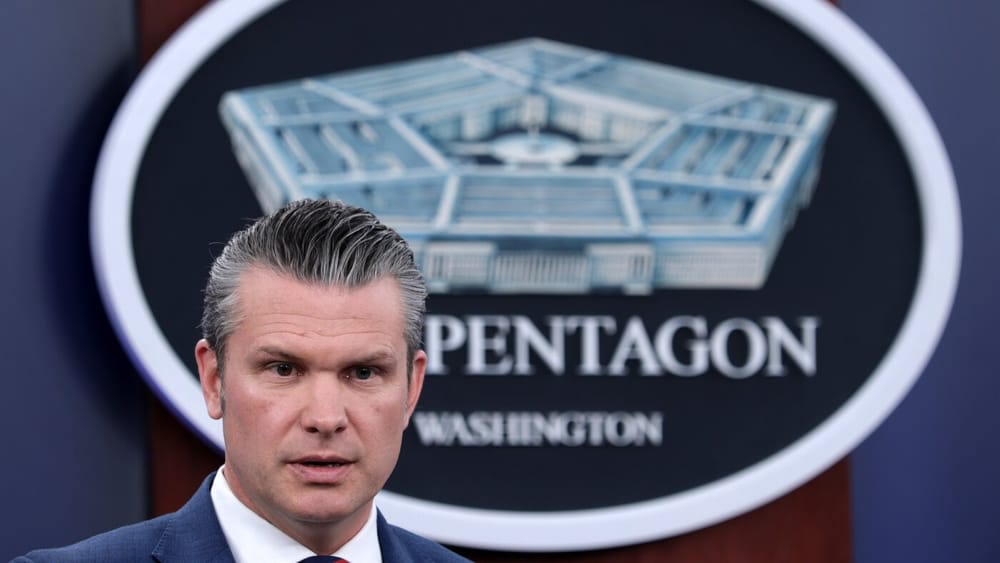
A federal judge has blocked a Pentagon policy that required journalists to sign pledges promising not to gather information unless Defense Department officials formally authorized its release, according to NPR News. The court ruled the restrictions violated the First Amendment by conditioning press access on prior restraint — a form of censorship the Constitution explicitly prohibits.
The policy represented an extraordinary assertion of control over independent journalism. Under the rules, media organizations seeking to cover the Defense Department would have been required to sign agreements pledging not to report information obtained through their own newsgathering unless Pentagon officials had first approved its release. The restriction applied not just to classified material — which is already governed by existing law — but to any information gathered in the course of covering the military, effectively transforming journalists into extensions of the Defense Department's public affairs operation.
The lawsuit challenging the policy was brought by The New York Times, NPR News reported. The Times argued that the pledge requirement would have prevented reporters from fulfilling their basic function: independently verifying government claims, speaking to sources without official permission, and publishing information the public needs to know. The judge agreed, finding that the policy amounted to a prior restraint on speech — one of the most disfavored forms of censorship under constitutional law.
What makes this ruling significant is not just that it blocked an unconstitutional policy, but that the policy was proposed at all. The Pentagon's attempt to require loyalty pledges from journalists reflects a broader pattern of government efforts to control information about military operations, particularly as the United States conducts strikes in multiple theaters without clear congressional authorization. When the executive branch wages war without legislative oversight, independent press coverage becomes one of the few remaining checks on executive power. Policies that condition that coverage on government approval eliminate the check entirely.
The ruling arrives as press freedom faces coordinated pressure from multiple directions. The FCC chair has threatened broadcast licenses over Iran war coverage, the White House has labeled critical war reporting as "treason," and the Pentagon has imposed new editorial controls on Stars and Stripes after the president called the military newspaper "woke." Each of these moves operates through different mechanisms — regulatory threats, rhetorical attacks, internal editorial interference — but they share a common goal: to make independent coverage of government actions more difficult, more dangerous, or more costly.
The judge's decision makes clear that requiring journalists to pledge obedience as a condition of access is unconstitutional. But the ruling does not address the subtler forms of control that remain available to the executive branch. The Pentagon can still limit physical access to military facilities, restrict which officials are authorized to speak to reporters, classify information that would otherwise be public, and retaliate against sources who provide unauthorized information. None of these tactics requires a signed pledge, and all of them achieve similar results: a press corps that covers the military primarily through official channels, on official terms, with official framing.
What the court protected is the right of journalists to refuse those terms — to gather information independently, to speak to sources without permission, to publish what they learn without prior approval. That right only matters if journalists exercise it. The policy the Pentagon attempted to impose would have made that exercise contractually prohibited. The ruling ensures it remains constitutionally protected. Whether news organizations use that protection to actually challenge official narratives about military operations is a separate question, and one no court can answer for them.