Thirty years ago, the gender gap in American elections was a political curiosity — roughly five to seven percentage points separated how men and women voted in presidential races, a difference that mattered but rarely determined outcomes on its own. The gap that has now opened between young men and young women is something different in kind, not just degree. Among voters under 30, some polling in the 2026 midterm cycle shows a partisan split approaching 30 points — women trending sharply Democratic, men moving toward Republicans at rates not seen since the Reagan coalition. What The Guardian US has documented in its pre-midterm analysis is the latest evidence of a structural transformation in the American electorate that most political coverage still treats as a curiosity rather than a governing force.
The conventional framing is that Donald Trump created this divide. That framing is incomplete. Trump accelerated and crystallized something that was already forming — a generational sorting by gender that predates his 2015 escalator ride and has now reached a scale that will outlast him. The question that matters for November 2026 is not whether the gap exists. It is whether Democrats have built a political program capable of mobilizing it, and whether Republicans understand what is happening to them fast enough to do anything about it.
The Dobbs decision in June 2022 is the most obvious accelerant. The Supreme Court's elimination of the federal right to abortion produced an immediate and measurable shift in voter registration among women — particularly young women in states where abortion bans took effect quickly. But to treat Dobbs as the sole cause of the current divide is to miss the longer arc. Data from the Pew Research Center tracking political identification by gender and age cohort showed the divergence beginning to widen around 2016, then steepening after 2020. Abortion rights became the most visible single issue, but the underlying shift involves something broader: a divergence in how young men and young women perceive economic fairness, institutional trust, and the direction of the country.
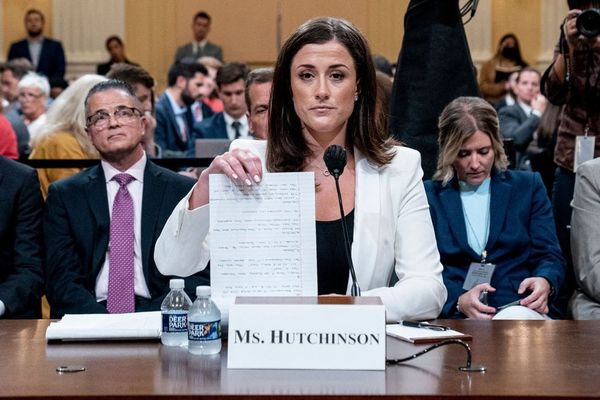
Young women have, by most economic measures, outpaced young men in educational attainment for decades — women now earn roughly 60 percent of all U.S. college degrees. They have entered professional labor markets in larger numbers. And they have done so into an economy where wage gaps persist and where reproductive healthcare has been restricted rather than expanded. For much of their adult lives, the party that has controlled the presidency has nominated and defended a man facing multiple criminal indictments, a civil finding of sexual abuse, and an Access Hollywood tape that he dismissed as "locker-room talk." The political conclusions many young women have drawn from this experience are not difficult to reconstruct.
The story of young men's rightward movement is more contested and more uncomfortable for both parties to address honestly. Some of it tracks with economic anxiety — men without college degrees have faced genuine labor market disruption, and the Democratic Party's messaging has not consistently centered their concerns. Some of it reflects the influence of online media ecosystems, from podcasts to social platforms, that have cultivated a politics of male grievance and found enormous audiences for it. And some of it is simply the mirror image of women's leftward movement: when one group moves, the partisan calculus for everyone else shifts. Democrats who want to understand why they are losing young men without college degrees should look at their own record on working-class economic policy before blaming the podcast ecosystem entirely.
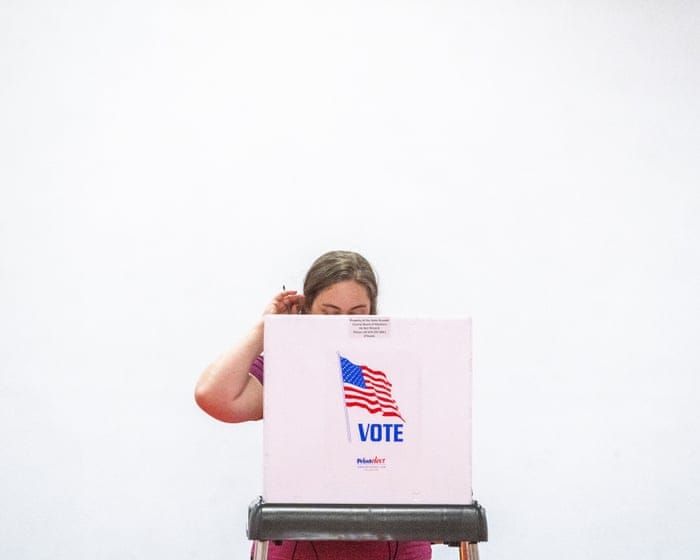
In the 2022 midterms, the gender gap helped Democrats outperform expectations, particularly in Senate races in Pennsylvania, Wisconsin, and Georgia. Women voters — especially suburban women — turned out at higher rates than anticipated in the months after Dobbs. The 2026 cycle features two new variables: abortion rights have been on the ballot in multiple states since 2022, with mixed results that have complicated the issue's mobilizing power, and economic discontent over prices and wages has cut across gender lines in ways that may dampen the enthusiasm gap Democrats are counting on.
The structural argument here — the one the source reporting gestures toward but does not fully make — is this: the gender gap has become self-reinforcing in ways that make it more durable than any single election cycle or any single candidate. Political identity is increasingly formed in gender-segregated information environments. Young women are more likely to get news from platforms and peer networks that lean Democratic. Young men are more likely to consume content — from podcasts to YouTube channels to X — that has shifted rightward over the past five years. These aren't just different preferences; they are different epistemological worlds, and the gap they produce will not close when Trump leaves the political stage.
For the 2026 midterms specifically, the electoral map makes the gender divide directly consequential for control of the House. Democrats need a net gain of a handful of seats to take the majority. The competitive districts that will decide that outcome — in the suburbs of Atlanta, Phoenix, Philadelphia, and Detroit — are precisely the districts where the gender gap is most pronounced. College-educated suburban women, who have been trending Democratic since 2016, are the single demographic most likely to determine whether Democrats flip enough seats. Republican-controlled states have simultaneously moved to restrict ballot access in ways that disproportionately affect lower-income voters — a factor that complicates turnout calculations for both parties.
Republicans are not blind to this problem. There have been visible, if awkward, attempts by some GOP candidates to soften their positioning on abortion — endorsing exceptions for rape, incest, and the life of the mother, or explicitly declining to support national abortion bans. The calculation is transparent: the party cannot afford to keep losing college-educated women at current rates and retain the House majority. But the structural problem for Republicans is that the candidate who most embodies the cultural politics driving women away from the party remains its dominant figure. Every attempt to soften the party's image on reproductive rights runs directly into the gravitational pull of a political brand built on the opposite.

The Democratic side of this equation carries its own complications. The party's reliance on the gender gap as a mobilizing force has sometimes substituted for a coherent economic message aimed at working-class voters of all genders. There is a version of the 2026 midterms in which Democrats win the gender gap and still lose the House, because the men they have lost in non-college households turn out at higher rates than the women they have gained in college-educated suburbs. Turnout asymmetry has defeated favorable demographic arithmetic before. The party's internal accounting of its 2024 losses has not produced a consensus response to this problem.
There is also a global dimension to this story that American political coverage almost entirely ignores. The gender realignment in voting behavior is not unique to the United States. South Korea, the United Kingdom, Germany, and several other democracies have documented similar divergences — young men moving right, young women moving left — in the past decade. The forces driving it are partly local and partly structural: the same algorithmic media environments, the same economic pressures, the same backlash dynamics around gender politics are operating across different national contexts. The American political press tends to treat this as a story about Trump. The international evidence suggests it is a story about something larger that Trump has exploited, but did not invent.
What Access Hollywood actually did — and this is the part the standard retrospective misses — was not create the gender gap. It revealed that the gap had already formed, and that a substantial portion of the male electorate had decided it did not matter. The tape's political aftermath told two different stories simultaneously: one about women who concluded that a man who described sexual assault as a perk of celebrity was unfit for office, and another about men who concluded that the media's reaction to the tape was itself the real political problem. Both of those stories are still being told in 2026. The gap between them is now wide enough to determine who controls Congress.
The districts that will decide the House majority in November are already being canvassed by campaigns that have internalized this arithmetic. Democratic field programs are targeting college-educated women in suburban counties with a precision that reflects just how load-bearing that demographic has become. Republican campaigns in those same districts are hoping that economic discontent — prices, wages, the cost of housing — cuts across the gender divide enough to offset it. One of those bets will be right. The gender gap will not close before Election Day. Whether it is large enough, in the right places, to be decisive is the variable both parties are now racing to shape. The party that benefits from it has not yet proven it has done enough to deserve it.