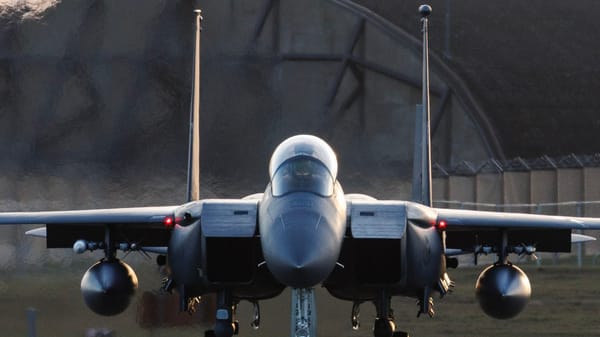
The Israel Defense Forces will continue bombing Iran for at least three more weeks with "thousands of targets" remaining, IDF spokesperson Brig. Gen. Effie Defrin told CNN on Sunday. The announcement marks the first public timeline for what Israeli officials are now describing as an open-ended military campaign conducted "in coordination with our U.S. allies."
The contradiction between Israel's expanding target list and the absence of any reported diplomatic efforts reveals how normalized endless bombing campaigns have become when the United States provides both weapons and political cover. Three weeks represents approximately 500 hours of potential airstrikes—a timeframe that would constitute a major war by any historical standard, yet merits only routine coverage in American media.
"We are ready, in coordination with our U.S. allies, with plans through at least the Jewish holiday of Passover," Defrin stated, confirming direct American involvement in operational planning. The casual reference to religious holidays as military milestones underscores how routine this violence has become for Israeli planners.
The scope implied by "thousands of targets" suggests strikes far beyond military installations. When the U.S. military used similar language during the 2003 Iraq invasion's "shock and awe" campaign, it preceded attacks on civilian infrastructure including power plants, water treatment facilities, and communications networks. Civilian casualties from the current Iran strikes remain officially uncounted by either Israeli or American authorities.
No Israeli or American official has articulated what would constitute an end to this bombing campaign. The IDF spokesperson mentioned no conditions for cessation, no diplomatic parallels, no strategic objectives beyond the existence of targets. This represents a fundamental shift in how wars are conceived—from instruments of policy with defined goals to indefinite exercises in destruction limited only by target availability.
The timing through Passover—approximately April 23 to May 1—means Israel anticipates conducting military operations while much of the Western diplomatic apparatus observes Easter and spring holidays. Previous Israeli military campaigns have exploited Western holiday periods when media attention and diplomatic pressure typically diminish.
American coordination, confirmed explicitly by the IDF, extends beyond intelligence sharing to operational planning. U.S. defense contractors already provide the targeting systems that enable these strikes. Now military officials confirm the Pentagon's direct involvement in planning attacks that will extend for weeks with thousands of potential targets.
The regional implications stretch beyond Iran's borders. Every strike risks retaliation that could draw in Lebanon, Syria, Iraq, or Yemen—countries where Iranian allies maintain significant military capabilities. Oil markets have already priced in supply disruptions, with the Strait of Hormuz remaining vulnerable to closure.
What "thousands of targets" means for Iranian civilians depends entirely on how Israel defines legitimate military objectives. The Gaza precedent suggests an expansive interpretation: Hamas government buildings, police stations, and civilian ministries all became targets under theories of "dual use." Applied to Iran, this doctrine could encompass everything from research universities to civilian airports.
The three-week timeline represents a minimum, not a maximum. By announcing plans through a specific date while emphasizing the vast remaining target list, Israeli officials signal that operations could extend indefinitely. Without diplomatic pressure—conspicuously absent from both Israeli and American statements—the campaign's duration depends solely on military logistics and target availability.
International law requires military operations to serve achievable political objectives with proportional means. An open-ended bombing campaign with "thousands of targets" and no stated end condition meets neither requirement. Yet no Western government has questioned the legality or strategic logic of Israel's announced plans.
The transformation of war from an exceptional policy tool to a routine management technique happens through precisely such announcements—military spokespeople casually discussing weeks of bombing as operational scheduling, religious holidays as campaign milestones, thousands of targets as logistical challenges rather than human communities. When bombing campaigns become indefinite and objectives become optional, war transforms from policy to process.