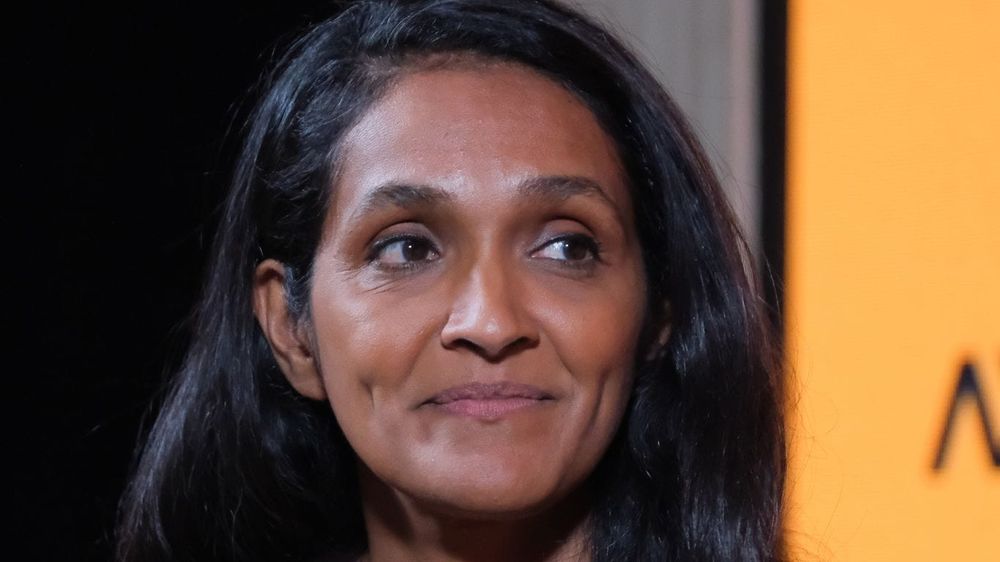
The California Democratic establishment threw everything it had at this race. Governor Gavin Newsom endorsed Karen Bass. So did former Vice President Kamala Harris. So did former House Speaker Nancy Pelosi. So did much of the Los Angeles City Council. The combined weight of the party's most recognizable figures lined up behind an incumbent who had held the mayor's office for three years — and it wasn't enough. Axios reported Thursday that the Associated Press called the race for Nithya Raman, a democratic socialist and former council member, who led Bass 52.1% to 47.9% in unofficial results.
Bass becomes the first Los Angeles mayor in two decades to lose reelection. Raman, 45, who immigrated from India as a child, takes office December 14. She defeated not just an incumbent but a coalition — one that represents the institutional backbone of California's Democratic Party. That is the story. Not the margin. Not the symbolism. The question it forces is harder and more consequential than any election returns: what does the democratic socialist left actually do when it holds executive power?
The terrain Raman is inheriting is not forgiving. Los Angeles is home to the largest unhoused population of any American city. Its housing market has become inaccessible to the working and middle class over decades of underbuilding, speculative investment, and zoning decisions that served property owners over residents. And the city is still reckoning with the 2025 Palisades Fire — a catastrophe that consumed thousands of homes and that voters, according to reporting from Axios, held Bass responsible for mismanaging. The 2028 Olympics arrive in less than two years, bringing global scrutiny and logistical pressure to a city that has not resolved the basic question of where its residents sleep.
None of these problems are new. That is the point. Bass inherited a homelessness crisis. Her predecessor did too. The institutional Democratic approach to governing Los Angeles — incremental, developer-friendly, consensus-bound — has produced a city where tents line the same blocks as eight-figure condominiums. Raman built her campaign on the argument that this is not an accident of circumstance but a consequence of choices, and that different choices are possible. Voters, particularly younger ones, agreed. The Berkeley IGS/L.A. Times poll from September showed Raman leading Bass 66% to 4% among likely voters under 30. Among Latino likely voters — a critical constituency in a majority-Latino city — she led 45% to 21% before Bass narrowed the gap in the final weeks.
The coalition Raman assembled to win is significant for what it tells us about the current limits and possibilities of left electoral politics. She launched her challenge in February after previously endorsing Bass — a decision that turned former allies into opponents and required her to build a new base rather than inherit one. She did it anyway, and the coalition that carried her included young voters, renters, and Latino communities who had experienced years of housing insecurity without meaningful relief. This is not the stereotype of the socialist left as a niche of college-educated ideologues. It is a multiracial, renter-class coalition built on the lived experience of a city that stopped working for most of its residents.
Raman has repeatedly clashed with the Democratic Socialists of America over Israel, policing, and housing. National DSA leaders voted 14-13 Monday against withdrawing her endorsement after a dispute over how the Los Angeles chapter vetted her stance on the Boycott, Divestment and Sanctions movement. The L.A. chapter had previously censured her for accepting an endorsement from Democrats for Israel-Los Angeles. Raman has stressed her political independence throughout.
That independence is also where the story gets complicated. Raman is a democratic socialist who has, at multiple points, been at odds with the organization most associated with that label. The Democratic Socialists of America's national body voted 14-13 this week against withdrawing her endorsement — a margin that reflects genuine internal fracture over her positions on Israel, policing, and housing. The Los Angeles chapter previously censured her for accepting support from Democrats for Israel-Los Angeles. These are not abstract ideological disputes. They are early indicators of how Raman will govern: as someone who claims the democratic socialist identity while refusing to let any organization define its content for her.
She has a name for her governing philosophy. She told Axios and Noticias Telemundo at Visionarios that her approach amounts to "sewer socialism" or "pothole politics." "I just want government to work for the people," she said. The phrase is deliberately unglamorous. Sewer socialism was the term used for early twentieth-century municipal socialists — in Milwaukee, in Reading, Pennsylvania — who built their movements not on ideological purity but on public ownership of utilities, clean water, functional transit, and honest administration. The implication is that the left's failure in executive governance has often been a failure of delivery: promising transformation and producing process. Raman is betting that a left-wing mayor who makes the buses run on time is more durable than one who makes the right speeches.
She is not making this bet alone. New York Mayor Zohran Mamdani — also of South Asian descent, also with roots in democratic socialist organizing — is already in office. Washington, D.C., voters elected democratic socialist Janeese Lewis George on Tuesday. The movement that critics spent years describing as a coastal fringe phenomenon now controls city halls in New York and Los Angeles simultaneously, and has won a third major municipal victory in the nation's capital in the same cycle. As Tinsel News has reported, the DSA has helped elect more than 300 candidates across 40 states — a geographic spread that punctures the coastal-elite narrative the movement's opponents have relied on. Providence elected a 27-year-old democratic socialist mayor. The question was never whether the left could win elections. The question — the one Raman's victory now makes unavoidable — is whether it can govern.
The New York comparison is instructive and cautionary in equal measure. Mamdani entered office with a mandate, a set of promises about affordability and housing, and a city government that had spent decades building institutional resistance to exactly the kind of change he campaigned on. The landlord lobby, the real estate industry, the police union, the bond market — these are not forces that lose an election and disappear. They are permanent features of the institutional landscape that any mayor must negotiate. What Mamdani has discovered, and what Raman is about to discover, is that winning City Hall gives you the platform and the authority, but not automatically the power. As Tinsel News reported, Mamdani's New York has begun experimenting with structural changes — including new offices designed to shift the balance of power toward workers — that suggest one model for how a democratic socialist executive actually uses the machinery of government rather than just occupying it.
Los Angeles presents its own specific obstacles. The city's homelessness crisis is not simply a policy failure — it is the outcome of a decades-long system in which land values have been protected as a political priority, housing production has been kept artificially constrained, and the people bearing the cost have had the least political representation. Raman, as a council member representing the 4th District, developed a reputation for constituent-level accountability and for pushing back on the city's developer-aligned consensus on housing. Whether that translates into executive action at the mayoral scale — where she will face not just one council but a full political apparatus, plus a state government led by Newsom, who just backed her opponent — is a different challenge entirely.
The Palisades Fire is a specific test case. The disaster killed people, destroyed thousands of homes, and exposed the inadequacy of the city's emergency infrastructure. Bass's handling of it became the central accountability argument of Raman's campaign. But the fire also displaced residents into a housing market that was already failing them. Raman will inherit the reconstruction challenge — and with it, the political pressure from developers and property interests who will argue that the fastest path to rebuilding is deregulation. How she responds to that pressure will be an early and visible test of whether her governing philosophy holds under conditions that make compromise easy to justify.
The national significance of what happened Tuesday in Los Angeles should not be measured only in the symbolic. Yes, Raman's victory — alongside Mamdani in New York and Lewis George in D.C. — represents a generational and ideological shift in who runs America's largest cities. Yes, the image of South Asian immigrant women and men leading New York and Los Angeles simultaneously is a fact about American political culture that deserves to be named. But the more consequential story is structural. The democratic socialist movement has, over the past decade, built a theory of change centered on municipal politics: win city halls, demonstrate that government can work for ordinary people, expand the imagination of what's possible. That theory is now being tested at the largest scale it has ever reached.
The people who will pay the most immediate cost of failure are not the movement's donors or its intellectual architects. They are the 75,000 people sleeping outside in Los Angeles on any given night. They are the renters paying more than half their income in housing costs. They are the families displaced by the Palisades Fire who are waiting to find out whether the city will rebuild for them or for the investors who will arrive with capital and plans. Raman told voters she wants government to work for the people. The people she made that promise to are not waiting for the next election cycle to find out if she meant it.
The California Democratic establishment — Newsom, Harris, Pelosi — backed the candidate who represented continuity. Voters chose disruption. That is a data point. What Raman does with the disruption is the story that actually matters, and it begins December 14. The billionaire-backed corporate wing of the Democratic Party, which has spent years funding candidates who position themselves as the responsible center, will be watching closely — not out of curiosity, but because what Raman proves or fails to prove in Los Angeles will shape the argument about what American cities can be for the next decade.