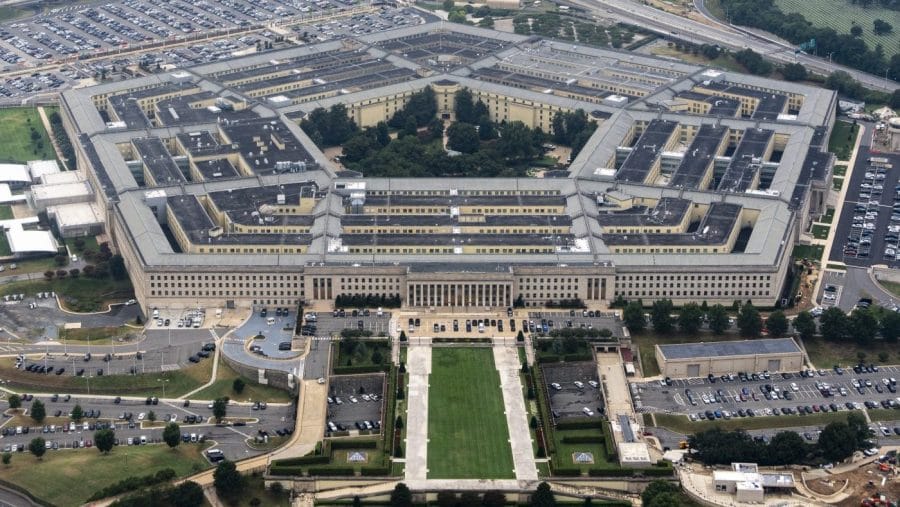
The Pentagon is considering redirecting air defense interceptor missiles originally destined for Ukraine to the Middle East, where U.S. forces have depleted critical munitions in the escalating conflict with Iran, according to The Hill citing Washington Post reporting.
The proposed diversion would affect weapons ordered through NATO's Prioritized Ukraine Requirements List (PURL), a program specifically created to fast-track military aid to Ukraine as it defends against Russian invasion. The consideration reveals how rapidly the U.S. military has exhausted its stockpiles in the Middle East — and how one war's defensive needs are being weighed against another's offensive operations.
This calculation exposes a fundamental reality of U.S. military planning: the arsenal that enables simultaneous conflicts has limits, even as defense contractors accelerate production to meet demand from multiple theaters. The same Patriot missiles protecting Ukrainian cities from Russian bombardment are now needed to shield U.S. bases from Iranian retaliation — a direct result of expanded American military operations in the region.
The timing is particularly stark. Ukraine faces intensified Russian missile attacks on its energy infrastructure as winter approaches, while Iranian-backed forces have increased strikes on U.S. positions across Iraq and Syria. Each interceptor missile diverted from Ukraine to the Middle East represents a gap in air defense over Kyiv, Kharkiv, or Odesa — cities where civilian casualties mount with each successful Russian strike.
What makes this weapons shuffle especially revealing is how it demonstrates the cascading effects of military escalation. The U.S. decision to expand operations against Iran has created ammunition shortages that now threaten to undermine support for Ukraine — support that Washington has repeatedly declared essential to European security and the "rules-based international order."
Defense contractors, meanwhile, face no such difficult choices. Raytheon, which manufactures the Patriot system, reported record international orders in 2024. Lockheed Martin's missile defense division has seen similar growth. The depletion of U.S. stockpiles triggers emergency procurement contracts, often at premium prices, while allied nations place their own orders to replenish donated equipment.
The PURL initiative itself represents a new model of weapons distribution — one where NATO coordinates bulk purchases that suppliers know will be paid regardless of which conflict ultimately receives the systems. This guaranteed demand has allowed manufacturers to expand production lines and lock in multi-year profits, even as the destinations for their products shift based on battlefield developments.
For Ukraine, the potential diversion carries immediate consequences. The country's air defense network, already stretched thin across a 600-mile front, depends on Western-supplied systems to protect civilian infrastructure. Each interceptor represents not just military capability but the difference between functioning hospitals, power grids, and water systems — or their destruction.
The broader pattern here extends beyond ammunition logistics. When the U.S. initiates or escalates military action, it creates resource demands that ripple through every other security commitment. The "pivot to Asia" becomes harder to sustain when munitions earmarked for Pacific deterrence are expended in Middle Eastern operations. European reassurance missions lose credibility when promised weapons deliveries are redirected.
This dynamic also reveals how military planning assumptions about "manageable" conflicts prove false once operations begin. The Pentagon likely calculated it could sustain operations against Iran using existing Middle East stockpiles. Instead, the intensity of exchanges has burned through reserves at rates that force uncomfortable trade-offs between different theaters.
The human cost of these calculations remains deliberately abstract in defense planning documents. Ukrainian civilians who die because an air defense system was sent to protect a U.S. base in Iraq don't appear in Pentagon briefings. Iranian families killed by munitions that might have defended against incoming missiles aren't part of the strategic equation. The language of "force management" and "strategic prioritization" obscures these realities.
Congress, which has authorized massive supplemental spending for both Ukraine aid and Middle East operations, has shown little interest in examining how these commitments interact. The Iran conflict alone has cost $12 billion without formal authorization, while Ukraine aid packages pass with bipartisan support. Few legislators ask whether the U.S. can sustain both efforts without compromising either.
The weapons diversion under consideration also highlights the growing influence of regional partners in shaping U.S. military priorities. Israel's air defense needs, Saudi Arabia's security demands, and UAE concerns about Iranian missiles all factor into Pentagon calculations about where to send limited interceptor supplies. Ukraine, lacking the lobbying power of Gulf states or the strategic weight of Israel, may find its needs subordinated to Middle Eastern partners.
What emerges from this Pentagon deliberation is a picture of American military power stretched between commitments it cannot simultaneously fulfill. The promise to help Ukraine defend its sovereignty collides with the decision to escalate against Iran. The result is a zero-sum calculation where one population's safety is traded for another's — all while defense contractors profit from the increased demand their scarcity creates.
The Pentagon's potential decision on these weapons will send a clear signal about U.S. priorities. If Ukraine's air defenses are weakened to sustain Middle East operations, it will demonstrate that Washington's security guarantees are contingent on the latest crisis, not principled commitments. For Ukrainians scanning the skies for incoming Russian missiles, and Iranians bracing for the next U.S. strike, the message will be equally clear: their safety is negotiable, subject to the arithmetic of empire.