A single specific, sourced statistic can reframe how we understand a developing political crisis. Consider this: 159 million Americans voted in the 2020 election, with 65% casting ballots either by mail or through early voting methods that relied on machine tabulation. An 80-year-old Florida lawyer with ties to Donald Trump now wants to eliminate both options through an emergency executive order that would restructure American democracy at its foundation.
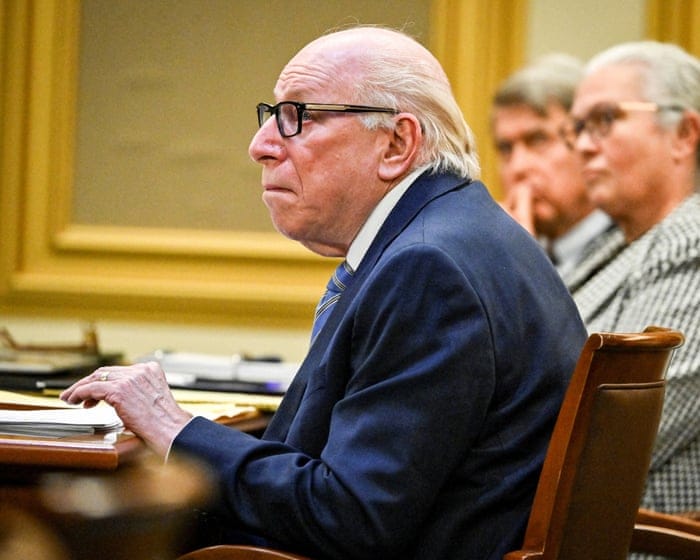
Peter Ticktin, a Boca Raton attorney who has represented multiple 2020 election deniers in court, has gained the former president's attention with a legally dubious plan that election law experts say would disenfranchise millions of voters, according to The Guardian US. The proposal calls for an immediate ban on all electronic voting machines and mail-in ballots, forcing every American to vote in person on paper ballots — a change that would require congressional action, not executive fiat.
The timing is not coincidental. With midterm elections approaching and Republicans facing demographic headwinds in key swing states, Ticktin's plan represents what voting rights advocates describe as an attempt to engineer electoral advantage through restriction rather than persuasion. The lawyer's access to Trump, while its exact nature remains unclear, signals how conspiracy theories about voting have moved from the margins to the center of Republican electoral strategy.
What makes Ticktin's influence particularly concerning is his track record. At 80, he has spent the past several years representing clients who challenged the 2020 election results in court — cases that were uniformly rejected by judges across the political spectrum. Now, rather than accepting those judicial defeats, he's advocating for an end run around the courts through executive action that constitutional scholars say would exceed any president's authority.
The plan's practical implications would be staggering. Eliminating mail voting would disproportionately affect elderly voters, disabled Americans, military personnel stationed overseas, and working-class citizens who cannot afford to miss work on Election Day. Rural communities, where polling places are often dozens of miles apart, would see dramatic drops in participation. The same pattern of restricting access that has emerged in reproductive healthcare would extend to the fundamental right to vote.
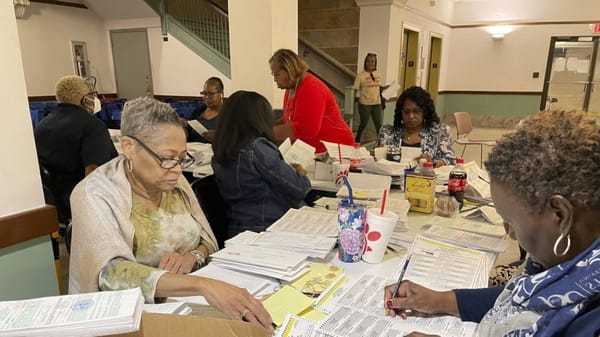
Election administration experts point out that hand-counting paper ballots for 160 million voters would require hundreds of thousands of poll workers and weeks of tabulation, creating chaos and opportunities for the very fraud that machine-voting critics claim to oppose. States that have attempted hand counts recently have experienced massive delays, errors, and costs that dwarf electronic systems.
The broader context shows Ticktin as part of a coordinated movement. Election deniers across the country are pushing similar emergency order proposals, creating an echo chamber that amplifies legally baseless theories about voting security. This network includes former military officials, conspiracy theorists with large social media followings, and now, apparently, lawyers with the former president's ear.
The constitutional problems with Ticktin's proposal are fundamental. The Constitution explicitly grants states the power to administer elections, with Congress able to regulate federal elections through legislation. No president has the authority to unilaterally rewrite election law through executive order — a fact that even Trump's own Justice Department acknowledged during his presidency when similar proposals were floated.
Yet the legal impossibility of the plan may be beside the point. By promoting extreme measures like total bans on machine voting and mail ballots, figures like Ticktin help normalize slightly less radical restrictions that state legislatures might actually pass. The pattern of using extreme proposals to shift the boundaries of acceptable policy has become a hallmark of the modern conservative movement.
The human cost of these restrictions cannot be abstracted into political calculations. A disabled veteran in Arizona who votes by mail would lose access to the ballot. An elderly voter in rural Montana would face a 100-mile round trip to cast a ballot. A single parent working two jobs would have to choose between voting and feeding their family. These are not hypothetical scenarios — they represent millions of Americans whose voting rights hang in the balance.
State election officials from both parties have already begun pushing back against the emergency order concept. Even in Republican-led states, secretaries of state understand that eliminating machine voting and mail ballots would create administrative nightmares and potentially violent confrontations at overcrowded polling places. The infrastructure simply doesn't exist to process that many paper ballots in a single day.
The international implications are equally troubling. The United States has long positioned itself as a global champion of democratic values, criticizing other nations for restricting ballot access or manipulating election rules. For a U.S. president to unilaterally impose voting restrictions through emergency decree would mirror the authoritarian tactics America claims to oppose abroad.
As midterm elections approach, the question is not whether Ticktin's specific plan will be implemented — legal experts agree it cannot be. The question is how much damage the promotion of such plans does to public faith in elections, and how many less extreme but still harmful restrictions might pass while attention focuses on the most outlandish proposals. The conspiracy theories that failed in court are now seeking victory through executive action, and an 80-year-old lawyer in Florida may have found a receptive audience in the one person whose opinion matters most.