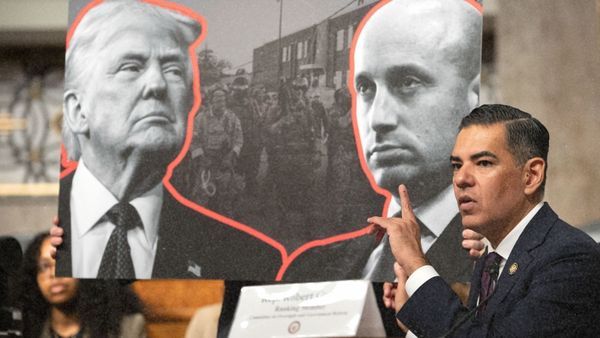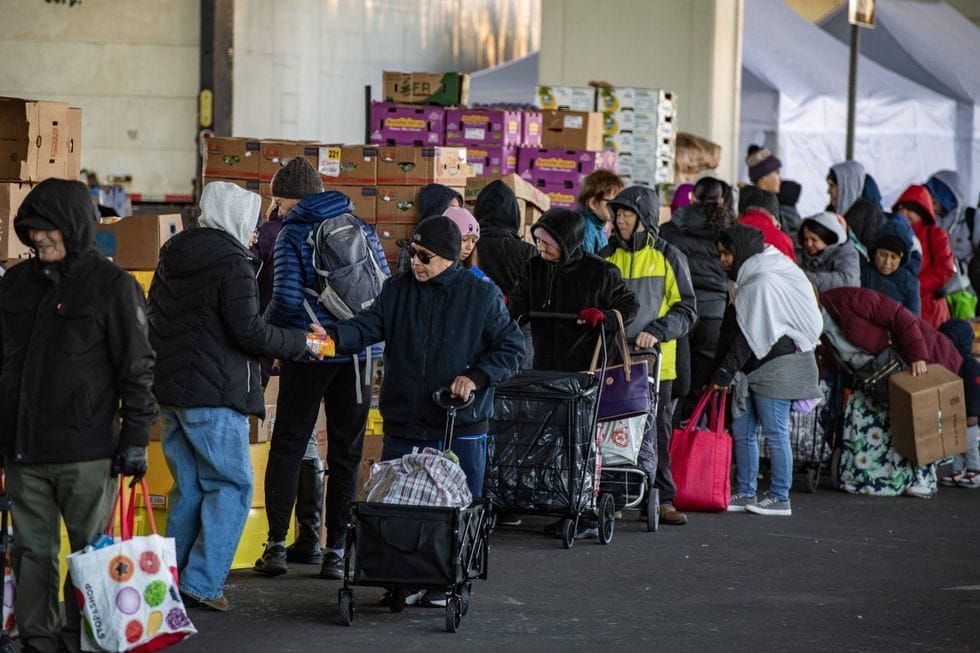
The deepest cuts to the Supplemental Nutrition Assistance Program in the program's history did not produce savings that went back to the public. They produced a tax cut. That is the transaction the One Big Beautiful Bill Act completed in July 2025, and Common Dreams reports that a new analysis from the Center on Budget and Policy Priorities now documents exactly how many people paid for it: approximately 5.5 million, including roughly 2 million children, stripped of food assistance in the months since the legislation was signed.
That number — 13 percent of the entire SNAP recipient population, gone in under a year — is not the byproduct of a policy that miscalculated. It is the result of a policy that worked precisely as designed. The bill's architects knew what they were cutting, knew who would bear the loss, and chose to proceed. The question worth asking now is not whether this constitutes a failure. It is who benefited from the outcome, and what institutional machinery made it possible.
The CBPP analysis documents that the caseload decline is not evenly distributed. Arizona lost nearly 51 percent of its SNAP enrollment — the steepest drop in the country. Florida, Illinois, Louisiana, Nebraska, Nevada, Oklahoma, Indiana, Kansas, and Texas all saw declines of 20 percent or more. In raw numbers: Texas lost 709,435 SNAP enrollees. Florida lost 665,935. Arizona shed 408,204. California lost 333,062. These are not rounding errors in a federal ledger. These are families.
A separate analysis released Tuesday by Unrig Our Economy and Americans for Tax Fairness adds a racial dimension the aggregate numbers can obscure. Their estimate: 1.5 million Latino SNAP recipients have been removed from the program since the OBBBA was signed, with Texas accounting for 396,164 of those losses and Arizona for 200,124. Latino communities in both states were already navigating the compounding pressures of elevated grocery prices and reduced access to employer-sponsored health coverage. The food assistance cut landed on top of that.
The mechanism that produced these numbers was not a sudden tightening of eligibility on paper. It was something more deliberate. The OBBBA imposed stricter work requirements and documentation standards that states were then pressured to enforce rapidly, in part because the bill also introduced a new cost-sharing structure: starting in October 2027, most states will have to cover between 5 and 15 percent of SNAP benefit costs — hundreds of millions of dollars annually in larger states. The CBPP analysis describes what that pressure produced: states took "drastic measures to reduce their payment error rates quickly and cut program costs, even if it meant delaying or improperly denying benefits to eligible people." Eligible people. The policy did not just catch the ineligible. It was built to move fast enough that it would inevitably sweep up people who qualified.
The OBBBA, signed July 2025, imposed the deepest cuts to SNAP and Medicaid in those programs' histories. It tightened work requirements, increased documentation burdens, and shifted a portion of benefit costs to states beginning in October 2027. The Congressional Budget Office had projected enrollment declines — but the actual losses documented by CBPP have already exceeded those projections.
The downstream effects are now visible in school cafeterias. The Washington Post reported Thursday that school districts across the country are experiencing ballooning unpaid lunch bills as declining federal reimbursements force them to scale back universal free meal programs. In rural Indiana, one district saw the share of students qualifying for free or reduced-price meals fall from 66 percent to 44 percent in a single year. Its lunch debt has already reached $10,000. Children who were fed last year are going without this year — not because their families' circumstances improved, but because the administrative machinery of eligibility moved faster than the families it was processing.
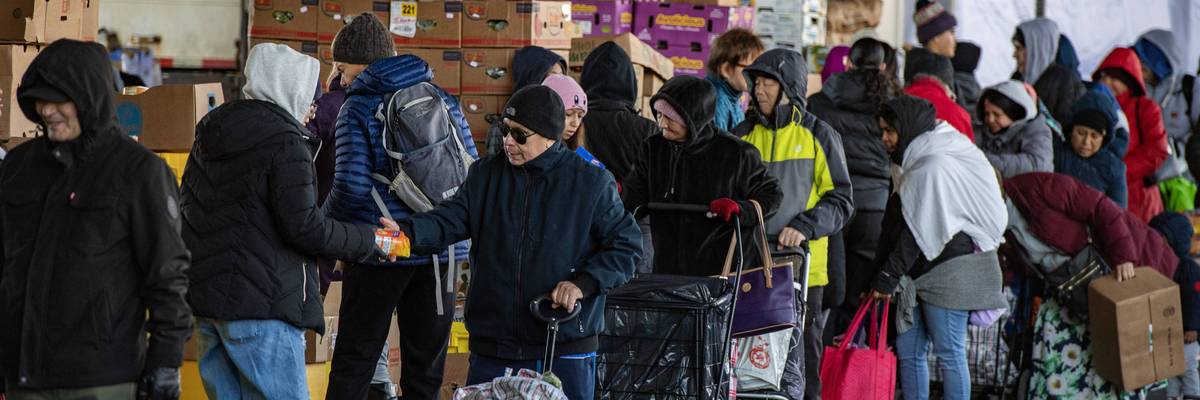
None of this happened in a vacuum of competing priorities. The OBBBA did not cut food assistance because the federal government lacked resources. It cut food assistance to generate savings that were then redirected to tax reductions concentrated among the wealthiest taxpayers and corporations. That is not an interpretation of the legislation — it is its stated fiscal architecture. The bill's sponsors chose to fund tax relief for billionaires by withdrawing food from 5.5 million people, including 2 million children, at a moment when more than 47 million Americans — one in five children — were already living in food-insecure households.
This is the transfer the legislation completed. It moved resources from the bottom of the income distribution to the top. The mechanism was eligibility restriction and administrative burden. The cover story was fiscal responsibility. As our earlier reporting on SNAP enrollment hitting a 17-year low documented, the states absorbing the deepest losses are frequently the same states whose congressional delegations voted for the bill — a political geography that tells you something about who the architects believed would bear the cost quietly.
The pattern here is not new. The specific mechanism — imposing administrative complexity on means-tested programs to achieve enrollment reductions without explicitly changing eligibility — has been a documented feature of conservative social policy for decades. Make the paperwork harder. Shorten the recertification windows. Require documentation that working families with irregular schedules struggle to produce on time. Then count the resulting disenrollments as evidence that the program was bloated. What the OBBBA did was scale that mechanism to its largest application in the history of both SNAP and Medicaid simultaneously. The CBPP's documentation that declines are already outpacing CBO projections is not a surprise to anyone who has studied how administrative burden functions as policy. It is confirmation that the mechanism worked.
The corporate tax beneficiaries of the OBBBA, meanwhile, are not abstract. Our reporting on corporate tax avoidance at a 40-year low effective rate documented the structural landscape this legislation reinforced: 706 corporations already paying roughly half the statutory rate they owe, with the lobbying infrastructure those tax savings fund working to preserve and deepen exactly the kind of cuts the OBBBA delivered. The money flows in a circle. Corporations underpay taxes. The revenue gap gets filled by cutting programs. The savings from cutting programs get redirected as tax relief. The beneficiaries of that relief fund the campaigns of the legislators who vote for the next round of cuts.
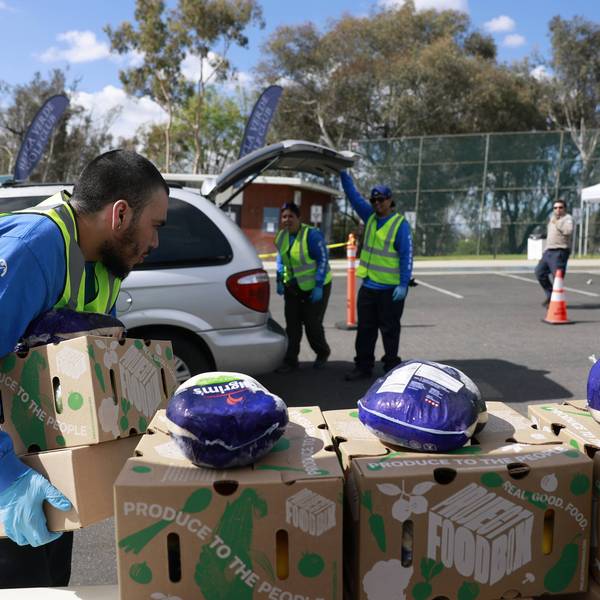
What the CBPP analysis adds to this picture is precision. It is no longer possible to argue that the SNAP cuts were a projection, a risk, a theoretical harm. The 5.5 million people are gone from the rolls. The 2 million children are documented. The 709,435 Texans, the 665,935 Floridians, the 408,204 Arizonans — these are not estimates of future damage. They are the current count of people who were eating with federal assistance in June 2025 and are not eating with it now.
The CBPP warns that the losses are not finished. The state cost-sharing requirement that begins in October 2027 will create additional pressure to reduce enrollment, and the administrative incentives the bill created — penalizing states for payment errors while rewarding caseload reduction — will continue to push states toward denial over enrollment. A federal judge has already ruled that SNAP restrictions of this kind were designed to reduce enrollment rather than protect program integrity — a finding that 23 states now have to live with, and that the OBBBA's architects chose to ignore at national scale. The 5.5 million is a floor, not a ceiling.
The hunger disaster that advocates are describing was not an unintended consequence of tax legislation that happened to include some food assistance provisions. It was the revenue source. The 5.5 million people who lost SNAP are not collateral damage — they are the mechanism by which the bill's tax cuts were paid for. Naming that is not editorial opinion. It is the fiscal math of the legislation itself.