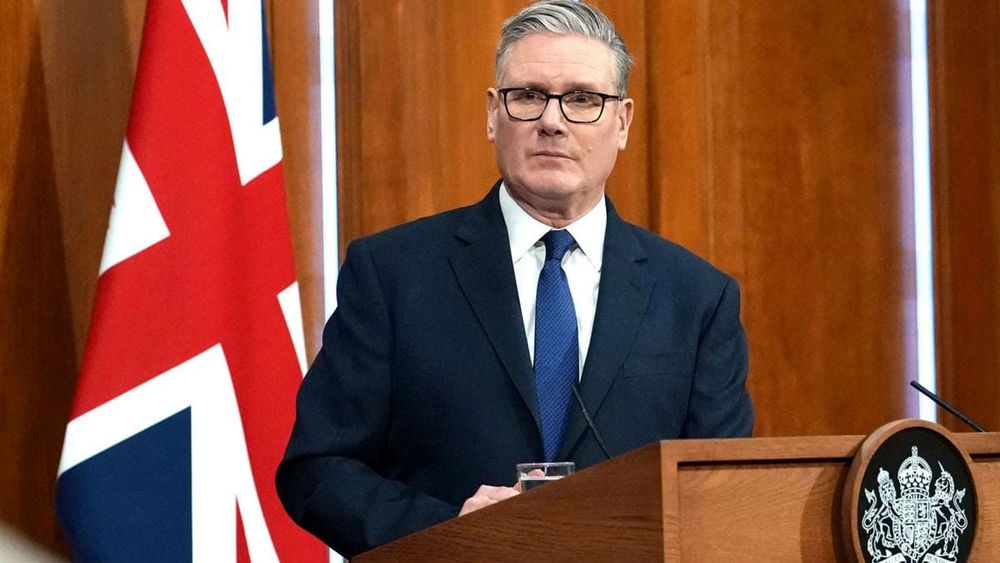
For decades, the standard operating logic of British foreign policy has been simple: stay close to Washington, manage the relationship with Europe, and never force a choice between the two. Keir Starmer just forced the choice — and he chose Europe.
According to BBC News, Prime Minister Starmer has stated that the UK will seek closer ties with the European Union in direct response to the Iran war — framing renewed European alignment not as an ideological preference but as a strategic necessity. The stated reason is the strain on UK-US relations caused by Britain's refusal to be pulled deeper into the American-led conflict. The subtext is harder to miss: London has decided that Washington's war is not Britain's war, and it needs a different anchor.
That is a more significant break than the diplomatic language suggests. The UK's post-Brexit identity was built, in part, on the premise that a close US relationship could substitute for lost European integration. The Iran war has exposed that premise as fragile. When the price of the "special relationship" is participation in a military campaign that the British public and the British government have not endorsed, the relationship stops being special and starts being a liability.
The timing matters. Britain's involvement in the Iran conflict has already made it a target. As Tinsel News reported earlier this year, the UK became exposed to Iranian retaliation after hosting US bombers — a dynamic that drew direct comparisons to the aftermath of the Iraq War, when British cities faced blowback for a conflict the public had marched against in the millions. That history is not lost on Starmer's government. The political cost of being seen as Washington's junior partner in another Middle Eastern war is not abstract — it is electoral.
What Starmer is doing, then, is using the war as political cover to accomplish something that post-Brexit British politics had made nearly impossible to say out loud: that the EU relationship is more durable, more economically consequential, and ultimately more aligned with British interests than unconditional deference to American military strategy. The Iran war did not create that argument. It gave a Labour government permission to make it.
The EU angle is also practical. European governments — particularly France and Germany — have maintained more skeptical postures toward the Iran conflict than Washington has demanded. A UK pivot toward Brussels on security and trade cooperation would find receptive partners. It would also, not incidentally, begin to repair some of the institutional damage of Brexit at a moment when European defense architecture is being rebuilt from scratch, partly in response to American unpredictability under the current administration. The war has accelerated a European strategic autonomy conversation that was already underway. Britain, if Starmer moves quickly, could be inside that conversation rather than watching it from the outside.
There is an accountability dimension here that deserves direct naming. The Iran war — which, as Tinsel News has documented, was launched without congressional authorization, without a budget, and without a coherent exit strategy — has now begun reshaping the foreign policy of a sovereign ally. The costs of that decision are being distributed across governments that had no vote on it. Britain's EU pivot is, among other things, a consequence of American unilateralism. The countries being asked to align with US war aims are calculating whether the alliance is worth the price.
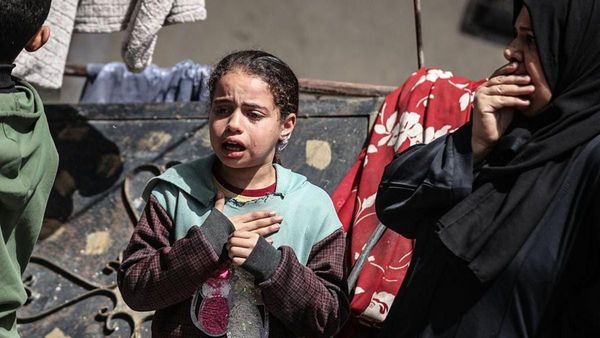
Starmer's calculation appears to be that it is not — or at least, not at this price. The political logic is defensible. The humanitarian logic is more pointed: a British government that declines to deepen its participation in a war that has killed hundreds of Iranian civilians and generated documented calls for international investigation is not abandoning its allies. It is declining to be implicated in their choices.
The question now facing London is whether a EU realignment driven by war-avoidance can translate into durable institutional architecture — trade agreements, defense frameworks, intelligence-sharing arrangements — that survive the next change of government on either side of the Channel. Starmer is betting that the Iran war has permanently altered the cost-benefit analysis of the transatlantic relationship. If he is right, Britain's strategic center of gravity has just shifted in a way that will outlast this particular conflict. If he is wrong, the UK will find itself having strained Washington without having secured Brussels. That is the bet he is making — and the consequences will be measured not in diplomatic communiqués but in the security and economic conditions facing ordinary British people for the next decade.