The 100-page State Department document released last week is titled as though it is a security assessment. It reads as something else: a catalogue of Americans who criticized U.S. foreign policy toward Cuba and were named for doing so.
Among those listed in "Cuba: The Capital of 21st Century Communism": Hasan Piker, a political commentator. Christian Smalls, who founded the Amazon Labor Union. Isra Hirsi, a campus activist who happens to be the daughter of Rep. Ilhan Omar. The National Lawyers Guild. What they share is not a covert relationship with Havana. What they share is having spoken publicly against the administration's oil blockade of Cuba and its threats of military action against the island.
The document's publication is not a policy mistake. It is the policy.
In January, the Trump administration issued an executive order declaring Cuba an "extraordinary threat" to U.S. national security and threatened tariffs against countries supplying oil to the Cuban government. The administration had already cut off Cuba's primary energy source by taking control of Venezuela's oil reserves. The resulting fuel shortage has left Cuba's healthcare system, education infrastructure, and basic public services struggling to function — consequences borne almost entirely by the Cuban population.
The report claims Cuba's communist government has waged "a sustained campaign of subversion against the United States" and recruited "generations" of activists on American soil. The evidence offered for this subversion is, in large part, the existence of Americans who participated in solidarity campaigns with the Cuban people. That framing does something specific: it transforms the act of organizing against a U.S. foreign policy into evidence of foreign infiltration. It is not an intelligence finding. It is a legal theory — one that treats dissent as disloyalty.
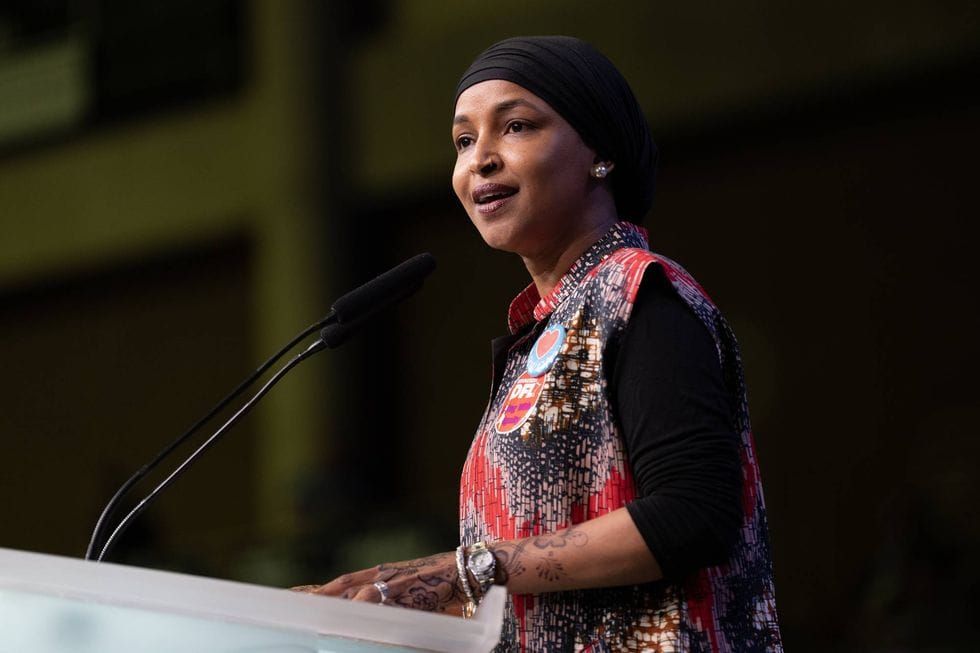
Eleven Democratic lawmakers, led by Rep. Ilhan Omar (D-Minn.) in her role as chair of the Congressional Progressive Caucus Peace and Security Taskforce, condemned the report as a "McCarthyite attack on Americans' free speech rights." The group — which included Reps. Alexandria Ocasio-Cortez (D-NY), Jim McGovern (D-Mass.), Delia Ramirez (D-Ill.), and Rashida Tlaib (D-Mich.) — warned that the report's real function is not to protect national security but to intimidate political opponents. "Trump appears hell-bent on taking America back 70 years to the height of Cold War McCarthyism," the lawmakers said in their joint statement, "when hawkish foreign policy was paired with unsubstantiated accusations of communist subversion and political repression against dissidents at home."
The McCarthyism comparison is accurate in its mechanics, but there is a more precise frame available: this is not nostalgia for a tactic. It is the deployment of a proven one. The original McCarthy era demonstrated that you do not need convictions to silence people. You need only the list. The act of naming — of placing someone inside a government document that associates them with a foreign adversary — carries consequences that no subsequent exoneration fully reverses. Careers end. Organizations lose funding. Lawyers get surveilled. The chilling effect does not require a prosecution to function.
Christian Smalls built the first successful union at an Amazon warehouse. His inclusion in a State Department security report is not incidental. The economic power that Amazon wields over its workforce is precisely the kind of concentrated private authority that labor organizers threaten — and that the current administration has consistently protected. Smalls did not appear in this report because he poses a national security risk. He appeared because he is effective.
The report also names Isra Hirsi, a 21-year-old student activist. Her mother sits on the committee whose oversight power could scrutinize the administration's Cuba policy. The inclusion of Hirsi in a government security document directed at her mother's political work is not a coincidence that requires elaborate explanation. It is pressure applied openly, in a document bearing official State Department letterhead.
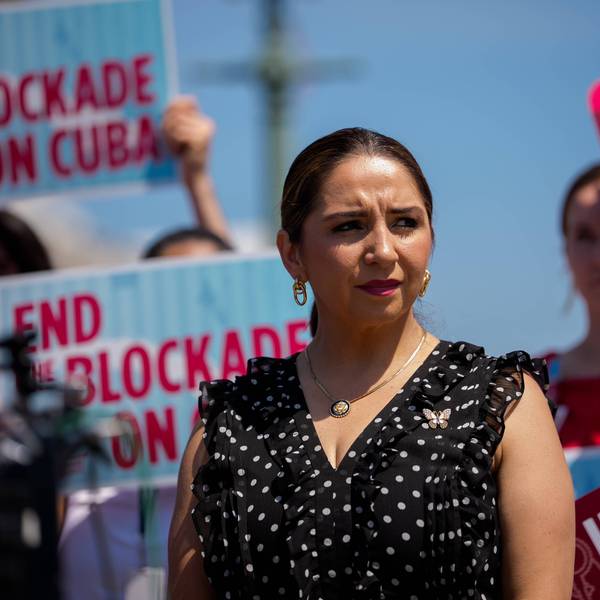
The global dimension of this story deserves the attention it is not receiving in most U.S. coverage. The population most immediately harmed by the Cuba blockade is Cuban — roughly 10 million people whose access to fuel, medicine, and functional public services has been systematically degraded by U.S. policy. The Americans named in this report were, in many cases, advocating for those 10 million people. The government has now used a national security document to punish that advocacy. The Cubans whose suffering prompted it get no mention in the framing of whether this is acceptable.
The pattern this report fits is one Tinsel News has documented across multiple fronts: the use of official government instruments — visa revocations, DOJ investigations, security designations — to impose costs on people whose speech is constitutionally protected but politically inconvenient. The mechanism changes. The target changes. The function is consistent: make the exercise of dissent expensive enough that fewer people attempt it.
What makes the Cuba report distinct from other instances of this pattern is its scope and its explicitness. It does not merely imply that critics of Cuba policy are suspect. It names them, in a document that carries the formal authority of the State Department, in a section that frames their activities as evidence of foreign subversion. The report is, in this sense, unusually candid about what it is doing.
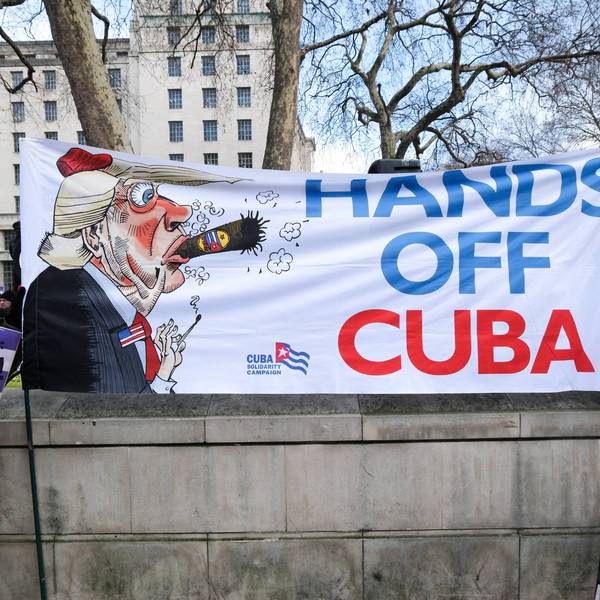
The eleven lawmakers who signed the condemnation statement said they would use their "full oversight power as members of Congress and elected officials" to stop what they described as an attack on constitutional rights. That commitment matters — and its limits matter equally. Congressional oversight, in the current environment, operates against an executive branch that has demonstrated its willingness to treat institutional checks as obstacles rather than constraints. The report has already been published. The names are already in it. The people named will live with that fact regardless of what any oversight hearing produces.
The administration has constructed a logic in which opposing a blockade that has left Cuban hospitals without electricity constitutes participation in a foreign subversion campaign. That logic, if it holds — if it goes unchallenged in courts, in Congress, and in the coverage that shapes public understanding — does not stop at Cuba policy. It is a template for treating any organized opposition to any foreign policy as evidence of disloyalty. The names in this report are the first test of whether that template sticks.