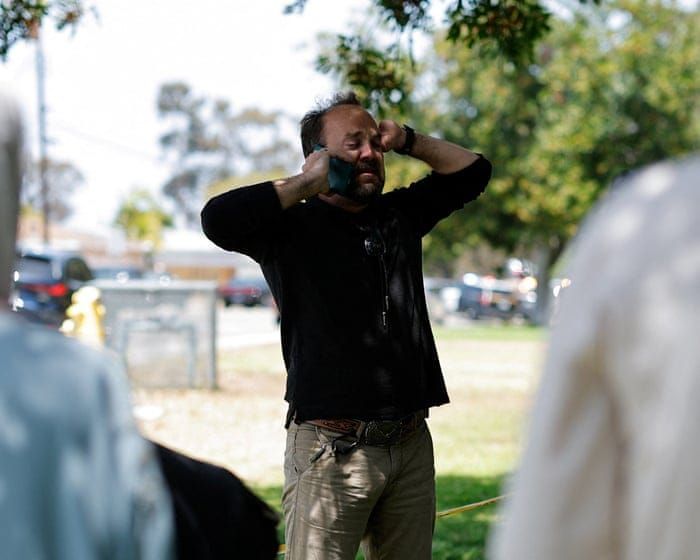
Three people are dead after two gunmen opened fire inside the Islamic Center of San Diego on Sunday, in what federal investigators are treating as a hate crime. The suspects — a 17-year-old and a 19-year-old — were found dead from self-inflicted gunshot wounds, according to reporting by The Guardian US. The FBI has opened an investigation and established a public tip line seeking information about the attack.
The Islamic Center of San Diego is the largest mosque in the city. It is a Friday prayer destination, a community anchor, and a place where American Muslims — many of them citizens, many of them born here — gather without expecting to be murdered. On Sunday, they were.
This attack does not exist in a vacuum. It arrives at the end of a period in which anti-Muslim hostility has been normalized at the federal level with a consistency not seen since the months after September 11. The current administration has used the machinery of government — executive orders, rhetorical framing, deportation policy, surveillance infrastructure — to cast Muslim communities as suspect by default. When government treats a population as a threat, some portion of the population will treat them as a target. That is not speculation. It is the documented pattern of stochastic violence, and it has a name. Tinsel News has covered how political rhetoric converts into real-world violence — the mechanism is not complicated, and it is not new.
The suspects were 17 and 19 years old. They did not arrive at this mosque by accident. Someone — a community, a platform, a media ecosystem, a political culture — taught them that Muslims were worth killing. The FBI's hate crime investigation will focus, appropriately, on the immediate facts: what weapons were used, what the suspects said, what digital trail they left. What the investigation will not resolve is the broader question of who prepared the ground.
FBI data shows anti-Muslim hate crimes spiked following the September 11 attacks and again in 2015–2016, periods marked by intense political rhetoric targeting Muslim communities. Researchers who study bias-motivated violence have consistently documented a correlation between inflammatory political speech and subsequent attacks on targeted groups.
The San Diego attack is not an isolated aberration. It is part of a pattern of targeted violence against Muslim Americans that intensifies when anti-Muslim rhetoric is amplified from positions of authority. A Republican senator recently linked a Muslim mayoral candidate in New York City to the September 11 attacks without evidence — and faced no meaningful consequence from his party. A Miami Beach commissioner allegedly deployed billboard trucks to publicly shame Jewish pro-Palestine activists by name. These are not fringe incidents. They are the texture of a political moment in which targeting people by religion has become a usable tool.
The FBI's hate crime designation matters legally. It opens federal jurisdiction and triggers enhanced sentencing guidelines. But federal hate crime prosecutions have historically been rare, slow, and unevenly applied — and the current Justice Department has demonstrated a clear preference for deploying federal power against communities it considers politically inconvenient, not protecting them. The Muslim community in San Diego has every reason to ask whether this investigation will be pursued with the same urgency the DOJ applies to other priorities.
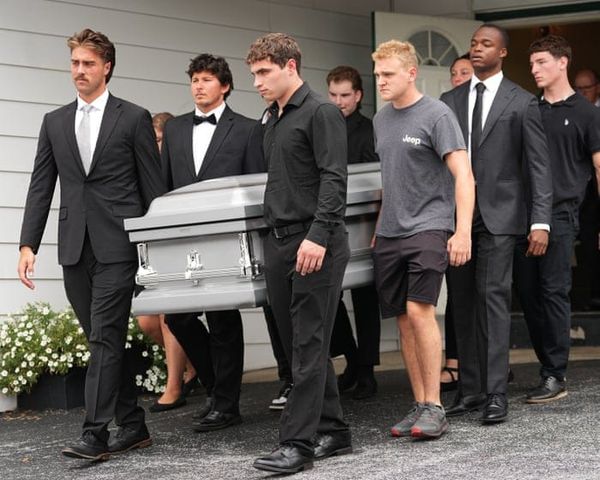
Three people went to their mosque on a Sunday and did not come home. Their names have not yet been released publicly. They deserve more than a news cycle. They deserve an accounting — not just of two young men with guns, but of the political and media infrastructure that convinced those young men a mosque full of worshippers was an appropriate target.
The Islamic Center of San Diego will reopen. Muslim Americans across the country will return to their mosques this week, as they do every week, because they have no other choice but to live their lives in a country that has never fully decided whether they belong in it. The question for everyone else is whether the conditions that produced Sunday's attack will be named, addressed, and dismantled — or whether this becomes another entry in a list that keeps growing.