The closure of the Strait of Hormuz has triggered the most significant energy crisis since the 1970s. Twenty percent of global oil supply has been disrupted. Gas prices in the United States have surged past $5.80 per gallon. Regional airports are under drone attack. Civilian flights are being turned back mid-journey.
These are the facts that every outlet covering the story agrees on. What they disagree on — profoundly — is whose story this is, and what matters most about it.
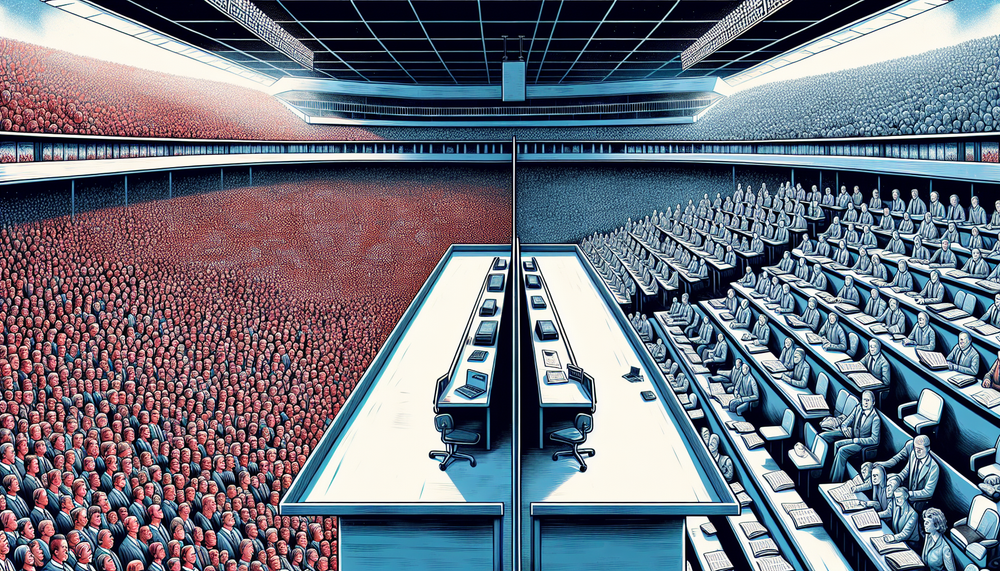
The divergence in coverage between U.S. and regional media outlets reveals more than editorial preference. It exposes fundamentally different conceptions of who counts as a stakeholder in global conflict, whose suffering registers as newsworthy, and whether international crises exist primarily as tests of American presidential authority or as lived catastrophes for the people experiencing them.
The Hill's coverage exemplifies the U.S. media approach. Their headline — "Trump: NATO facing 'very bad' future if countries don't help with Strait of Hormuz" — frames the crisis entirely through Trump's threats to allied nations. The story opens with Trump's warning that NATO faces a "very bad" future if member countries don't answer his call to patrol the strait. The human cost of the closure appears nowhere in the article. The economic disruption to Gulf states goes unmentioned. Instead, readers learn about Trump's negotiating tactics and his criticism of European allies.
The Hill's framing isn't unique among U.S. outlets. Another Hill article runs live updates on Trump "pressing on" with the Iran fight, treating the conflict as a test of presidential resolve rather than a humanitarian catastrophe. The outlet quotes Trump extensively — "It's only appropriate that people who are the beneficiaries of the strait will help to make sure that nothing bad happens there" — while offering no quotes from Iranian civilians, Gulf state residents, or energy workers affected by the closure.
NPR and Axios, though not providing full articles in this cluster, follow similar patterns based on their historical coverage. NPR typically adds more context about international law and energy markets but still centers U.S. policy debates. Axios delivers bullet-point summaries of Trump's demands without interrogating their feasibility or regional impact.
Now observe how Al Jazeera English covers the same crisis. Their headline — "Qatar calls on Iran to stop Gulf attacks, urges diplomatic solution" — immediately centers a regional actor's perspective. The article quotes Qatar's foreign ministry spokesman Majed al-Ansari directly: he "accuses Iran of targeting civilian areas." This is not abstract diplomatic maneuvering. This is about missiles hitting neighborhoods.
Al Jazeera's video coverage reinforces this focus on civilian impact. They don't just report that attacks are happening — they specify that "Iranian attacks have targeted residential areas." The distinction matters. When U.S. outlets discuss the conflict, they focus on strategic waterways and oil prices. When Al Jazeera covers it, they document where the missiles land.
The BBC, straddling both Western and more internationalist traditions, offers a telling middle ground. Their coverage of an Edinburgh-to-Dubai flight forced to turn back due to drone attacks at the airport provides concrete detail about civilian disruption — "Hundreds of passengers spent 11 hours on a flight to nowhere" — while still maintaining the detached tone typical of Western coverage. They report the human inconvenience but not the human fear.
The pattern extends beyond individual articles. The Hill reports that Trump has asked "about 7" countries to police the strait, treating this as a story about American coalition-building rather than regional destabilization. The passive construction — "its closure amid the U.S.-Israeli war with Iran disrupts global energy markets" — obscures agency. Who closed it? Under what conditions? These questions go unasked.
Meanwhile, Al Jazeera interrogates U.S. military claims directly: "US says it has destroyed Iran missile capacity: How is Iran still shooting?" They quote experts who explain that despite degraded launch capabilities, Iran retains enough missiles to "keep region on edge." This is journalism that tests official statements against observable reality.
What these divergent approaches reveal goes beyond simple bias. U.S. outlets — The Hill especially, but NPR and others as well — operate from an assumption that American presidential statements are inherently the most newsworthy element of any international story. Trump threatens NATO? That's the lead. Trump claims victory? That frames the narrative. The actual closure of the strait and its consequences become secondary details in a story about American power projection.
This isn't necessarily conscious propaganda. It's something more insidious: an internalized worldview where global events matter primarily as they affect or reflect American political dynamics. The Hill doesn't ignore civilian casualties because they're callous. They ignore them because their entire editorial apparatus is oriented toward covering what Trump says about the conflict rather than the conflict itself.
Regional outlets like Al Jazeera, serving audiences who live with the consequences of these conflicts, cannot afford such distance. When they report that Qatar accuses Iran of targeting civilian areas, they're not making a political point. They're documenting what their viewers can see from their windows. When they interrogate U.S. claims about destroying Iran's missile capacity, they're fact-checking assertions that directly affect regional security. The UN's demand for a U.S. investigation into civilian deaths in Iran underscores just how much international scrutiny American military conduct is drawing — scrutiny that barely registers in domestic coverage.
The BBC's middle position — acknowledging civilian disruption while maintaining emotional distance — reflects its attempt to serve both audiences. But even this compromise reveals priorities: an 11-hour flight to nowhere gets coverage because it affects Western travelers, while the presumably far greater disruptions to regional aviation go unmentioned.
These editorial choices matter because they shape public understanding of what's actually at stake in the Strait of Hormuz crisis. Readers of U.S. outlets learn that Trump is pressuring allies and threatening consequences. They don't learn that Gulf states are caught between Iranian missiles and American demands, that civilian airports are under attack, or that regional actors are desperately calling for diplomatic solutions while Washington escalates.
The failure isn't just incomplete coverage — it's a fundamental misframing of whose story this is. For The Hill, it's Trump's story, and everyone else is a supporting character. For Al Jazeera, it's a regional catastrophe in which Trump is one actor among many. The difference isn't just perspective; it's about recognizing whose lives count as central to the narrative.
This pattern — U.S. media centering American political theater while regional outlets document human consequences — repeats across international coverage. Whether it's Israeli strikes in Lebanon or Iranian threats to UAE cities, American outlets consistently prioritize what U.S. officials say about events over what those events mean for the people living them.
The result is an American public that understands foreign policy as a series of presidential declarations rather than as events with human consequences. They know Trump threatened NATO over the strait. They don't know that working families are choosing between gas and groceries as prices soar, or that Asia's energy markets are collapsing as LNG supplies dry up and countries abandon climate commitments to return to coal.
This isn't an argument for abandoning coverage of U.S. policy responses. Those matter. But when covering international crises, American media must ask: Whose story is this? If the answer is always "America's," then we're not doing journalism — we're doing nationalist theater criticism, reviewing Trump's performance while the actual drama unfolds offstage.
