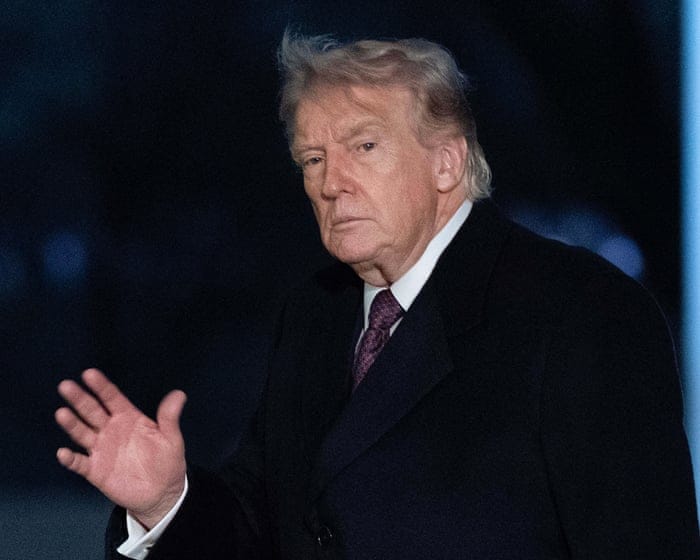
The contradiction between what presidents can legally do and what they claim they can do has never been starker. At 2:17 AM Monday morning, Donald Trump posted to social media that he has an "absolute right" to impose tariffs without congressional approval or judicial review, according to The Guardian US. The Supreme Court, which last week struck down one of his unilateral tariff orders as unconstitutional, had "unnecessarily RANSACKED" the United States, he wrote.
This is not how constitutional democracy works. No president has "absolute" rights. Every presidential power exists within constitutional limits enforced by federal courts. When a president declares those limits illegitimate — when he frames judicial review itself as an attack on America — he is articulating an authoritarian vision of executive power.
The timing matters. We are less than two years from the 2026 midterm elections, where control of Congress will determine whether Trump faces any legislative constraints in his final two years. More critically, we are less than three years from the 2028 presidential election. Trump cannot run again, but his ability to influence that election — through executive orders, through control of federal agencies, through shaping of voting rules — depends entirely on whether courts will check his power.
His 2 AM post tells us exactly how he plans to handle judicial resistance: by declaring it illegitimate. This is the same rhetorical strategy he deployed in 2020 when he claimed victory prematurely and spent months attacking courts that ruled against his election challenges. But now he controls the executive branch. Now he has two more years to stock federal agencies with loyalists who will execute orders regardless of their legality.
The specific case that triggered Trump's outburst involved his attempt to impose a 25% tariff on all imports from countries he deemed "unfair traders" — a list that included most of America's largest trading partners. The Supreme Court ruled 6-3 that the president cannot unilaterally rewrite trade law through executive order. Even the Court's conservative majority, including two Trump appointees, agreed that Congress alone has the constitutional power to regulate foreign commerce.
But Trump's response reveals he has learned from his first term. Rather than accept judicial limits and work with Congress, he is pre-emptively delegitimizing court rulings that constrain him. This is exactly what authoritarian leaders do in democracies they seek to dismantle: they don't initially abolish courts, they simply declare court rulings optional when those rulings limit executive power.
The economic stakes are immediate. Gas prices have already hit $5.80 due to Middle East conflicts. Trump's threatened tariffs would add an estimated $2,400 per year to the average American family's expenses through higher prices on imported goods, according to the Peterson Institute for International Economics. But the constitutional stakes dwarf the economic ones.
What happens when a president declares he has "absolute" power in defiance of the Supreme Court? In a functioning democracy, Congress would act. Articles of impeachment would be drafted. Cabinet members would consider their constitutional duties. But this Republican Congress has shown no willingness to constrain Trump, even when he threatens war crimes or attacks the foundations of democratic governance.
The 2026 midterms now carry existential weight. If Trump maintains allied majorities in Congress while declaring independence from judicial review, the 2028 election will occur under whatever rules he chooses to impose. Federal agencies that oversee elections report to him. The Justice Department that investigates election crimes reports to him. If courts can't check that power, and Congress won't, American democracy rests on the willingness of career civil servants to refuse illegal orders.
That's not hyperbole. That's the logical endpoint of a president declaring "absolute" power over any domain of governance. Today it's tariffs. Tomorrow it could be election rules, protest permits, or which votes get counted. The slope from "I have absolute right to impose tariffs" to "I have absolute right to govern" is not steep. It's a gentle decline, paved with congressional acquiescence and public exhaustion.
Trump has told us exactly how he plans to govern when courts rule against him: he'll ignore them. The question now is whether American institutions — Congress, the courts, the professional civil service, and ultimately voters in 2026 — will accept that answer. Monday morning's 2 AM post was not a tired president venting. It was a declaration of intent. Those who value constitutional democracy should take it as such.