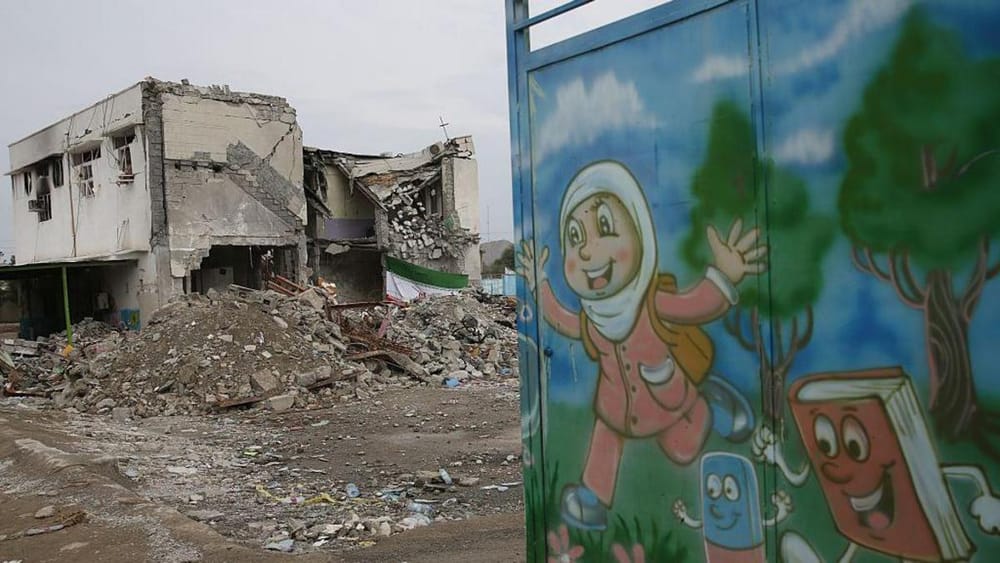
The United Nations High Commissioner for Human Rights Volker Türk has formally called on the United States to investigate a military strike on an Iranian school that killed at least 168 people, mostly children, describing the attack as evoking "visceral horror," BBC News reports.
The demand represents an extraordinary rebuke from the UN's top human rights official and places immediate pressure on Washington to account for what may constitute one of the conflict's most devastating attacks on civilians. The strike's toll — 168 dead in a single location, with children comprising the majority of victims — marks it as potentially the deadliest incident targeting an educational facility since the war began.
Türk's characterization of the attack as "viscerally horrifying" signals the UN's growing alarm over civilian casualties in a conflict that has already seen $12 billion spent without Congressional authorization. The language chosen by the Commissioner — rarely this stark in official UN communications — speaks to the severity of the incident and the international community's demand for accountability.
The strike occurred amid an escalating pattern of attacks on civilian infrastructure that human rights organizations have documented across the region. Schools, hospitals, and residential areas have increasingly become casualties of a war that Pentagon officials initially promised would involve "precision" operations. Instead, the mounting civilian death toll has drawn comparisons to previous U.S. military campaigns where strategic objectives overshadowed humanitarian concerns.
International law explicitly prohibits attacks on educational institutions unless they are being used for military purposes — a standard that requires clear evidence and proportionality even when such use is established. The death of 168 people, predominantly children, in a single strike raises immediate questions about target selection, intelligence failures, and the rules of engagement governing U.S. military operations in the region.
The UN's demand for a U.S. investigation comes as Pentagon resources are increasingly strained between multiple conflicts, potentially affecting operational oversight and decision-making processes. Military analysts have warned that stretched resources and accelerated operational tempo often correlate with increased civilian casualties and targeting errors.
For the families of the 168 victims, Türk's statement offers the first glimmer of potential accountability from the international community. Yet previous UN calls for investigations into U.S. military actions have often resulted in internal reviews that human rights advocates criticize as lacking transparency and independence. The question now becomes whether international pressure can compel a genuinely independent investigation with public findings.

The strike also highlights the broader pattern of how modern conflicts increasingly blur the lines between military and civilian spaces. Schools in conflict zones often serve multiple community functions — as shelters, distribution centers, or simply the last remaining intact buildings in devastated neighborhoods. This reality complicates military targeting but does not absolve armed forces from their obligation to protect civilian lives.
As the death toll from the broader conflict continues to mount, the school strike stands out for both its scale and its victims. The image of 168 people, mostly children, killed in what should be a place of learning and safety, crystallizes the human cost of a war that many Americans remain largely disconnected from. Türk's intervention forces that human cost back into the center of the conversation about U.S. military actions and their consequences.