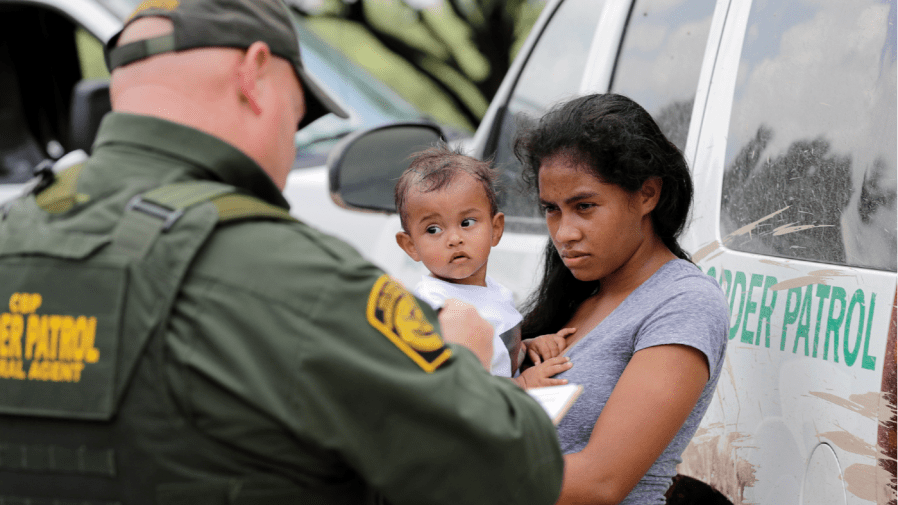
The first family separation crisis had a name, a policy memo, a public outcry, and a court order. This one has none of those things — and it is ten times larger.
A June 2025 report from the Brookings Institution, as reported by The Hill, found that more than 145,000 U.S. citizen children have likely been separated from at least one parent due to immigration detention under the second Trump administration. More than 22,000 of those children have lost access to both parents simultaneously. These are not the children of undocumented immigrants in some abstract legal category — they are American citizens, born on American soil, whose constitutional status has not protected them from losing the people who raise them.
The number demands context. The 2018 "zero tolerance" family separation policy — the one that generated congressional hearings, federal litigation, and international condemnation — separated an estimated 5,500 children from their parents before a court order forced its end. That policy had a name. Officials were called to testify. The ACLU spent years tracking down separated families. The 145,000 figure in the Brookings report is not the result of a single named policy. It is the cumulative arithmetic of mass detention applied without a framework for what happens to the children left behind.
That distinction is the story. The administration has constructed a system that produces family separation at industrial scale while maintaining plausible distance from the label. There is no memo to point to. There is no zero-tolerance order to enjoin. There is only detention — mass, rapid, and conducted without any accounting for the American children whose lives reorganize around an empty chair at the kitchen table.
The accountability question is not complicated, even if the legal architecture around it is. ICE detains a parent. That parent may have lived in the United States for a decade, two decades, longer. Their children were born here. When the parent is detained, no federal agency is formally responsible for the child's welfare unless the child enters the foster care system — and even then, the connection between the detention and the family rupture is not tracked in any centralized way. As Tinsel News has previously reported, ICE's own detainee tracking system fails families trying to locate detained relatives, compounding the harm at the moment families most need information.
The 22,000 children who lost both parents deserve particular attention. A child who loses access to both parents simultaneously is, functionally, a child without a guardian. Federal law has provisions for this — child protective services, emergency guardianship, kinship care — but none of those systems were designed to absorb a sudden influx of tens of thousands of cases, and none of them were funded or staffed in anticipation of this policy environment. The Brookings report does not describe an accident. It describes a foreseeable outcome of foreseeable choices that no one in the relevant agencies was required to plan for.
The Fourteenth Amendment guarantees birthright citizenship to children born on U.S. soil regardless of their parents' immigration status. When a U.S. citizen child is separated from a detained parent, no federal law requires the government to reunify them, notify child welfare agencies, or track the separation. The child's citizenship status creates rights the child cannot exercise alone — and no agency is currently accountable for protecting them.
There is a power and money dimension here that the family separation debate has rarely surfaced directly. The immigration detention system is not a public service — it is a contracted industry. The two largest private prison operators in the United States, GEO Group and CoreCivic, hold the majority of ICE detention contracts and have spent millions lobbying for expanded detention capacity. As detention numbers rise, their revenue rises. The 145,000 children in the Brookings report are the externalized cost of that business model — costs borne by families, by state child welfare systems, by schools and pediatricians and grandparents — costs that do not appear on any contractor's balance sheet.
The framing of immigration enforcement as a border security issue has consistently obscured this domestic consequence. The children in the Brookings report are not at the border. They are in Houston, Chicago, Los Angeles, Atlanta, and every other city where immigrant communities have built lives over decades. As Tinsel News has documented, immigrant families in Houston's most polluted ZIP codes now navigate ICE raids alongside chemical spills and a healthcare system they cannot access — a convergence of vulnerabilities that enforcement policy has made dramatically worse.
The systemic pattern is not new, but the scale is. Every previous wave of mass immigration enforcement in American history — the deportation of Mexican Americans during the Great Depression, the internment of Japanese Americans during World War II, the post-9/11 detentions — produced family separations that were only fully counted years later, after the political moment had passed and the damage was permanent. The Brookings report is unusual precisely because it is counting now, in real time, while the policy is still operating. That gives it a different political weight than retrospective documentation.
It also gives Congress a different kind of obligation. The 2018 family separation crisis produced legislation — the Keep Families Together Act passed the House — that ultimately went nowhere in the Senate. The argument for inaction then was that the policy had been rescinded, the emergency had passed. That argument is not available now. The Brookings numbers are current. The separations are ongoing. The 22,000 children without access to either parent are not a historical fact to be studied; they are a present condition to be addressed or ignored.
The administration's position, implicit in its enforcement posture, is that the responsibility for these separations lies with the parents who violated immigration law — that the children's suffering is a consequence of parental choice, not government action. That framing does not survive contact with the actual legal status of the children involved. A U.S. citizen child did not choose their parents' immigration status. They did not choose to be born into a mixed-status family. They did not choose a policy environment in which their parent's detention carries no mandatory notification requirement, no reunification protocol, and no government agency formally accountable for their welfare.
The Brookings report will be cited in congressional testimony, in litigation, and in the next wave of advocacy organizing. What it should also do is force a reckoning with the language being used. This is family separation. It is happening at a scale the 2018 crisis never approached. The fact that it arrived without a policy memo and without a named directive does not make it less real for the 145,000 American children living inside it — it just makes it easier for the officials responsible to avoid the word.
The administration has not disputed the Brookings figures. It has not released its own count. ICE has already been documented deporting parents without their children in violation of its own stated family separation rules. A government that cannot account for 145,000 separated citizen children — and has chosen not to try — has made a decision about whose citizenship it considers worth protecting.