Seventy-seven percent. That is the share of U.S. adults who told The Hill's survey team this week that the current administration's policies have made the cost of living in their communities more expensive. Eight percent said costs had gone down. Sixteen percent said nothing had changed. By any standard of political measurement, a number like 77 percent is not a partisan finding — it is a near-consensus.
The number lands differently when you place it next to something the president said last month. Asked directly whether Americans' financial pain influenced his thinking on ongoing Iran negotiations, Trump told reporters it didn't motivate him "not even a little bit." That was not a gaffe. It was a policy statement. The White House has since made no effort to walk it back.
The administration's economic framework has two primary engines of cost pressure. The first is tariffs — broad import levies that function as a consumption tax paid by U.S. importers and passed directly to buyers. The White House claims tariffs are a negotiating instrument that will ultimately strengthen American manufacturing. Economists across the ideological spectrum have described them as a price increase on goods that lower-income households spend a disproportionate share of their budgets on: groceries, clothing, electronics, household goods. The costs are not abstract. They show up on receipts.
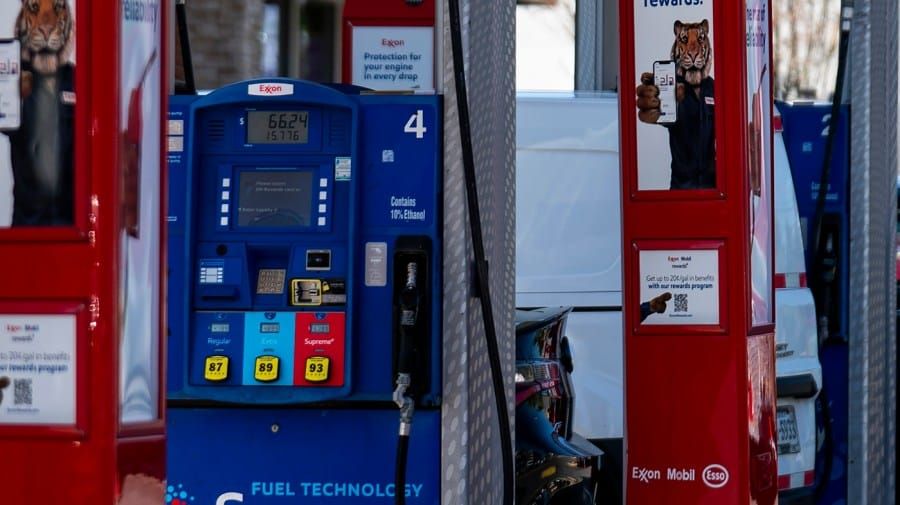
The second engine is the Iran war and its effect on global energy markets. Gas prices have hit $5.80 in parts of the country as military operations in and around the Strait of Hormuz have disrupted global oil supply chains. The Strait carries roughly 20 percent of the world's traded oil. When it is functionally closed or threatened, energy prices move everywhere, immediately, and the cost is borne by anyone who drives to work, heats a home, or buys products that travel by truck. That is most people. A war that was never authorized by Congress is now being paid for, in part, at the pump by people who never voted on it.
What the CNN poll captures is not simply disapproval — it is attribution. Voters are not confused about cause and effect. The 77 percent figure cuts across party lines, which means a significant portion of the people who voted for this administration in 2024 are now connecting its specific policy choices to their monthly budgets. That is a different political problem than generic inflation discontent. Generic inflation is a weather event; voters look for someone to blame but the target is diffuse. Attributed inflation — inflation that 77 percent of adults connect to specific presidential decisions — has a face and a return address.
The administration's political bet has always been that its base would tolerate economic pain in exchange for cultural and ideological wins. That calculation worked through much of the first term and the early second. But the CNN data suggests the tolerance has limits, and that those limits are now being tested. Young men who swung toward Trump in 2024 are reconsidering as gas prices and grocery bills accumulate. The coalition that delivered the second term was built partly on an economic promise — that tariffs would bring jobs back, that energy dominance would lower prices, that the working class would benefit. The 77 percent number is the public's verdict on whether that promise was kept.
It is worth being precise about what the polling does not tell us. Survey data measures perception, not economic causation. Some portion of the cost increases Americans are feeling have roots in supply chains, post-pandemic demand patterns, and global commodity markets that predate this administration. The question of what share of current inflation is directly attributable to tariff policy versus Iran war energy disruption versus structural factors is genuinely contested among economists. What is not contested is that the public has made its attribution — and that attribution is politically lethal at 77 percent.
The administration's response to this kind of polling has been consistent: dismiss the framing, attack the messenger, and point to economic metrics that show strength in other areas. That response has worked before. But the president's own statement — that American financial pain doesn't move him — removes the usual escape hatch. He cannot now credibly claim he's working urgently to ease the burden. He already told the country he isn't.
The 2026 midterm map is beginning to take shape around exactly this question. Democrats are trying to rebuild a working-class economic argument they largely abandoned over the past decade. Whether they can convert a 77 percent public consensus into electoral consequence depends on whether they can offer something concrete in its place — not just a number, but a policy. What is clear is that the White House has already conceded the economic argument. The president said so himself. The voters heard him.