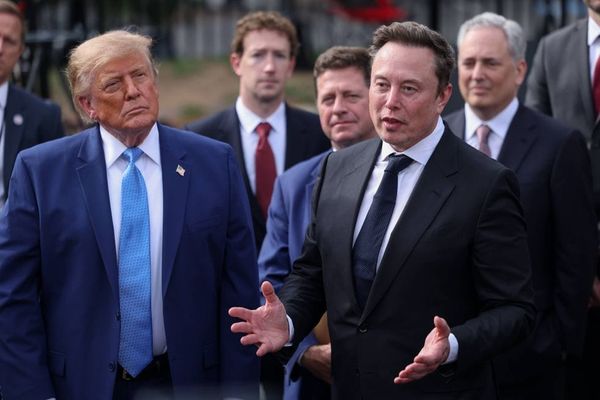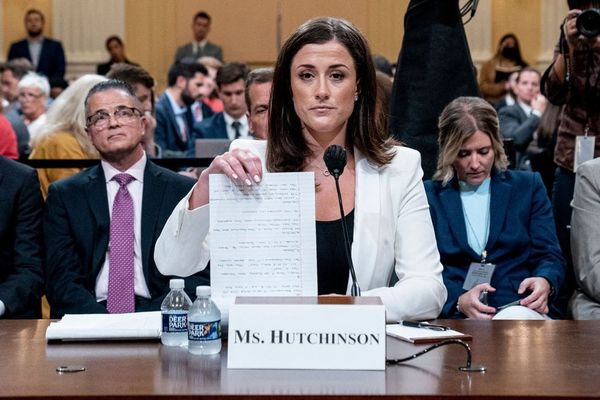
The number was chosen deliberately. $1.776 billion — a patriotic figure, a founding-era echo, a branding decision masquerading as a legal settlement. The Justice Department announced the fund on Monday, framing it as restitution for Americans who were allegedly targeted by the IRS for political reasons. What The Hill reported — and what the administration's own framing obscures — is that the fund emerged from a $10 billion lawsuit filed by Donald Trump himself against the IRS, a federal agency he now controls, settled by a Justice Department he now controls, with terms set by an administration that will also control who gets paid.
No independent arbiter. No defined eligibility criteria made public at launch. No congressional authorization for the disbursement. A president sued a government agency, then became the government, then settled the case against himself using taxpayer money, then named the fund after the year of American independence. The legal architecture here is not complicated. The political architecture is the point.
The official version, per the Justice Department's announcement, is that the fund will compensate Americans subjected to improper IRS scrutiny — a real category of harm with a real legal history. The IRS targeting scandal of the Obama era, in which the agency applied unusual scrutiny to conservative nonprofit applications, was documented, litigated, and resulted in a 2017 settlement. That settlement already compensated affected groups. What the new fund adds — beyond the symbolic dollar figure — is a mechanism for distributing nearly $2 billion in public money under criteria that the executive branch will define, administer, and adjudicate, with the president who initiated the underlying lawsuit positioned as the political beneficiary of every payout.
The contradiction is structural, not incidental. A president cannot simultaneously be the aggrieved plaintiff in a lawsuit and the sovereign authority that settles it. That is not a legal gray area — it is the definition of a conflict of interest that the separation of powers was designed to prevent. When the Justice Department settled Trump's $10 billion IRS suit by creating a $1.776 billion fund, it did not resolve that conflict. It institutionalized it.
Follow the money, and then follow who controls the money. The fund will issue payouts and — remarkably — "formal apologies" to those who pursue settlements, according to The Hill's reporting on the DOJ announcement. Formal apologies from the United States government, administered by the same administration whose political allies are most likely to file claims, distributed without a publicly announced independent review process. The apology is not incidental. It is the product. It transforms a legal settlement into a political document: official government acknowledgment, on demand, that the previous administration's IRS targeted you.
The IRS targeting controversy — in which the agency applied heightened scrutiny to conservative and Tea Party-affiliated nonprofit applications — was litigated extensively during the Obama and early Trump years. A 2017 settlement compensated affected organizations. The new $1.776 billion fund is not a continuation of that settlement. It is a separate mechanism, initiated by Trump's personal $10 billion lawsuit against the IRS, settled under terms controlled by his own Justice Department.
This is not the first time this administration has used the settlement process as a policy instrument rather than a legal one. As Tinsel News has reported, federal enforcement decisions have been structured to advantage political allies and disadvantage political opponents — a pattern in which the formal neutrality of legal process provides cover for decisions made on political grounds. The anti-weaponization fund fits this pattern precisely: it uses the language of legal remedy to execute a political reward system.
The power and money dynamics are not subtle. Trump's original $10 billion lawsuit — filed before he retook the presidency — was a political document as much as a legal one. It named the IRS as the instrument of Democratic persecution. It positioned Trump as a victim of the administrative state. It generated headlines and fundraising copy. That the suit was settled for $1.776 billion rather than litigated to a verdict is itself telling: there was no independent factfinder, no evidentiary record, no judicial finding of liability. There was a negotiation between the plaintiff's former legal team and an administration the plaintiff now runs. The result is a fund that can be characterized as a legal victory while functioning as an executive slush fund.
The accountability gap is specific. Congress did not authorize this disbursement. No appropriations bill allocated $1.776 billion for IRS victim compensation. The fund appears to operate through DOJ settlement authority — a mechanism designed for cases where the government has been found liable or chooses to settle legitimate claims, not for cases where the president is simultaneously the plaintiff, the defendant's supervisor, and the administrator of the remedy. Congressional oversight of this fund — who qualifies, how claims are evaluated, who reviews denials, what happens to unclaimed funds — has not been established in any public document released at launch.
The "formal apology" provision deserves particular scrutiny. Government apologies carry legal and political weight. They can be used in subsequent litigation. They generate press. In the hands of an administration that has systematically targeted political opponents — including former intelligence officials and political critics — a mechanism for issuing official apologies to self-identified victims of government targeting is not a neutral legal tool. It is a political weapon with a treasury attached.
The systemic pattern here connects to a broader project. This administration has moved consistently to convert public institutions into instruments of political reward and punishment — clemency for political allies, prosecution for political critics, enforcement discretion deployed as patronage. The anti-weaponization fund extends that logic into the fiscal domain: public money, distributed by political actors, to claimants whose eligibility those same political actors will determine. The fund's name — "anti-weaponization" — is itself a tell. It takes the language of the critique (that government power was weaponized against political opponents) and uses it to justify a new and more explicit form of the same thing.
What makes this moment legally distinct from ordinary executive overreach is the self-dealing at its core. Most federal settlement funds involve a government agency that caused harm to private parties, a legal finding or negotiated admission of that harm, and a distribution process with at least nominal independence. The anti-weaponization fund inverts this: the private party who claimed harm is the same person whose administration created the fund, will administer it, and will benefit politically from every dollar distributed and every apology issued. The $10 billion lawsuit that predicated the settlement was not a good-faith legal claim awaiting adjudication — it was a political instrument that has now been converted into fiscal policy.
Congress has the authority to demand a full accounting: the eligibility criteria, the review process, the identity of any independent oversight, the legal basis for the disbursement, and the disposition of funds if claims fall short of $1.776 billion. Whether Congress exercises that authority is the question the fund's architects are betting on. Based on the pattern of the past year — in which the executive branch has ignored court orders, defied subpoenas, and restructured enforcement to serve political ends — they are probably right to bet that way. The fund will pay out. The apologies will be issued. And the president who sued the IRS will have converted a political grievance into a government-administered patronage system, funded by the taxpayers he claimed were victimized alongside him.