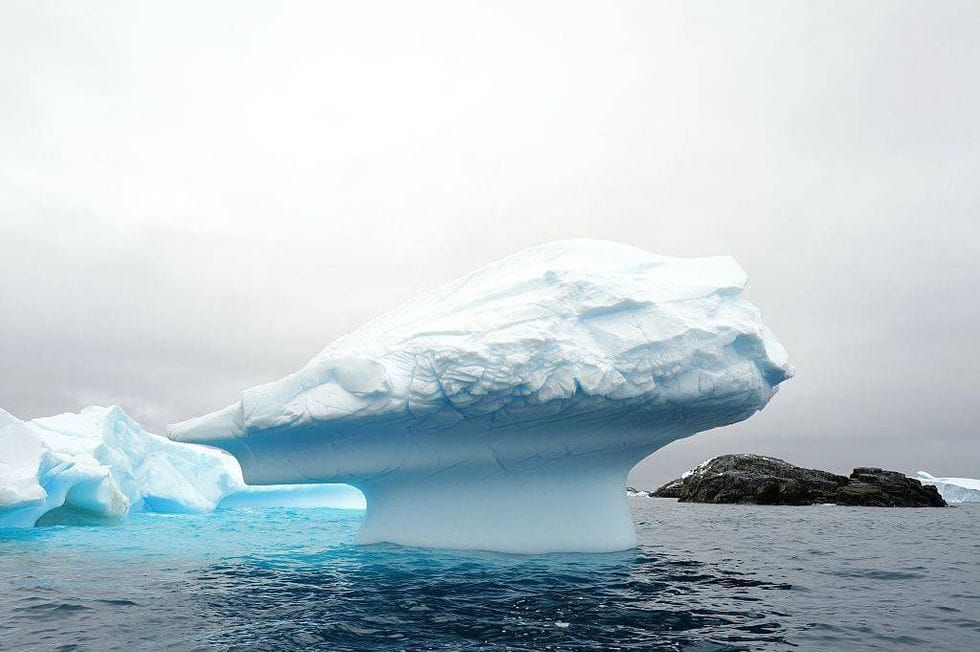
The Antarctic winter is supposed to be the planet's deep freeze — the season when sea ice expands, glaciers consolidate, and the southern continent reasserts its cold. This June, that did not happen. Temperatures at Antarctica's Trinity Peninsula reached peaks above 15°C, according to reporting by Common Dreams, drawing on a Guardian investigation. The previous June record at the peninsula, set in 1998, was 13.3°C. The anomaly this month: 20°C above seasonal norms.
That number — 20°C — is not a rounding error or a localized spike. It is the kind of deviation that climate scientists describe, with unusual bluntness, as "absolutely crazy." Raúl Cordero, a climate professor at the University of Groningen, used exactly those words to the Guardian. "That is a huge anomaly," he said. The language is notable. Scientists are trained in restraint. When they abandon it, the data has usually forced their hand.
Here is what the anomaly produced on the ground. Luis Muñoz, a Chilean glaciologist stationed at King George's Island just north of the Trinity Peninsula, stepped outside and found bare earth where there should have been 20 centimeters of snow and thick ice. "The temperatures here went very high so everything outside melted," he told the Guardian. That image — a scientist in Antarctica standing on exposed ground in winter — is the story in miniature. The continent is not behaving like the continent anymore.
The sea ice loss is the most consequential single data point in the report. An area roughly the size of France — ice that typically forms each June as part of the Antarctic winter cycle — is simply absent. Will Hobbs, an Antarctic sea ice expert at the University of Tasmania, told the Guardian he found it remarkable that in June there is no sea ice in a region where sea ice is expected. More significantly, Hobbs assessed that the loss is likely permanent given the trajectory of global temperature changes. That is a scientist saying, in measured professional language, that a planetary feature is gone.
Permanent sea ice loss at this scale is not a future risk. It is a present condition with cascading consequences. Peter Fretwell of the British Antarctic Survey described one of them: penguin breeding is already failing. Sea ice forms too late and breaks up too early, Fretwell explained, leading to reduced breeding success and longer trips to moulting grounds. Penguin populations are a visible, measurable indicator of ecosystem collapse — but they are also, in the broader accounting, a proxy for a system that billions of people depend on without knowing it.
Sea ice reflects solar radiation back into space. When it disappears, dark ocean water absorbs that heat instead — a feedback loop that accelerates warming globally. Antarctic sea ice also stabilizes the massive glaciers behind it. Without that buttressing effect, glaciers flow faster into the ocean, directly driving sea level rise. The Guardian reported that scientists now fear some of the biggest glaciers near the Trinity Peninsula may have passed a tipping point that could push up global sea levels by four meters — a rise without precedent in recorded human history. For context, global sea levels have risen between 21 and 24 centimeters since 1880, according to the same report.
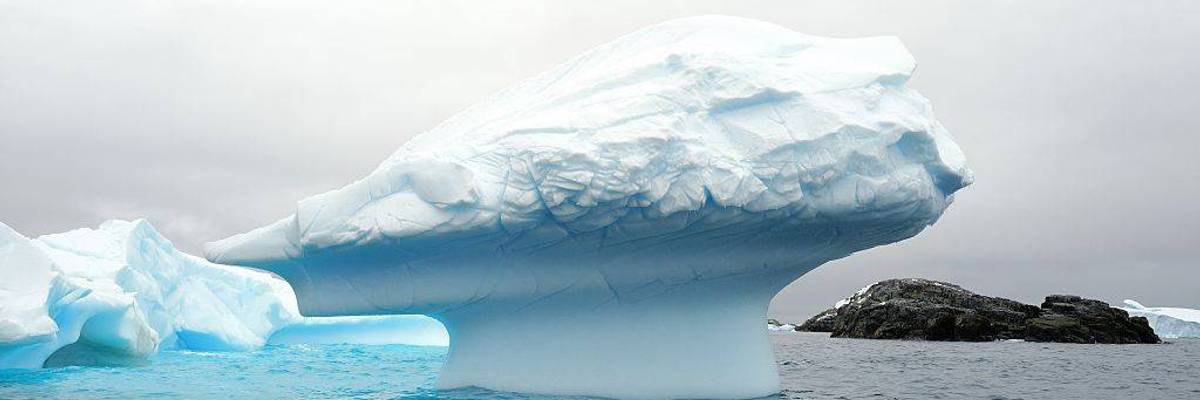
The original thesis the source reporting does not fully make — but the data demands — is this: the Antarctic anomaly is not primarily a story about Antarctica. It is a story about the speed of collapse outrunning the models that climate policy is built on. The scientific community's projections, the international agreements, the national net-zero targets, the corporate sustainability pledges — all of them are calibrated to a rate of change that this month's data suggests is already obsolete. The policy infrastructure for managing climate change was designed for a slower emergency. The emergency is not slower.
This matters for accountability in a specific way. The institutions and governments that have resisted aggressive climate action have done so by pointing to uncertainty — by arguing that the science has wide error bars, that projections are contested, that there is time to manage the transition gradually. The Antarctic data narrows those error bars in the wrong direction. The question is no longer whether the models were too pessimistic. The question is whether they were too optimistic — and whether the policy architecture built on them is fit for the reality now being documented.
The financial dimension runs parallel. As Tinsel News has reported, banks poured $906 billion into fossil fuel financing last year while abandoning net-zero pledges. The industry that benefits most from delayed climate action has spent decades funding the political and scientific argument that delay is acceptable. The Antarctic winter heatwave is the cost of that argument made visible. It does not arrive in a press release or a lobbying disclosure. It arrives as bare ground where glaciologists expected ice, and as a sea-ice mass the size of France that the ocean has simply absorbed.

The SEC's recent decision to rescind climate disclosure rules — as Tinsel News reported earlier this year — means investors are now making decisions without access to standardized information about climate exposure. That regulatory retreat is happening in the same month that Antarctic scientists are describing conditions they call absolutely crazy. The gap between the pace of physical change and the pace of institutional response is not a communications problem. It is a structural one, and it has beneficiaries.
The communities bearing the most immediate cost of what Antarctica is signaling are not the ones who produced the emissions that drove it. Coastal populations across the Pacific, South Asia, and sub-Saharan Africa face the four-meter sea level scenario that scientists now describe as a plausible trajectory. Island nations whose entire land mass sits within that margin have been making this argument at every international climate negotiation for decades — that the targets being debated are not adequate to their survival, and that the wealthy industrialized nations setting those targets are effectively negotiating on behalf of their own comfort rather than the planet's physical limits. This month's Antarctic data is not a new argument. It is new evidence for an argument that has been made, and largely ignored, for a long time.
The loss and damage framework — the mechanism through which wealthy nations are supposed to compensate vulnerable countries for climate harms they did not cause — remains dramatically underfunded and politically contested, as we have previously explained. The Antarctic data makes the case for that framework more urgent, not less. When scientists say the sea ice loss is likely permanent, they are describing an irreversible harm. Irreversible harms have a different moral and legal weight than reversible ones. The nations and corporations that produced the emissions driving this outcome have not been held to account for that distinction.

What the Trinity Peninsula is showing, in temperatures and missing ice and bare Antarctic ground, is that the window for gradual managed transition is closing faster than the institutions managing the transition have acknowledged. The 20°C anomaly is not a data point to be absorbed into a model and smoothed into a projection. It is a signal that the models themselves need revision — and that every policy, pledge, and timeline built on the old models is now operating on assumptions the planet is no longer honoring.
Scientists at the British Antarctic Survey are warning about tipping points. Chilean glaciologists are standing on ground that should be buried in snow. A sea-ice mass the size of France is gone in June. The people who will pay the heaviest price for this live mostly in places that produced the least of what caused it. That is the story the data tells — and it is not a story about uncertainty anymore.